
By Roselyn Fauth
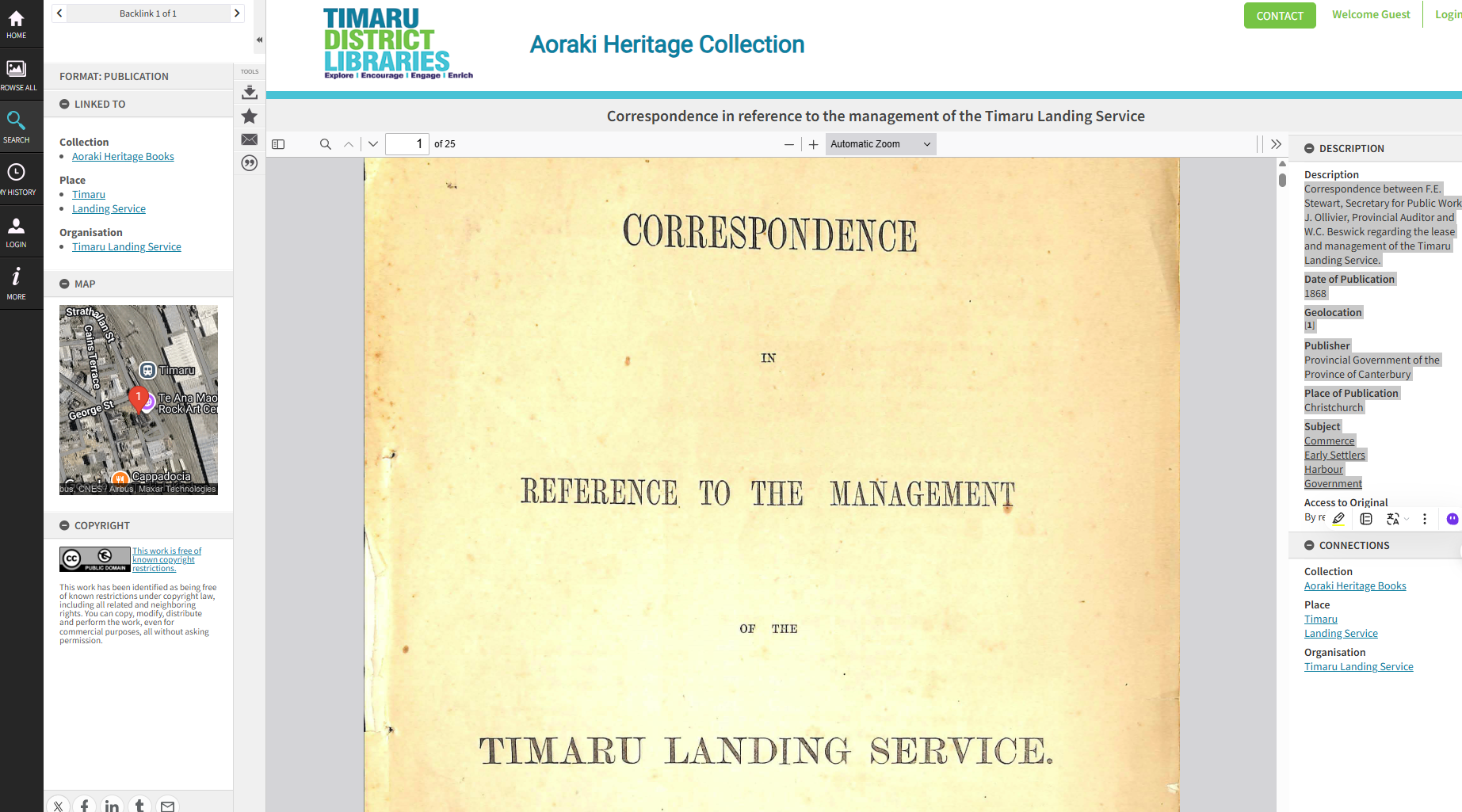
A line buried in an 1868 government paper stopped me... W. C. Beswick, who had been responsible for Timaru’s Government Landing Service, accused officials of trying to make him a “scapegoat”. A little later he described their treatment of him as an “infamous attempt to injure me and sully my character.” So much for dry government correspondence...
The document, Correspondence in reference to the management of the Timaru Landing Service, was published by the Canterbury Provincial Government in 1868. It records a dispute over boats, wool, money, responsibility and control.
It also gives us a glimpse of the politics behind Timaru’s early port...
Before there was a harbour
Ships visiting early Timaru could not pull alongside a wharf. They anchored offshore in the roadstead and cargo had to be moved between ship and shore by surfboat.
That made the Landing Service essential infrastructure. Imported goods came through it. Wool and other produce went out through it. Weather could stop it. Poor equipment could slow it. Decisions about boats, labour and charges affected merchants, shipowners and the wider settlement.
By the end of 1866, Beswick was dealing with a particularly difficult wool season. He said the surfboats were in poor condition and suggested chartering a small schooner or cutter to carry wool out to vessels waiting offshore.
On 19 December he was told by telegram: “Arranged about Prince Consort.” The following evening came a rather Timaru change of plan. Beswick telegraphed: “Prince Consort capsized about six o’clock.” The vessel had gone ashore.
Beswick later argued that after this loss he had been forced to find his own solution. He secured boats from Oamaru, kept the surfboats working and said he managed to load the Melita with about 3,000 bales of wool despite bad weather.
His point was simple. He had asked the Government for help, the proposed vessel had been lost, later assistance was either delayed or unsuitable, and he had got the work done anyway. Now, he felt, Christchurch officials were blaming him for the problems. That is Beswick’s version and it needs to be read as such. But contemporary reporting also suggests the service was operating under real strain. In 1867 there were complaints about inadequate boats, staffing, unpaid wages and the difficulty of maintaining the service with too little equipment.
Who was actually in charge?
This is where the papers become especially useful. The Landing Service was not simply a story about brave men pulling boats through surf. It was also a public service being overseen by the Canterbury Provincial Government. That meant important decisions affecting Timaru were being made in Christchurch.
Beswick clearly believed officials there did not fully understand the conditions he was dealing with. The Timaru Herald was also critical of the way the service was administered from Christchurch. That newspaper had its own local interests, of course, but the argument fitted a wider political mood.
South Canterbury was already pushing for greater control over its affairs. In 1867, the same year the Landing Service dispute intensified, pressure for stronger local administration helped lead to the creation of the Timaru and Gladstone Board of Works. The landing service debate therefore sat inside a bigger question... How much control should Christchurch exercise over infrastructure in South Canterbury?
Government service or private business?
The Provincial Government eventually decided to lease the Landing Service rather than continue running it directly. That created a new argument.
The Government advertised a three year lease from October 1867. The successful arrangement required substantial annual rental payments from the lessee.
Local critics argued that those costs would ultimately be recovered through landing and shipping charges.
There was also concern about monopoly.
If one lessee controlled the Government Landing Service and access to the most useful parts of the beachfront, what happened to competing landing businesses? Timaru merchants were already considering their own landing company. When another operator secured the Government lease, reports indicated that the local group intended to continue with an opposition service.
So by 1868 the argument involved much more than surfboats.
Who should provide essential infrastructure?
Should it be run by government or leased to private enterprise?
How should charges be set?
Should one operator control the landing places?
Who was accountable when the service failed?
These were practical questions for a growing port town, and they were also political ones.
Then came the auditors
Beswick’s anger appears to have sharpened after F. E. Stewart, Secretary for Public Works, and Provincial Auditor J. Ollivier visited Timaru during the handover of the Landing Service to its lessee. Beswick believed they had come looking for evidence of mismanagement. He later wrote that their report appeared designed to damage him and would be placed before the Provincial Council, where he would have little chance to answer it. So he fought back in print.
Government officials were concerned with public money and administration.
Beswick was defending his decisions and reputation.
Local newspapers pushed the case for Timaru.
Merchants wanted workable services and reasonable charges. Private operators wanted access to the trade. All had interests of their own.
And what about the Landing Service building? There is an important distinction.
The bluestone Landing Service building that survives in Timaru today dates from around 1870 and belongs to the later private landing service story.
It is not the Government Landing Service building at the centre of Beswick’s 1868 argument. But it survives from the same wider world. A world where cargo moved through the surf, wool ships waited offshore, landing charges mattered, weather could undo a government plan overnight and arguments about who should control Timaru were already well under way.
That is what I like about this old document. It starts with boats. Then you notice the money... Then the politics.
And behind all of it is a young town beginning to ask who should make decisions for Timaru, and who should answer for them when things went wrong.
Side Quest: Who was W. C. Beswick?
The W. C. Beswick firing off angry letters in the Landing Service correspondence was Captain William Cockerill Beswick (1821–1902). He was not a Christchurch desk official. Beswick was a former mariner who settled in Canterbury and, in October 1865, was appointed Harbour Master and Immigration Agent at Timaru.
When the Provincial Government took over the Timaru Landing Service, Beswick became one of the key men responsible for keeping it operating.
That put him in a difficult position. Ships waited offshore. Wool needed to get out through the surf. Boats broke down. Weather changed plans overnight. Merchants wanted their cargo moving, while officials in Christchurch wanted explanations about costs, equipment and management.
Beswick clearly felt he was being asked to solve problems without enough resources, then blamed when things went wrong. His 1868 letters are his side of the story, so they need to be read critically. But they also give us something valuable: the voice of the government official actually dealing with Timaru’s beach, boats and shipping day to day.
And his connection with the port did not end there. In 1877 Beswick was elected to the new Timaru Harbour Board, placing him in the next chapter of the story as Timaru shifted from surfboats and landing services towards building a permanent harbour. So Beswick links two eras of Timaru’s maritime history: the difficult years of hauling cargo through the surf, and the push to build a harbour that would eventually make that system obsolete.
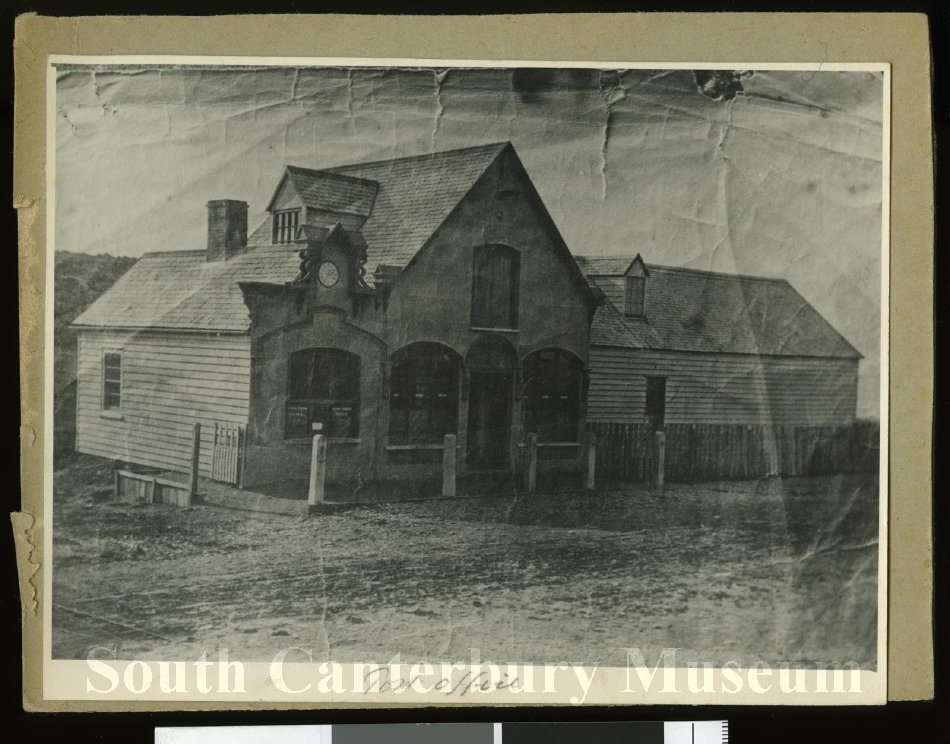
Timaru's first official Post Office in lower George Street, located in John Beswick's Store, circa 1862. Depicts the wooden building with dormer windows and a clock on the front left facing of the building. Posts in front of the entrance, possibly hitching rails, and a picket fence on the right are also visible. The road in front of the building is unpaved. Timarus first official Post Office in lower George Street located in John Beswicks Store c 1862 2679-1 SC Musuem 2679
Side Quest: Is Beswick Street named after W. C. Beswick?
When W. C. Beswick turned up in the Landing Service correspondence, I immediately wondered about Beswick Street. Was it named after him? Probably not him alone.
The evidence points more safely to the Beswick family, several members of whom were involved in early Canterbury and Timaru.
William Cockerill Beswick became Timaru’s Harbour Master and Immigration Agent in 1865 and later managed the Government Landing Service.
But his brother John Beswick had already established strong connections with Timaru.
John was an early merchant in the town. His store housed Timaru’s first official Post Office for a period, and by 1864 records refer to Beswick’s Bonding Warehouse near George Street and Cain’s Terrace. That means the Beswick name was already well established in Timaru before William took charge of the Landing Service. So, for now, I would not confidently say: “Beswick Street was named after William Cockerill Beswick.” A safer version is: Beswick Street appears to commemorate the Beswick family, whose members were involved in early Timaru business and public life.
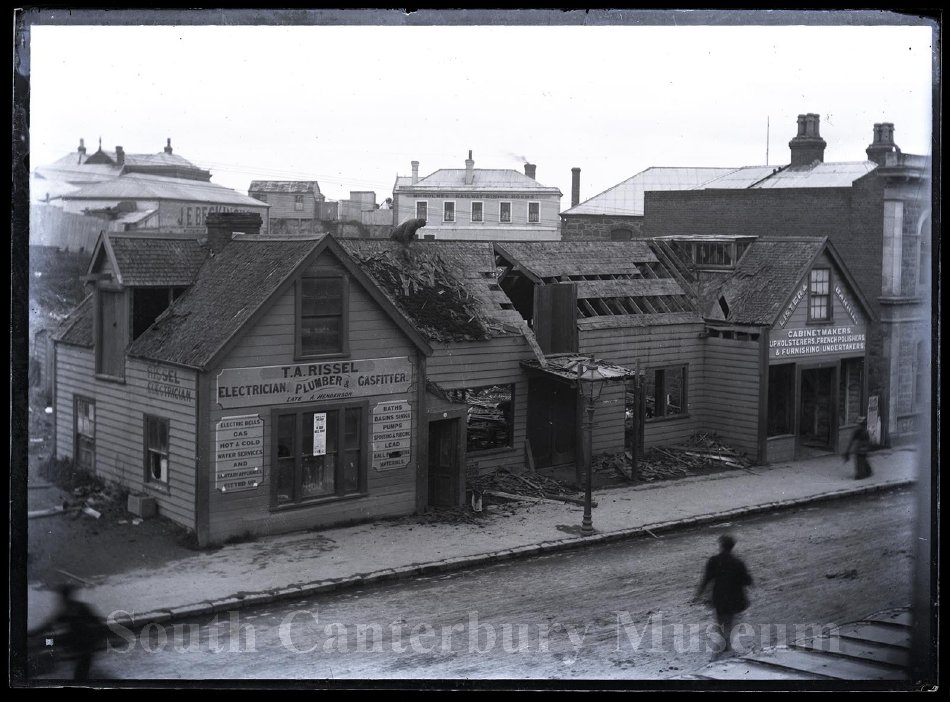
"An undated view taken looking across Stafford Street, Timaru towards two commercial premises being demolished, probably taken in 1899 or 1900 (or soon after). The two premises being demolished are signwritten for T A Rissel, "Electrician Plumber Gasfitter" (left), and cabinet makers Lister and Barrie (right). Rissel's building has "Late Mr Henderson" along the lower edge of his sign above door (see notes). Stafford St is unsealed and there is a gas light in front of the building. The building on the skyline in the background (in Cain St) has "Mrs Holmes Railway Dining Rooms" along the facade just under the roof line. These buildings are situated between Beswick St and George St on the eastern side of Stafford St." - Demolition of commercial premises Stafford Street Beswick and George Timaru - South Canterbury Museum 4698
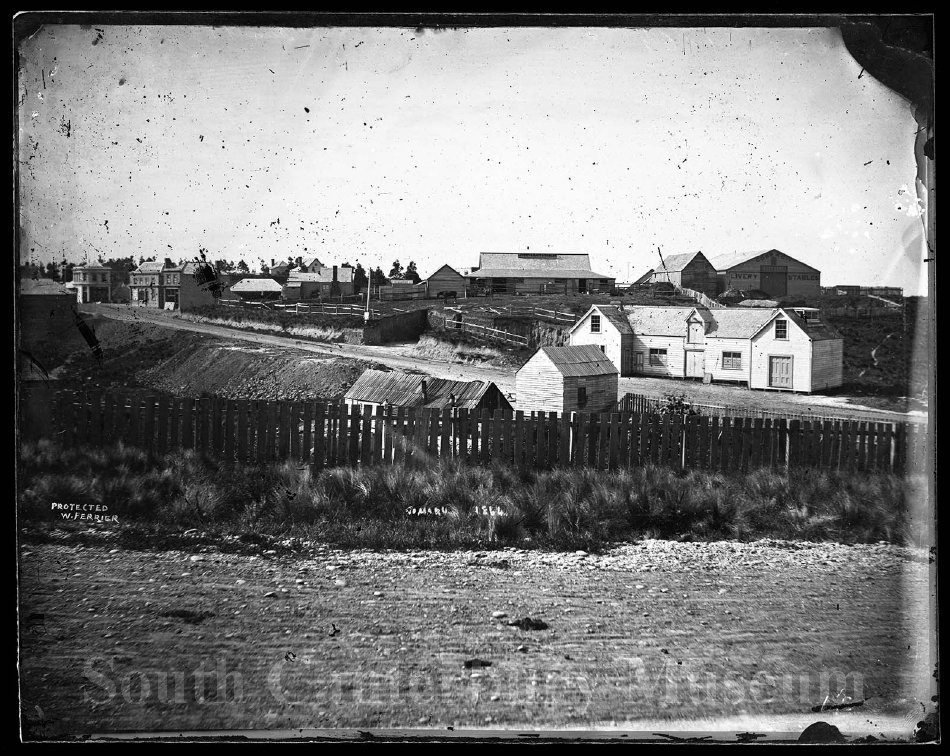
"A view of Stafford Street, Timaru, in 1864. Taken from George Street looking across the largely empty sections north of the Bank Of New Zealand building (out of shot on the right), towards the Cobb & Co livery stables on Beswick Street (top right). Inscribed with the title and "protected W. Ferrier". Ferrier was not the photographer who took the image, but clearly purchased the plate after he came to Timaru in 1881, perhaps from another retiring photographer (a common practise of the time)." - South Canterbury Museum 6116 https://timdc.pastperfectonline.com/photo/C9B559BC-4DE9-48C8-AF40-603871076306