
By Roselyn Fauth
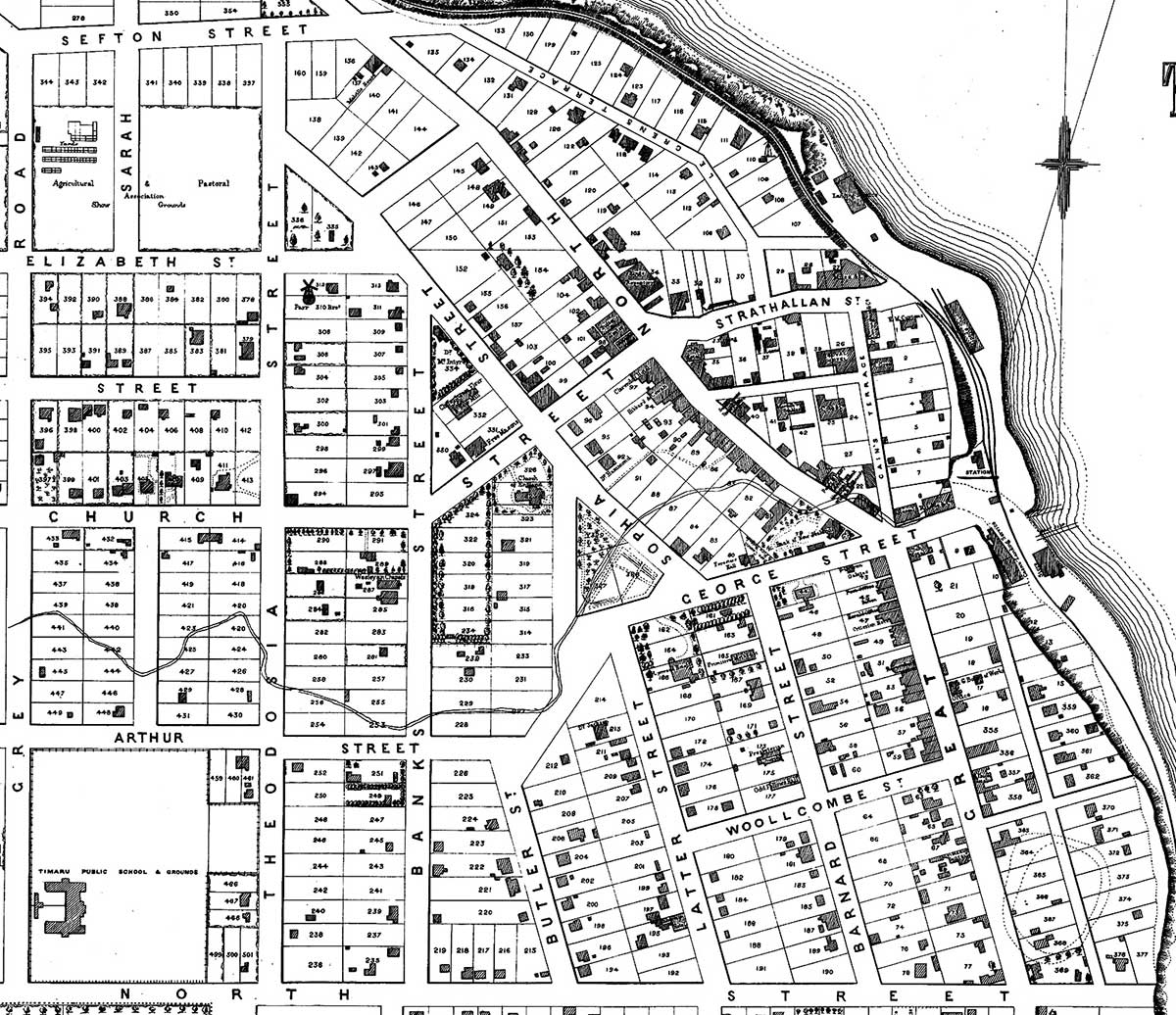
Plan of Timaru Townships, Canterbury, N.Z., 1875. Scale 3 chains to an inch. Lithographed at the Lyttelton Times Office, Christchurch, N.Z. - Courtesy of the Timaru District Council
A street sign, a politician, and some surprisingly big questions about power
Did you know Timaru's main street is named after Edward Stafford, three times Premier of New Zealand?
In 1870, two years after becoming the Member of Parliament for Timaru, Stafford stood before his constituents and admitted something rather surprising. He had, he said, “no personal claims” on them and, until shortly before his visit, had known only about three of his Timaru constituents.
According to the newspaper report, the room was well filled and Stafford was warmly received. Apparently this was not a problem. Nineteen years later, Timaru renamed its Great North Road Stafford Street in his honour.
That made me curious. Who exactly was Edward Stafford, and why did Timaru think enough of him to put his name down the middle of town? The answer led much further than I expected, into questions about voting, land, political responsibility and who held power while colonial New Zealand was taking shape...
The man behind the street sign
According to the Timaru District Council's Stafford Street heritage assessment, the road began as an early cart track and developed into Timaru's commercial high street. In September 1889 the Great North Road was renamed for Edward William Stafford, former MP for Timaru and three time Premier.
Stafford entered national politics in 1856 after serving as Nelson's first superintendent. He became Premier that year and eventually spent about nine years in the role across three ministries. In 1868 he became the member for Timaru.
He was particularly interested in how government should work. That sounds dry until you remember that many of the rules were still being worked out. What should central government control? What powers should the provinces have? Who could vote? Who controlled Māori affairs?
Stafford also had a direct impact locally. In 1867, after his proposed Local Government Bill failed, his government passed separate legislation establishing the Timaru Board of Works.
So there was a genuine civic connection between Stafford and the growing town.
But that is only the easy part of his story.
Stafford, Waitara and political responsibility
One trap in writing about this period is saying simply that “the government” or “the Crown” did something. Responsibility was shifting between British appointed governors and elected colonial ministers.
That became particularly important at Waitara.
In 1859 Te Teira Mānuka offered land at Waitara in Taranaki to Governor Thomas Gore Browne. Wiremu Kīngi Te Rangitāke opposed the sale. The dispute escalated, surveyors entered the contested land and fighting began in March 1860. Manatū Taonga's NZHistory identifies the disputed purchase as the immediate cause of the First Taranaki War.
Stafford was Premier, but the story is more complicated than that suggests.
The Dictionary of New Zealand Biography records that Stafford was overseas during crucial stages of the purchase. Although he wanted more land available for immigration, he opposed forcing Māori to sell and had warned colleagues to be cautious about Taranaki's complicated land disputes.
When he learned what had happened at Waitara, he was appalled and offered to resign. Then he stayed.
Stafford accepted collective ministerial responsibility for his government's actions. That leaves us with a surprisingly modern civic question: how much responsibility does a political leader carry for a decision they disagree with if they remain part of the government responsible for it? Suddenly a Timaru street sign has become a social studies lesson.
The year New Zealand “went mad” Stafford's government fell in 1861, so he was out of office during one of the most consequential periods of the New Zealand Wars.
In 1863 Crown forces invaded Waikato, heartland of the Kīngitanga, and Parliament passed the New Zealand Settlements Act. Its long title described an Act enabling the governor to establish “Settlements for Colonization” in the North Island. It allowed land within proclaimed districts to be taken and used for settlement, including military settlement.
Stafford strongly opposed it.
The Dictionary of New Zealand Biography records him describing the confiscation legislation promoted by Frederick Whitaker and William Fox as an “enormous crime”. He later described 1863 as the year New Zealand “went mad”. It would be easy at this point to cast Stafford as an enlightened opponent of Māori land confiscation, but I am not sure it is that tidy.
Who got a say?
Stafford returned as Premier in 1865. His government inherited continuing conflict, strengthened colonial forces and enlarged the militia.
Then, in 1867, Parliament created four Māori electorates.
Separate representation was considered necessary because the property qualification used for ordinary voting excluded many Māori men. According to NZHistory, most Māori land was held collectively rather than through the forms of individual freehold or leasehold title recognised by the electoral system. Only about 100 Māori are estimated to have voted in the 1853 election.
Stafford's government supported Māori representation, and Stafford argued for seven seats rather than four. That sounds relatively progressive until we add another piece of context. NZHistory estimates that representation based on population at the time would have produced about 14 to 16 Māori seats. Seven was more than four, but it was still far from proportional. That is the sort of detail that makes history more useful. Instead of asking whether Stafford was good or bad, we can ask what the political system actually produced.
Land could change through law as well as war
The Native Land Court was another part of that changing system. It converted customary Māori interests in land into forms of individual title recognised by colonial law, making land easier for the Crown and private purchasers to acquire.
Stafford's own papers make his position particularly interesting. Te Ara holds a document in which Stafford discussed what he called the “true object” of the Native Land Court. He believed one purpose was to encourage Māori to sell or lease land they were not occupying or cultivating.
So Stafford could condemn punitive confiscation while still believing that more Māori land should enter the colonial economy. Those positions may seem contradictory to us, but they fitted within his wider belief in settlement, development and a strong colonial state.
South Canterbury has its own story.
Timaru District Council identifies Kāti Huirapa as holding mana whenua in the Timaru District, represented by Te Rūnanga o Arowhenua. The Council also records that this area formed part of an extensive network of settlements, travel routes and mahika kai long before Stafford Street existed.
The local nineteenth century land story is connected particularly with the large Ngāi Tahu land purchases in Te Waipounamu.
Kemp's Deed, the Canterbury purchase of 1848, covered a huge area of Canterbury and North Otago. Arowhenua Māori Reserve 881 was allocated as part of that purchase.
Only a year later, Ngāi Tahu rangatira Matiaha Tiramōrehu formally raised grievances with the Crown.
Te Rūnanga o Ngāi Tahu describes his 1849 protest as the first formal statement of Ngāi Tahu grievances concerning the South Island land purchases. The concerns included inadequate reserves and promises relating to land, schools, hospitals and access to mahika kai.
Tiramōrehu and later generations continued pursuing those grievances through what became known as Te Kerēme, the Ngāi Tahu Claim. In 1875 he helped organise a meeting at Arowhenua as part of that continuing campaign.
Stafford did not cause Kemp's Deed, and Ngāi Tahu history should not become a side story about him.
The connection is broader. These histories were unfolding while the same colonial state was growing in power. One story shows us politicians building its institutions. The other helps us see the consequences of Crown decisions about land and obligations from a Ngāi Tahu perspective.
The Ngāi Tahu claim was eventually considered by the Waitangi Tribunal, and the Ngāi Tahu Claims Settlement Act was passed in 1998, including the Crown's formal apology.
The timeline behind Stafford Street
1848: Kemp's Deed covers a vast area of Canterbury and North Otago. Arowhenua Māori Reserve 881 is allocated as part of the Canterbury Purchase.
1849: Matiaha Tiramōrehu formally raises Ngāi Tahu grievances concerning the South Island land purchases.
1856: Edward Stafford becomes Premier. Governors still retain substantial responsibility for Māori affairs.
1860: Fighting begins at Waitara following the disputed land purchase. Stafford is Premier, although he had been overseas during crucial stages and had warned against forcing Māori land sales.
1863: Crown forces invade Waikato. The New Zealand Settlements Act provides for land to be taken for colonisation and settlement. Stafford, then out of government, condemns the legislation.
1865: Stafford returns as Premier. The Native Land Court becomes an increasingly important part of the colonial land system.
1867: Four Māori electorates are established. Stafford argues for seven. His government also establishes the Timaru Board of Works.
1868: Stafford becomes MP for Timaru.
1870: Stafford addresses his Timaru constituents and admits he previously knew only about three of them personally.
1875: Matiaha Tiramōrehu helps organise a meeting at Arowhenua as part of the continuing Ngāi Tahu claim.
1889: Timaru's Great North Road is renamed Stafford Street.
1991: The Waitangi Tribunal reports on the Ngāi Tahu claim.
1998: Parliament passes the Ngāi Tahu Claims Settlement Act, including the Crown's formal apology to Ngāi Tahu.
A street sign can become a question
I started with a simple question: why is Stafford Street called Stafford Street? It led somewhere much bigger.
Who could vote? What responsibility did politicians carry for government decisions? Who controlled Māori affairs? How could law alter people's relationship with land? Could Stafford condemn confiscation while still supporting policies intended to make more Māori land available for settlement?
And when we put somebody's name on a street, what exactly are we remembering? I don't think we need to remove Stafford's name to ask those questions. Knowing the story makes the street more interesting. Stafford was neither a cardboard hero nor a convenient villain. He was an influential colonial politician whose record included opposition to confiscation and support for greater Māori representation, alongside assumptions about settlement, land and government that deserve examination.
That is what I like about using our streets as historical clues... A street sign can be a question, that can take us much further than expected.
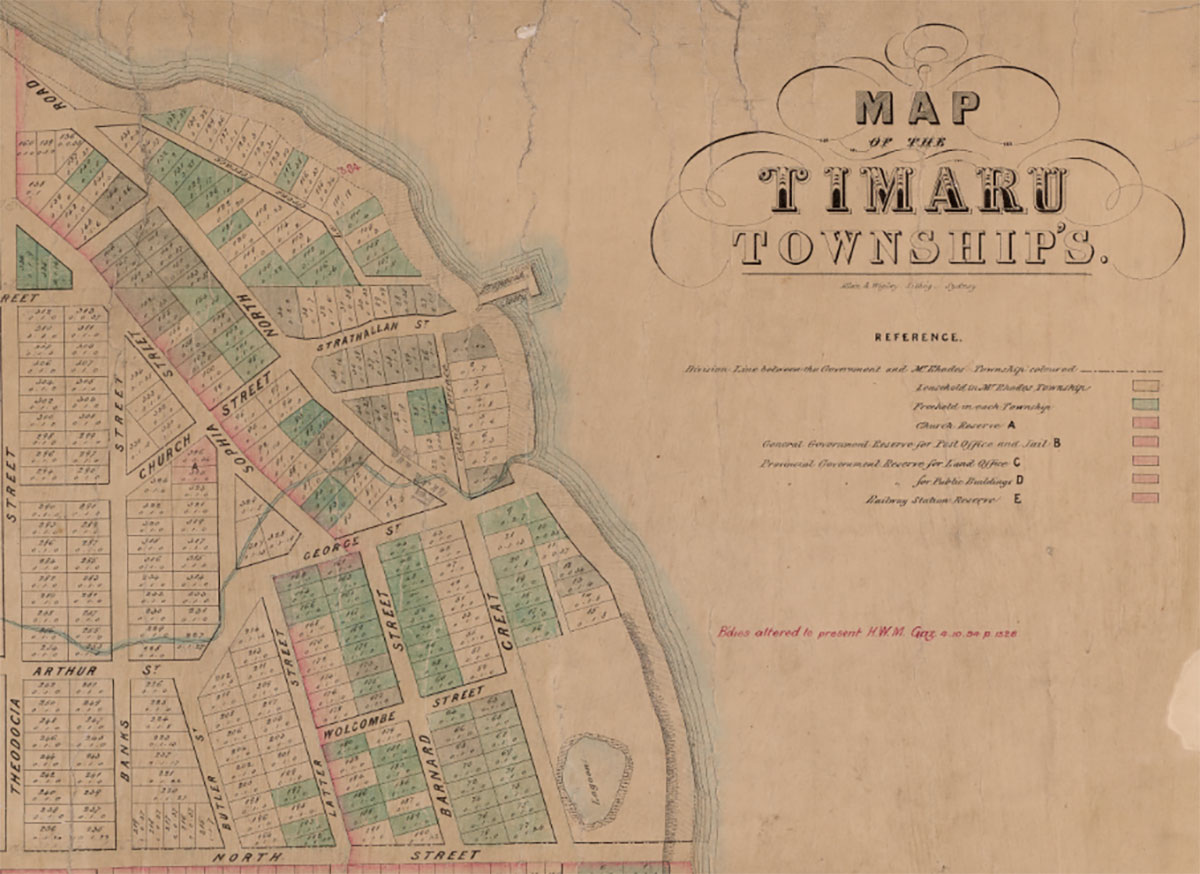
1860 Timaru town. NZ Heritage Maps Platform, https://maps.recollect.co.nz/nodes/view/1138
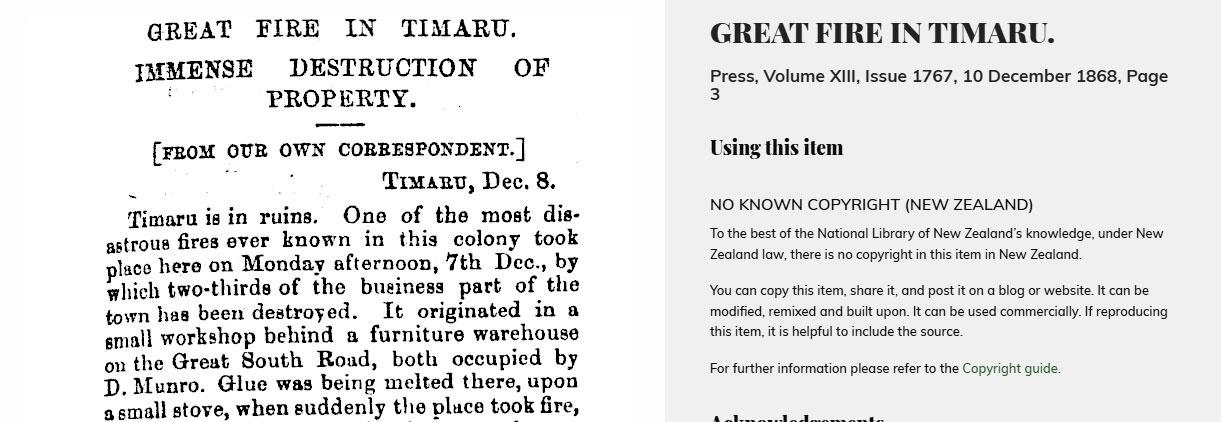
An article about the great fire of Timaru published 1868 referrs to Great South Road. GREAT FIRE IN TIMARU. Press, Volume XIII, Issue 1767, 10 December 1868, Page 3 https://paperspast.natlib.govt.nz/newspapers/CHP18681210.2.17
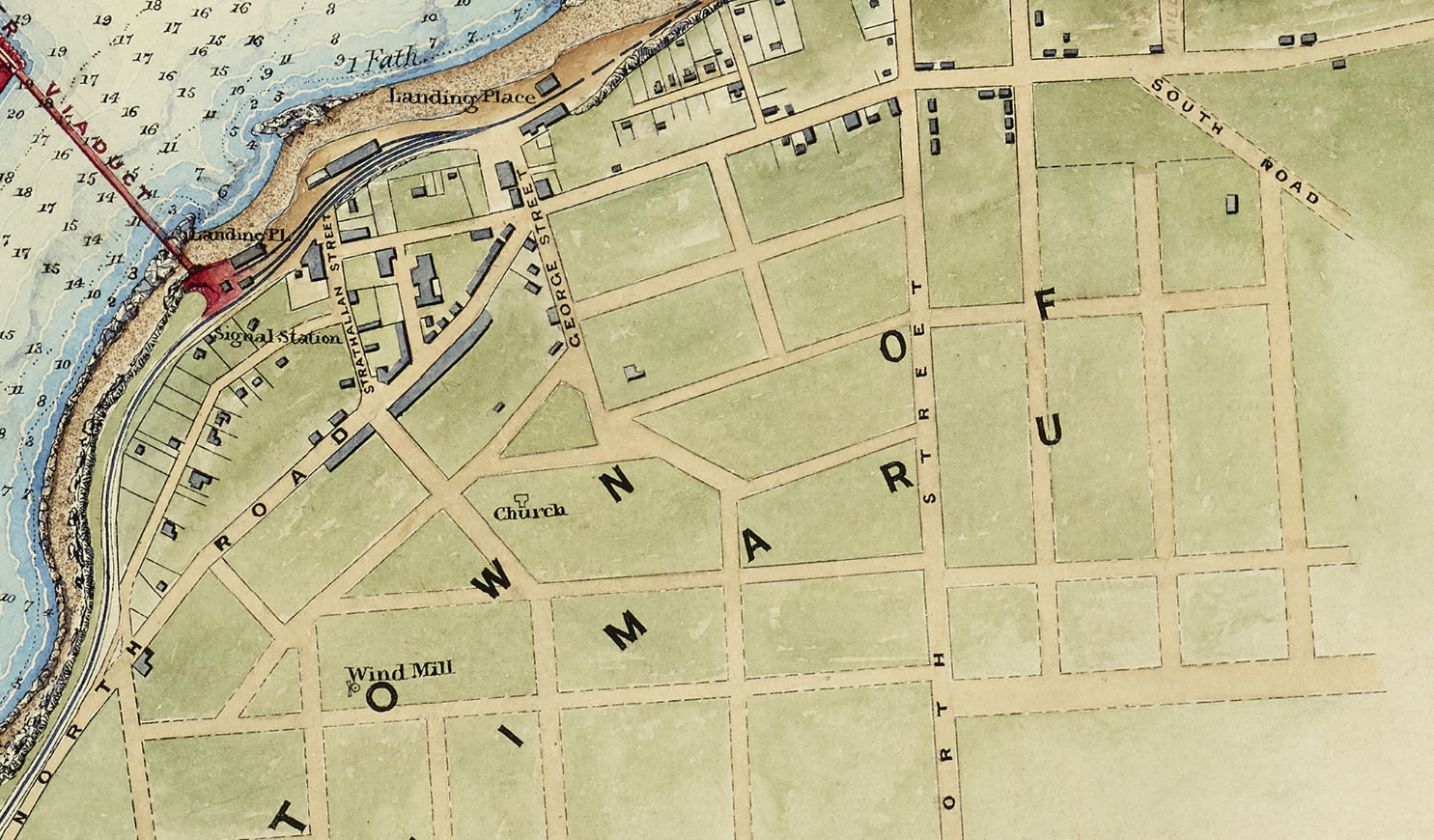
Both Great North and Great South Roads appear on this 1875 map. Timaru Foreshore. NZ Heritage Maps Platform, accessed 17/05/2026, https://maps.recollect.co.nz/nodes/view/404
Sources and further reading
Timaru District Council, Stafford Street Historic Heritage Area Assessment
https://www.timaru.govt.nz/__data/assets/pdf_file/0006/674034/Historic-Heritage-Historic-Heritage-Area-Assessment-Report-HHA1-Stafford-Street-Historic-Heritage-Area.pdf
Timaru District Council, Mana Whenua, Final Decision, 19 March 2026
https://www.timaru.govt.nz/__data/assets/pdf_file/0003/1114635/Decision-Appendix-3-16.-Mana-whenua-Final-Decision-19-March-2026.pdf
Dictionary of New Zealand Biography, Edward William Stafford, Te Ara
https://teara.govt.nz/en/biographies/1s22/stafford-edward-william
Papers Past, “Mr Stafford, M.H.R., at Timaru”, Southland Times, 3 May 1870
https://paperspast.natlib.govt.nz/newspapers/ST18700503.2.13
Te Ara, Controlling Māori affairs
https://teara.govt.nz/en/self-government-and-independence/page-4
Manatū Taonga, NZHistory, The Waitara offer
https://nzhistory.govt.nz/war/taranaki-wars/waitara-dispute
New Zealand Legislation, New Zealand Settlements Act 1863
https://www.legislation.govt.nz/act/public/1863/8/en/latest/
Manatū Taonga, NZHistory, Setting up the Māori seats
https://nzhistory.govt.nz/page/setting-maori-seats
New Zealand Parliament, Origins of the Māori seats
https://www3.parliament.nz/en/pb/research-papers/document/00PLLawRP03141/origins-of-the-m%C4%81ori-seats
Manatū Taonga, NZHistory, Native Land Court created
https://nzhistory.govt.nz/page/native-land-court-created
Te Ara, “The true object” of the Native Land Court, from the Edward Stafford Papers
https://teara.govt.nz/en/zoomify/36132/the-true-object-of-the-native-land-court
Te Rūnanga o Ngāi Tahu, Matiaha Tiramōrehu and the first formal statement of Ngāi Tahu grievances
https://ngaitahu.iwi.nz/connect-2/connect/news-and-stories/matiaha-tiramorehu-the-first-formal-statement-of-ngai-tahu-grievances-against-the-crown/
Te Rūnanga o Ngāi Tahu, Claim History
https://ngaitahu.iwi.nz/ngai-tahu/creation-stories/the-settlement/claim-history/
Dictionary of New Zealand Biography, Matiaha Tiramōrehu, Te Ara
https://teara.govt.nz/en/biographies/1t100/tiramorehu-matiaha
Waitangi Tribunal, Ngāi Tahu Inquiry, Wai 27
https://www.waitangitribunal.govt.nz/en/inquiries/district-inquiries/ngai-tahu
New Zealand Legislation, Ngāi Tahu Claims Settlement Act 1998
https://www.legislation.govt.nz/act/public/1998/0097/latest/whole.html