
By Roselyn Fauth
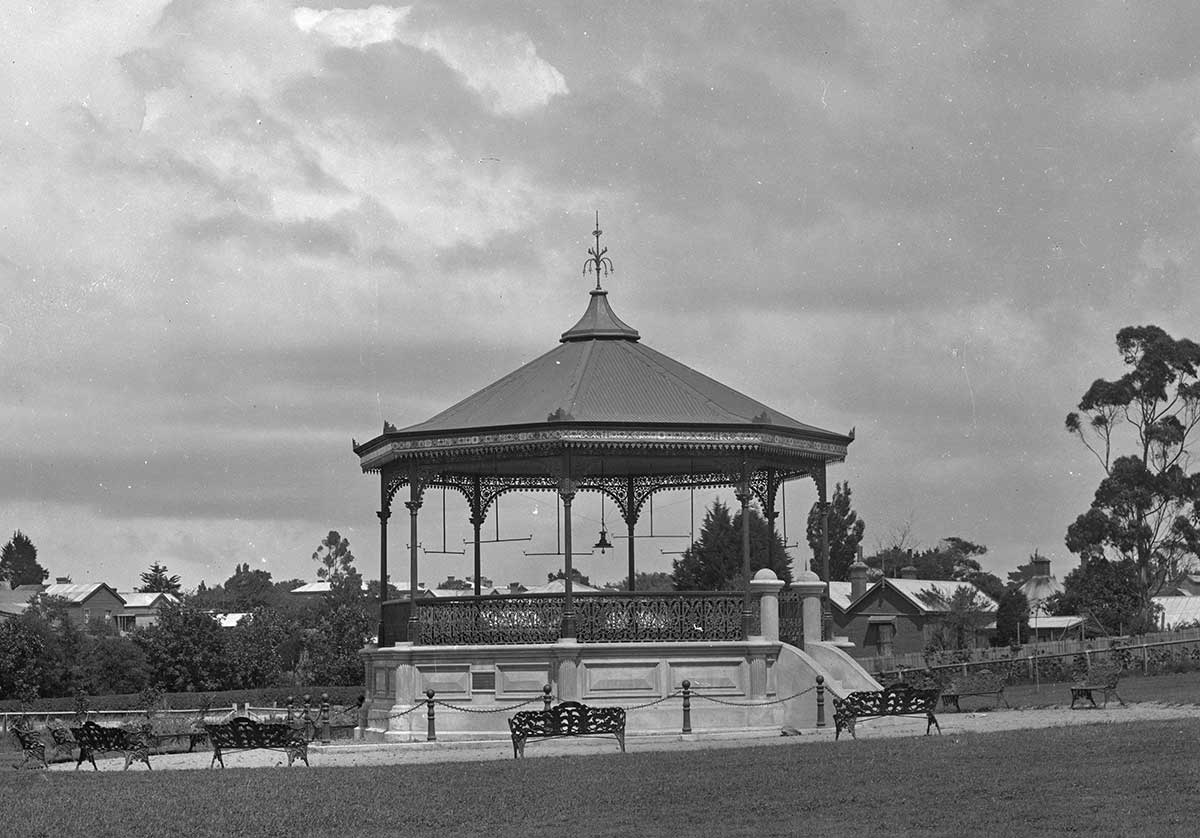
Before Timaru’s Botanic Gardens rotunda opened in 1912, the town already knew what a band rotunda could do.
In 1904, Alexandra Square gained one of its own. It stood in a civic square rather than a garden or seaside reserve, but it served the same purpose: to give public music a proper place and to give a town somewhere to gather around it. At a time when brass bands were central to civic life, that mattered.
Rotundas and bandstands were built across New Zealand in parks, domains, and reserves because live music was part of how communities marked public occasions and filled open space. Timaru once had several. Caroline Bay had one by the middle of the decade, the Botanic Gardens later gained its coronation rotunda, and Alexandra Square had an earlier example right in the town.
What makes the Alexandra Square rotunda especially interesting is that it arrived as a gift. Museum records identify it as having been gifted by Charles Bowker in 1903, with the rotunda itself opened in 1904. That act of giving says something about the period. Public embellishment was not left to councils alone. Local benefactors, beautifying groups, and civic-minded residents all helped shape the appearance of the town.
Charles Bowker, a Timaru land agent and businessman of The Pines, College Road, is identified in museum records as the donor of Alexandra Square’s band rotunda and twelve garden seats in 1903, apparently as one of Timaru’s earliest significant civic gifts of this kind.
The structure itself sounds more decorative than the later Botanic Gardens rotunda. Contemporary reporting noted the erection of its cast-iron columns and ornamental fringe, suggesting a lighter, more ornamental bandstand style. The columns were erected by Mr W. J. Palmer for the contractors Messrs Hunt and Werry. Even in those small details, you can picture the kind of structure it must have been: airy, visible, and intended to dress the square as much as serve it.
Alexandra Square itself did not stop with the rotunda. Reports in 1905 show the Timaru Beautifying Association had money earmarked for improvements there, and that work on the square included a fence around the rotunda. So the building did not stand alone. It was part of a wider effort to make the square more attractive and more obviously civic.
That is really the key to its importance. The Alexandra Square rotunda was not simply an object dropped into an empty space. It was part of a broader moment in Timaru when public places were being improved, framed, and made more ceremonial. Music was part of that, but so was appearance. A rotunda gave a square focus. It said this was a place where people might stop, listen, and take part in town life.
Unlike the Botanic Gardens rotunda, Alexandra Square’s bandstand did not survive. By the late 1920s it was already being described as unused and in decline. That makes it one of those lost pieces of Timaru heritage that survive more in postcards, reports, and memory than in timber and iron.
Even so, it still matters. The lost Alexandra Square rotunda reminds us that Timaru’s public music culture once spread across several places, not just one. It also reminds us that the town’s built heritage was shaped not only by councils, but by donors, associations, contractors, and communities who wanted public spaces to be both useful and beautiful.
That is not a bad legacy for a vanished bandstand.
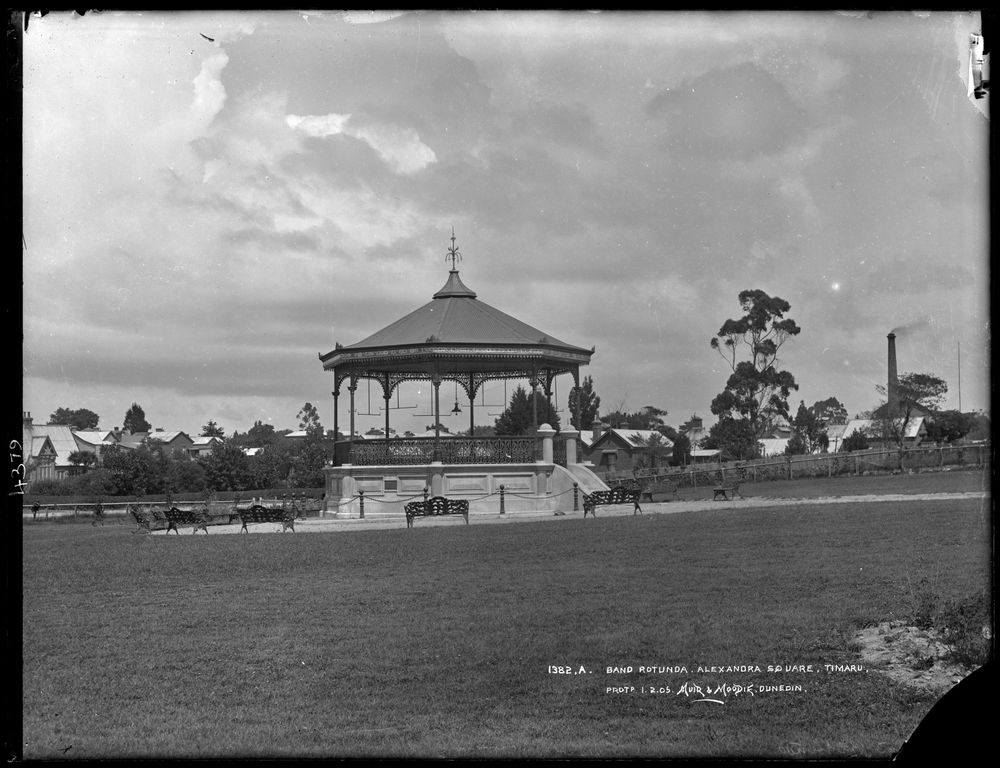
Band Rotunda, Alexandra Square, Timaru, circa 1905, Dunedin, by Muir & Moodie. Te Papa (C.014379)
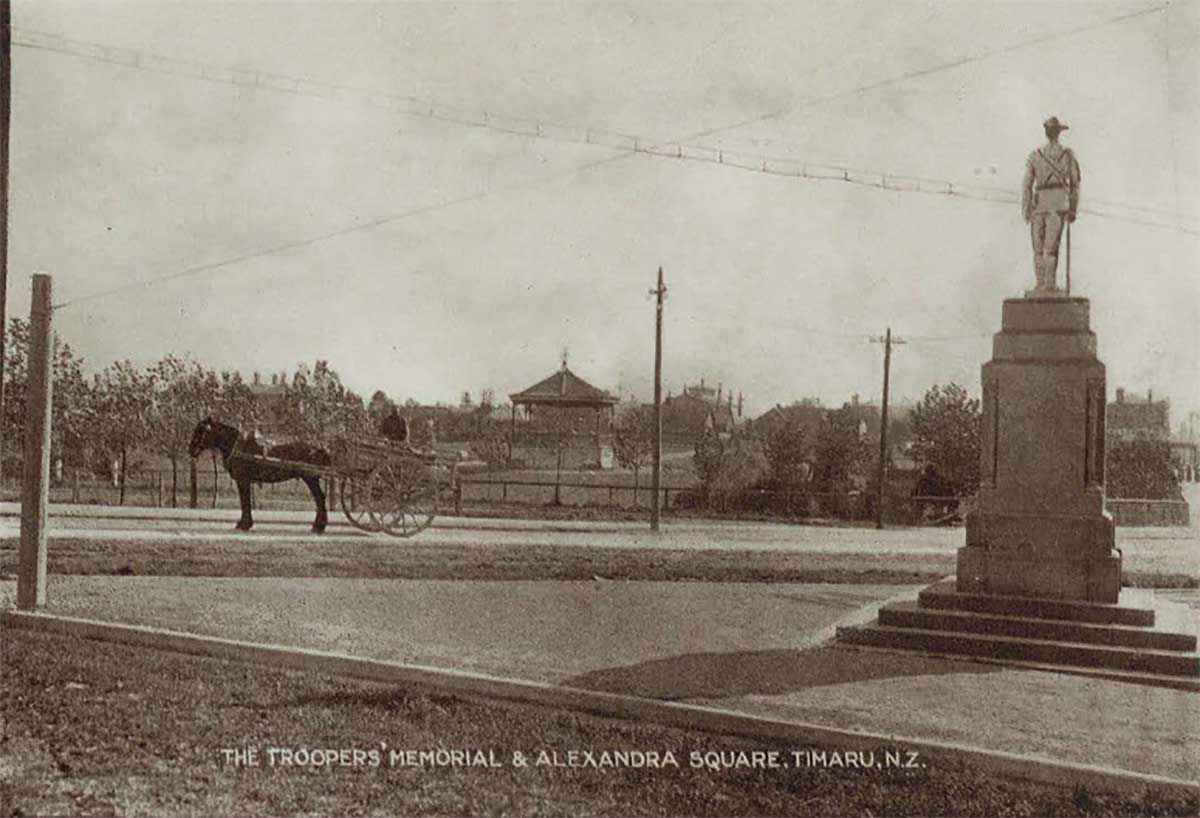
Official Guide: Timaru and surrounding districts. Aoraki Heritage Collection, accessed 10/05/2026, https://aorakiheritage.recollect.co.nz/nodes/view/8923
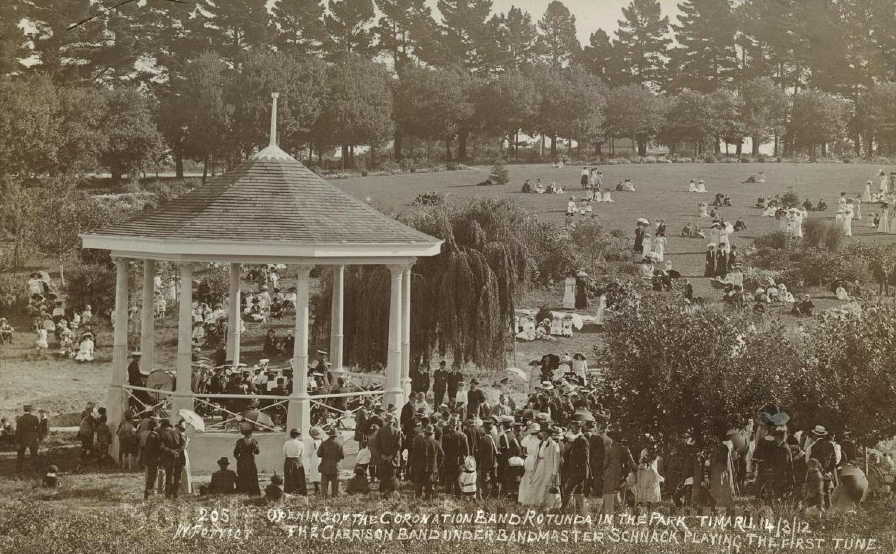
The opening of the Coronation Band rotunda in the Timaru Botanical Gardens in 14 March 1912. Crowds surrounding the rotunda watch as the Timaru Garrison Band, under Bandmaster Schnook, play the first tune. Bears a standard divided verso, postally unused, but with a brief message of good wishes.
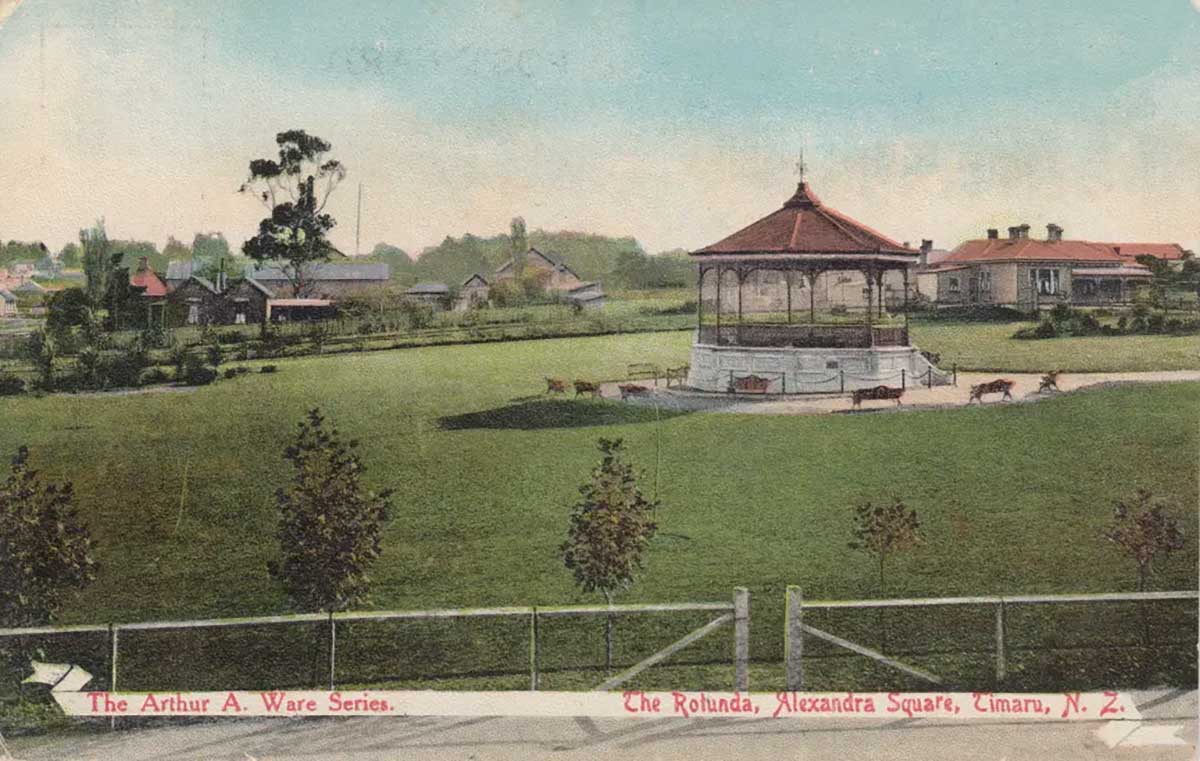
Postcard: The Rotunda, Alexandra Square, Timaru, N.Z. (date unknown). (Source: Jeremy de Korte Collection)
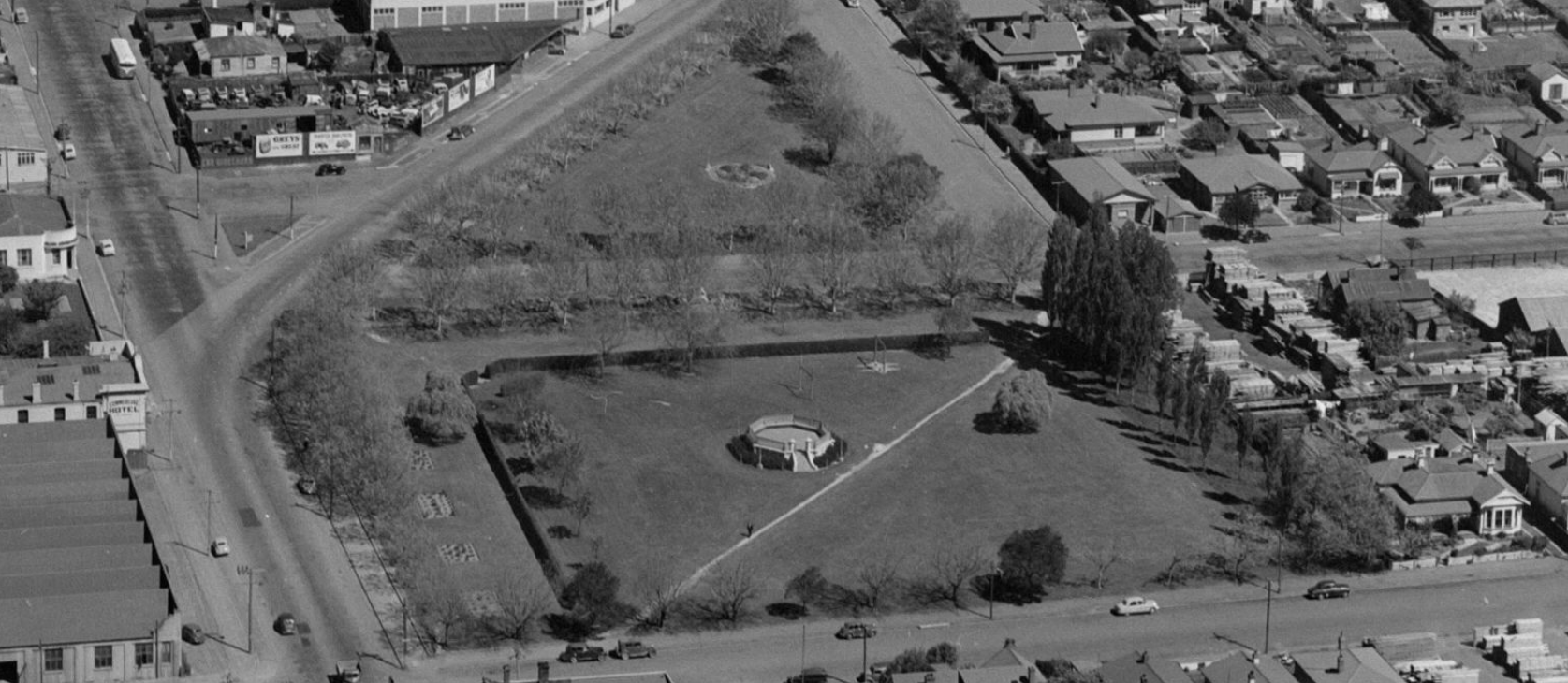
https://tiaki.natlib.govt.nz/#details=ecatalogue.711006 Alexandra Square - Oct 1956 crop from whites aviation survey photo