
By Roselyn Fauth
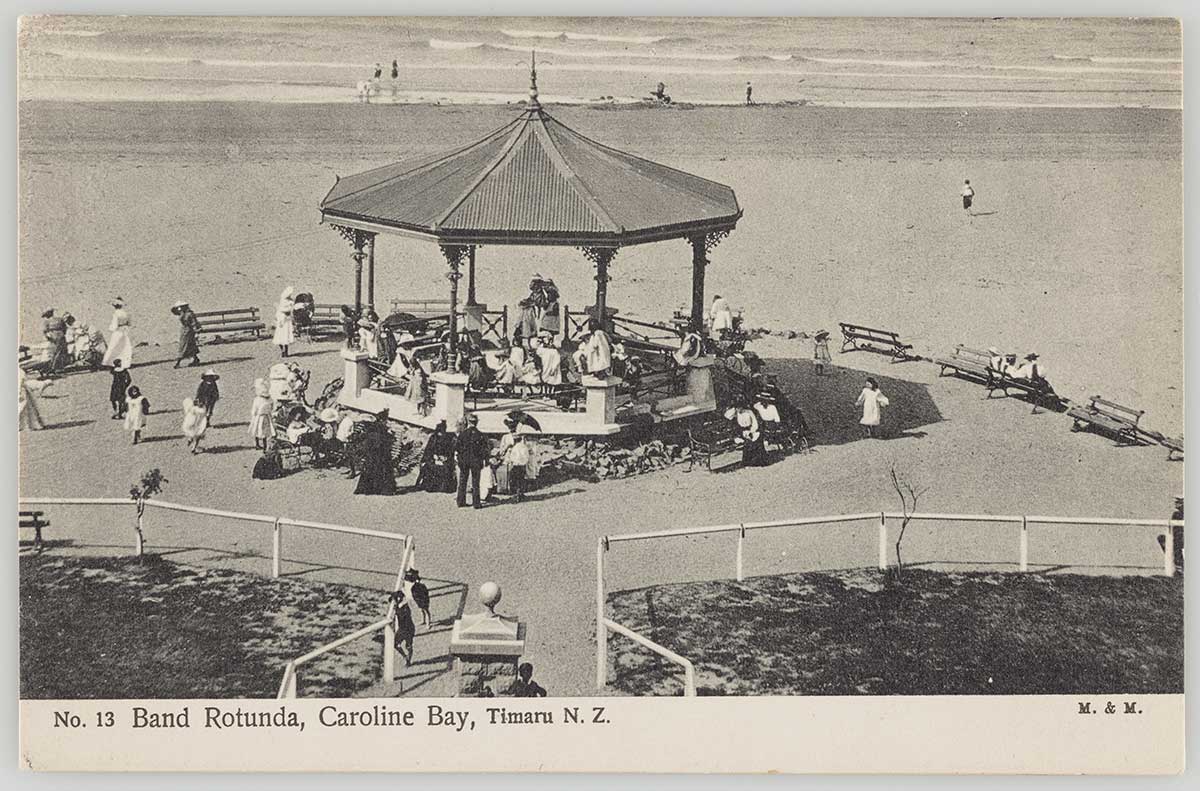
Band Rotunda, Caroline Bay, Timaru, New Zealand, 1904-1915, Timaru, by Muir & Moodie. Purchased 1998 with New Zealand Lottery Grants Board funds. Te Papa (PS.001047)
Before the sound shell, Caroline Bay had an earlier musical landmark. A band rotunda opened there in 1904, at a time when Timaru was deliberately reshaping the bay into a public resort. After harbour works created a sandy beach beneath the cliffs, the Borough Council leased the foreshore in 1902 and began turning Caroline Bay into a more formal recreational place. The rotunda was part of that wider transformation.
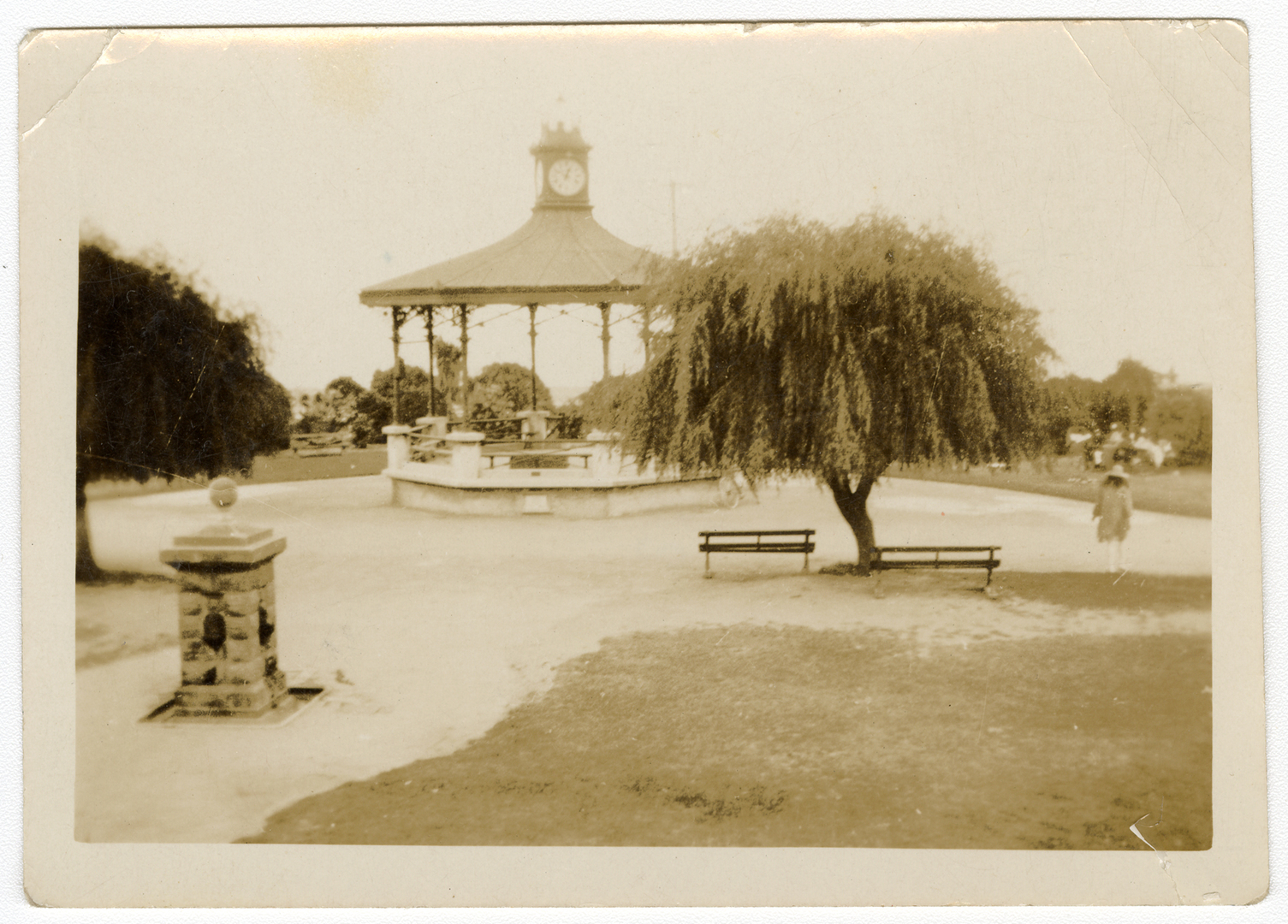
Band Rotunda at Caroline Bay 4264 - Christchurch Star archive. Archive 1072. Copy prints. Arch 1072/1/2/1 https://www.canterburystories.nz/collections/star/prints/1900-1939/ccl-cs-4264
"The four-faced clock, which was erected on the Band Rotunda in 1915 cost £191.8s.8d, and this was raised by private subscription, thanks to the energy and interest of Major A.W Wright and the late Dr Thomas. It was ordered from Scotland through Messrs Bower and Ferguson, Jewellers, of Timaru, and was given to the CB.A. free of charge, with the Borough Council being obliged to see that it was lighted at night." - Doug Shears, Tales of South Canterbury. Vol. 1 : Caroline Bay . Aoraki Heritage Collection, https://aorakiheritage.recollect.co.nz/nodes/view/8179
Band rotundas were once familiar features in parks, domains, and seaside reserves across New Zealand. They gave brass and civic bands a proper place to play and gave the public somewhere to gather around music in the open air. Caroline Bay’s rotunda belonged to that wider tradition, but in Timaru it also signalled something more specific: the bay was being developed as a civic pleasure ground, not left as an informal stretch of sand.
A Timaru Herald report in November 1905 explained that the Borough Council had borrowed and spent £2,500 on Caroline Bay improvements and another £200 on the bathing sheds. It then added that the band rotunda and seats, subscribed privately, cost £425, while the Beautifying Society spent a further £160. So the rotunda itself was not simply a council work. It sat within a broader improvement scheme, but was paid for by private subscription.
Heritage assessments describe the Timaru Borough Council and the Beautifying Association as erecting the band rotunda in 1904, then adding the caretaker’s cottage and tearooms in 1905 to improve the bay’s amenities. In other words, the rotunda belonged to a larger campaign of civic beautification, with council borrowing, private giving, and voluntary effort all playing a part.
Unlike the later Botanic Gardens rotunda, I have not found a clearly named architect or builder for the Caroline Bay structure in the sources checked so far. What does come through strongly is its role in the life of the bay. Early views show it as a light, open pavilion with music at its centre and the beach behind it. It gave Caroline Bay a focus and helped turn public entertainment into part of the landscape itself. This was one of the first built signs that the bay was becoming the seaside place Timaru still treasures.
The original rotunda did not survive. In 1937 it was replaced by the sound shell, which reflects changing expectations about performance and public entertainment. Even so, the lost rotunda deserves to be remembered. It was part of the earliest phase of Caroline Bay’s improvement, and it shows that Timaru’s built heritage was shaped not only by councils, but by subscribers, beautifying groups, and communities prepared to invest in public life.
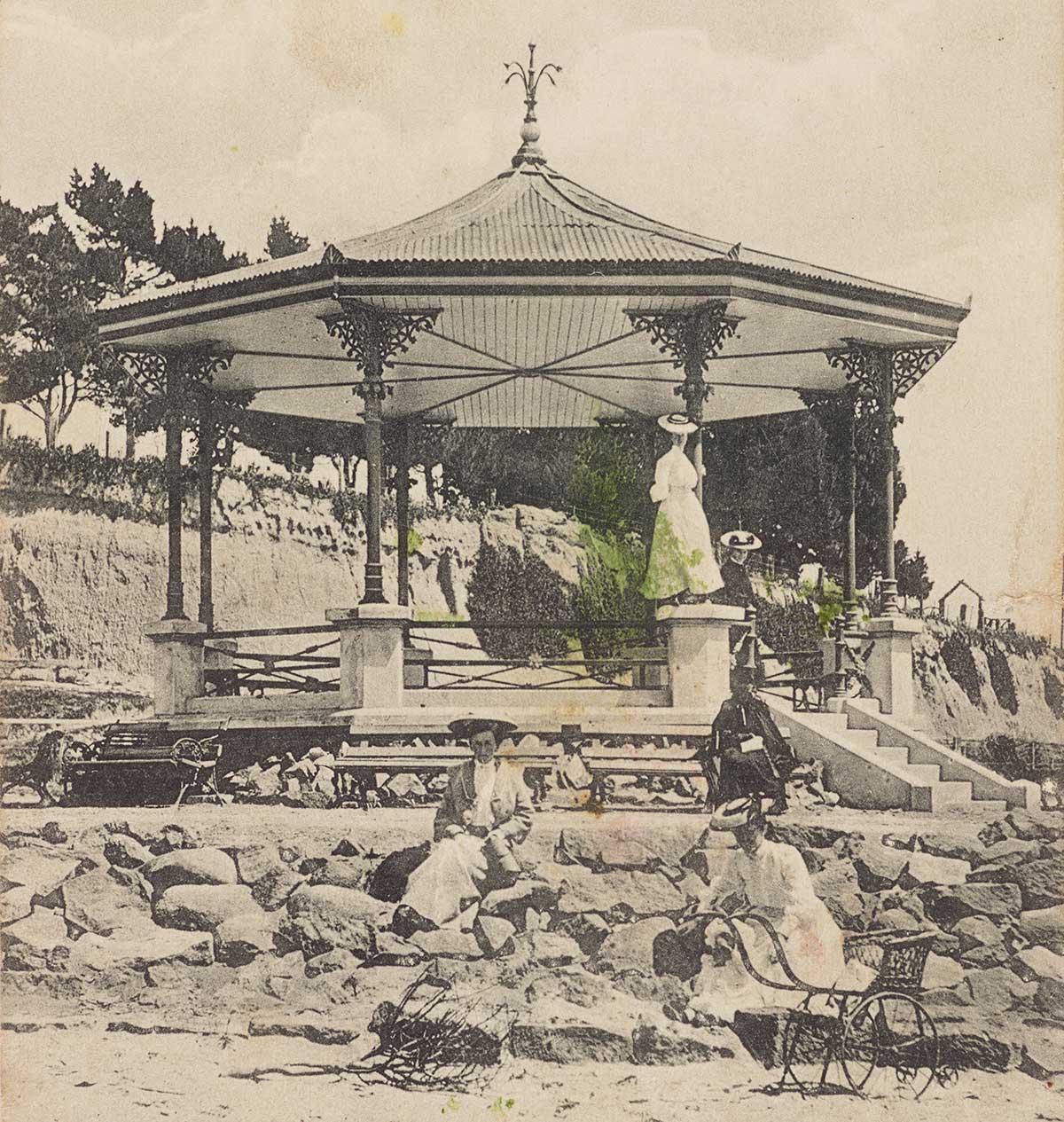
Band Rotunda, Timaru Esplanade, New Zealand, 1904-1915, Timaru, by Muir & Moodie. Purchased 1998 with New Zealand Lottery Grants Board funds. Te Papa (PS.002378)
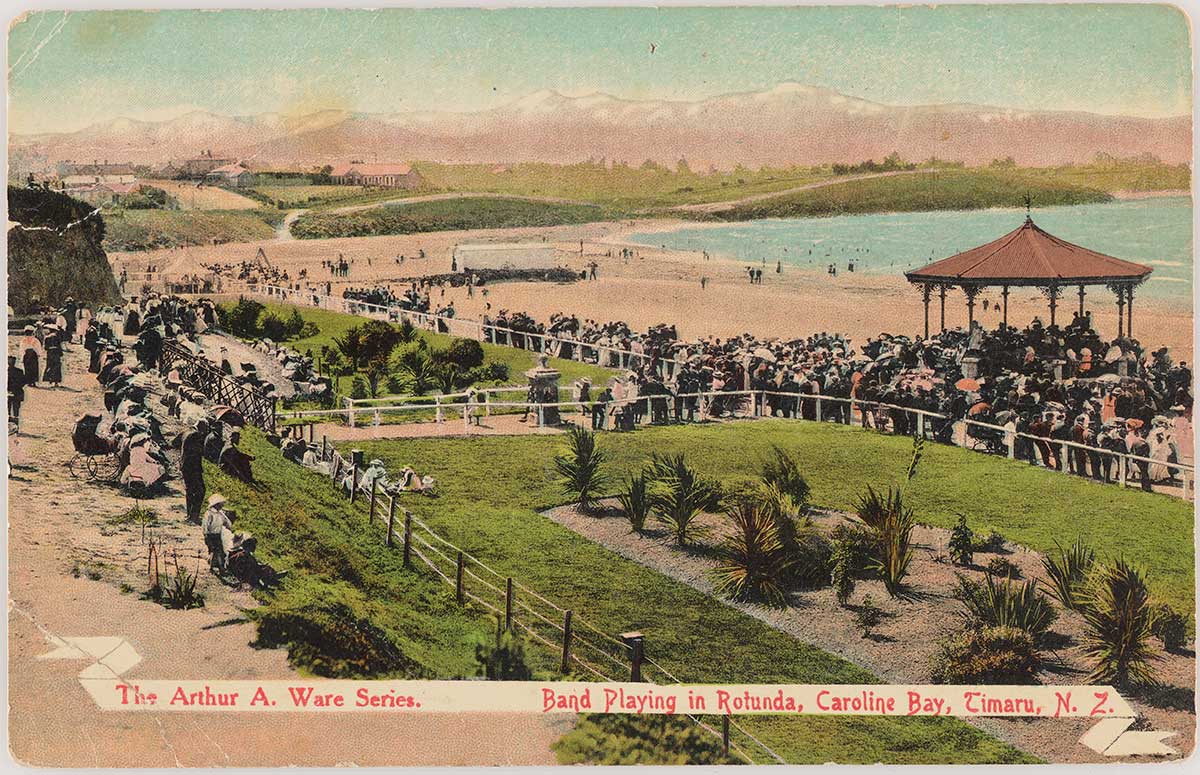
Band playing in rotunda, Caroline Bay, Timaru, New Zealand, 1903-1907, by Arthur A. Ware Company. Purchased 1998 with New Zealand Lottery Grants Board funds. Te Papa (PS.002468)
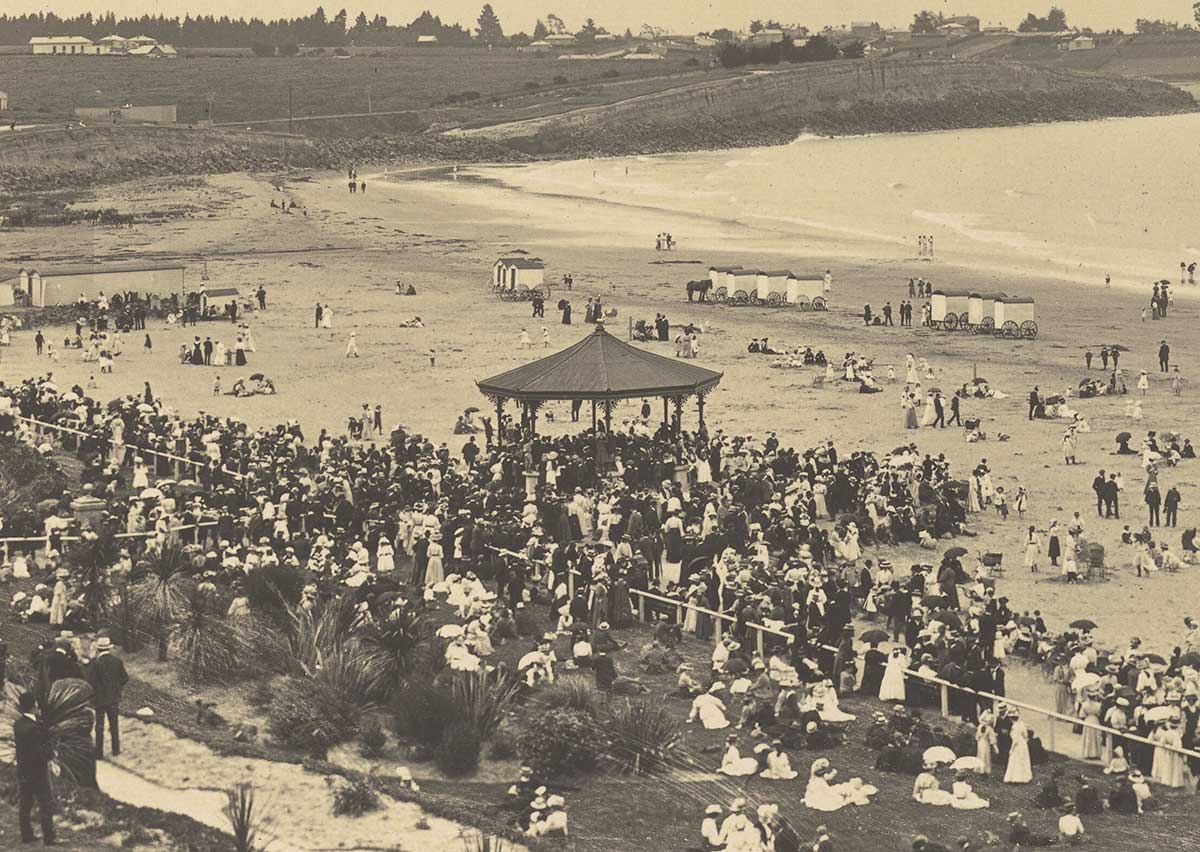
Caroline Bay, Timaru, seaside resort, circa 1910, Timaru, by William Ferrier. Te Papa (O.051440)
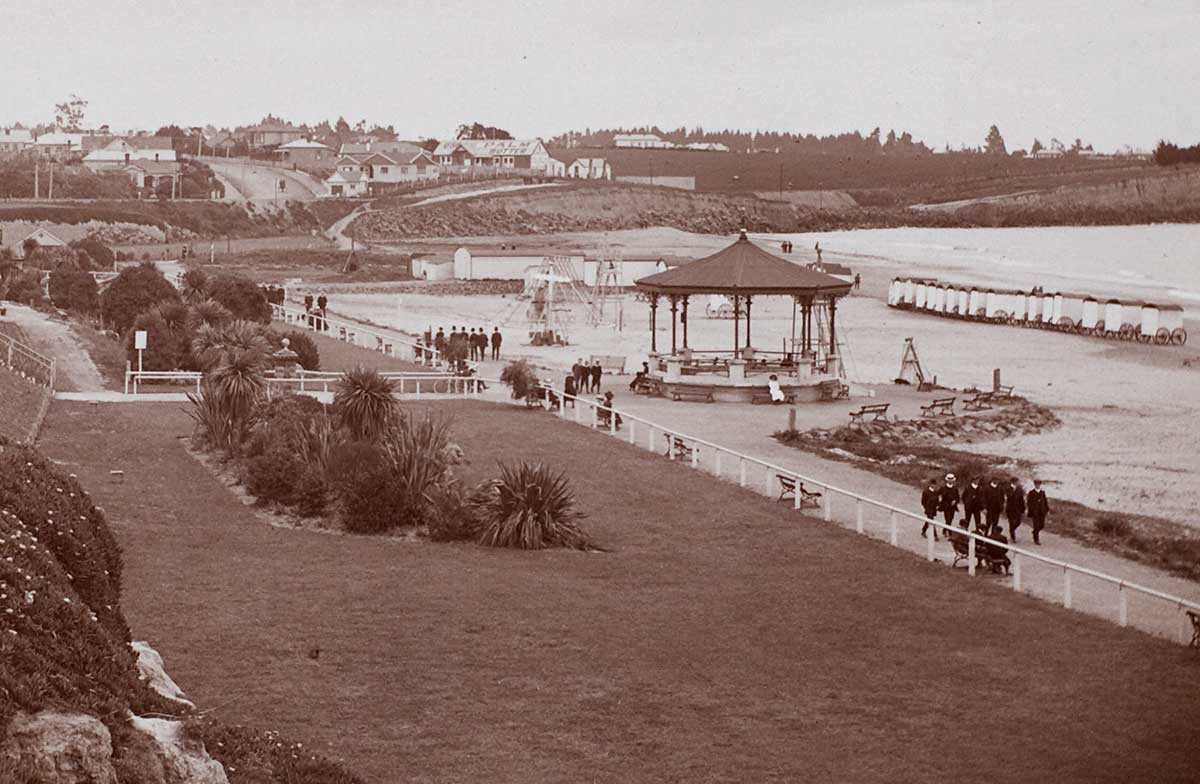
Section of a photo of the beach at Timaru, Timaru, by Burton Brothers. Te Papa (O.019251)
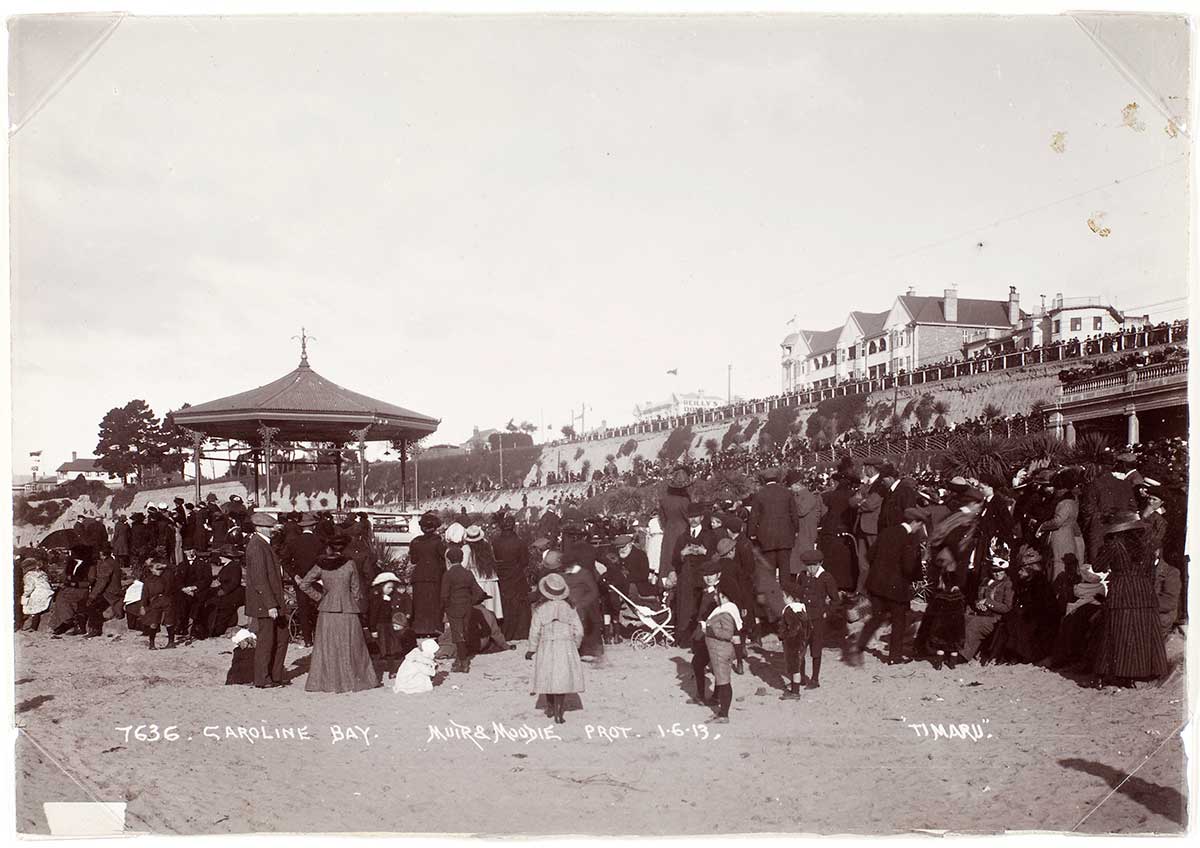
Caroline Bay, Timaru, 1913, Dunedin, by Muir & Moodie. Te Papa (O.001836)
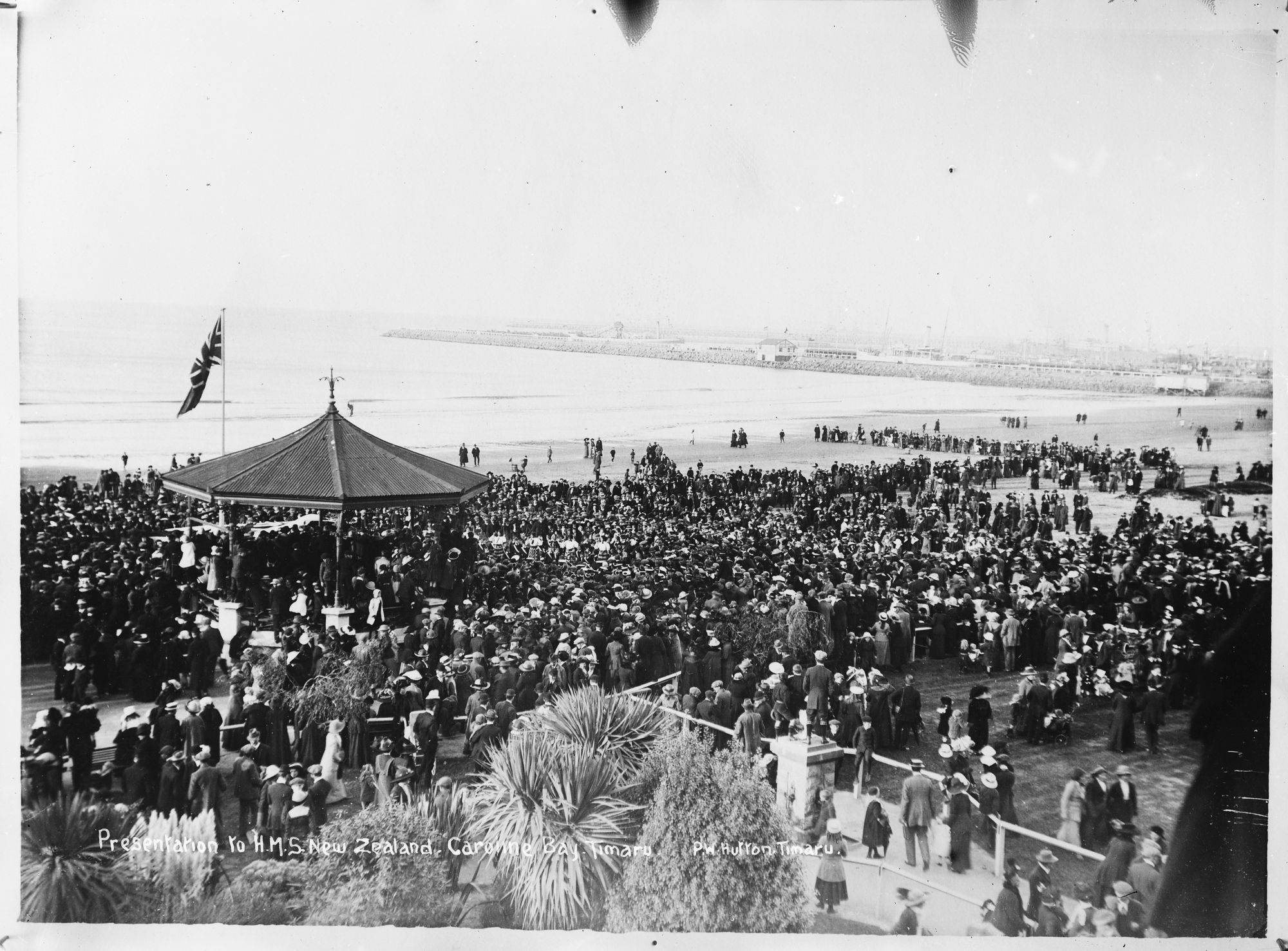
A large crowd gathered around the band rotunda at Caroline Bay during the 1910s for a presentation connected with HMS New Zealand. Flags decorate the scene as people assemble across the grounds surrounding the rotunda.
P. W. Hutton & Co., Presentation to HMS New Zealand, Caroline Bay, Timaru, c.1910–1919, black-and-white half-plate glass negative, Radcliffe Collection. Source: Auckland Libraries Heritage Collections, Radcliffe Collection, record 35-R1499.
Photographer: P. W. Hutton & Co., Timaru. Copyright: No known copyright restrictions.