
By Roselyn Fauth
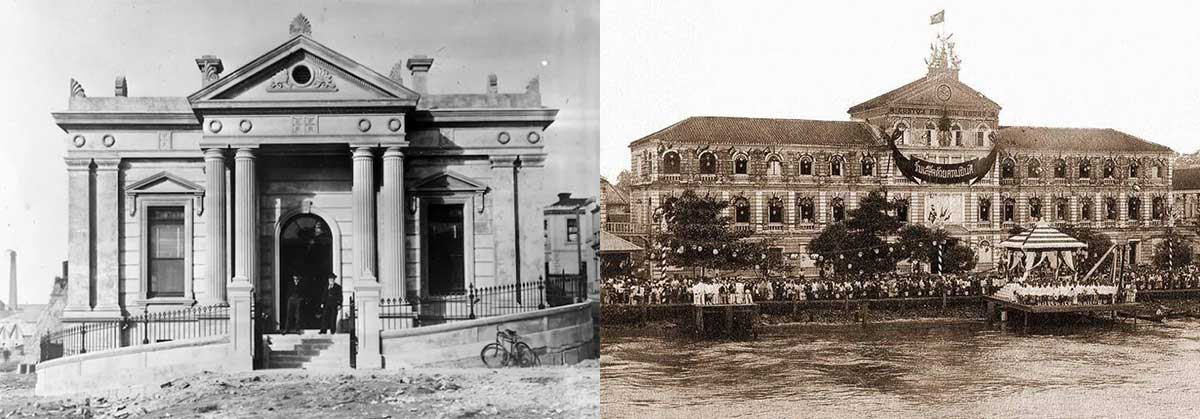
It began with a building, a restaurant refit and a tempting question... Timaru’s former Customhouse is preparing for a new life as a Thai restaurant. Could there already be an old connection between this building and Thailand? Had rice, spices or other goods from Siam, as Thailand was then known internationally, once entered Timaru through the port?
I went looking for a ship from Bangkok, and I haven't found one, but instead, the trail led through London, Newcastle, Colombo and Singapore, into the grocery shops of Stafford Street and eventually to another remarkable Customhouse on the bank of Bangkok’s Chao Phraya River.
What emerged was a much bigger story...
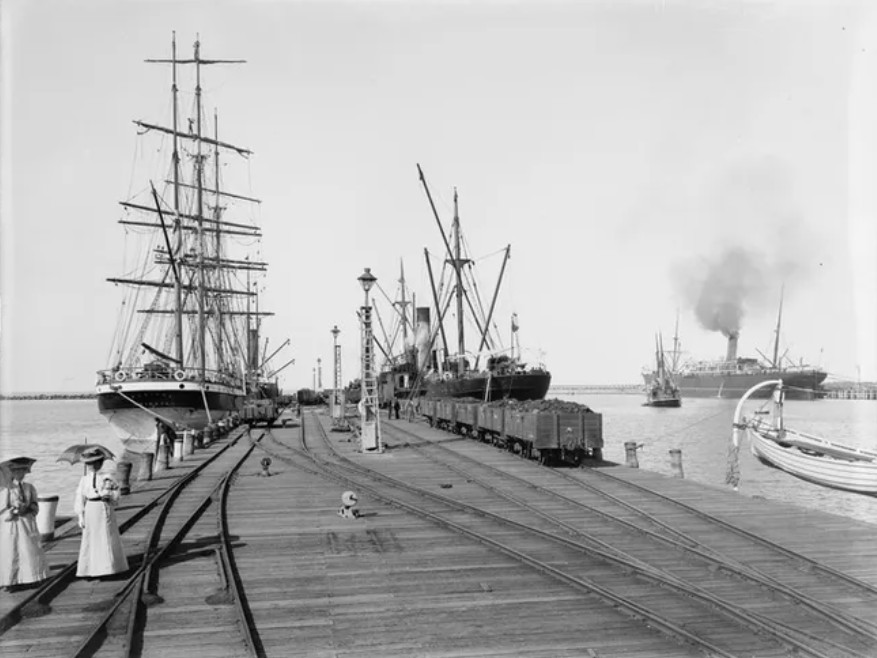
Timaru, showing wharves with ship Pleione alongside; filled railway carts and women holding umbrellas. The Press (Newspaper) :Negatives. Ref: 1/1-009868-G. Alexander Turnbull Library, Wellington, New Zealand. /records/29943094
Timaru and Bangkok each built a grand classical Customhouse where their communities met the wider world. More than a century later, both buildings are being given new life through hospitality a shared history of ports, architecture, adaptation and arrival.
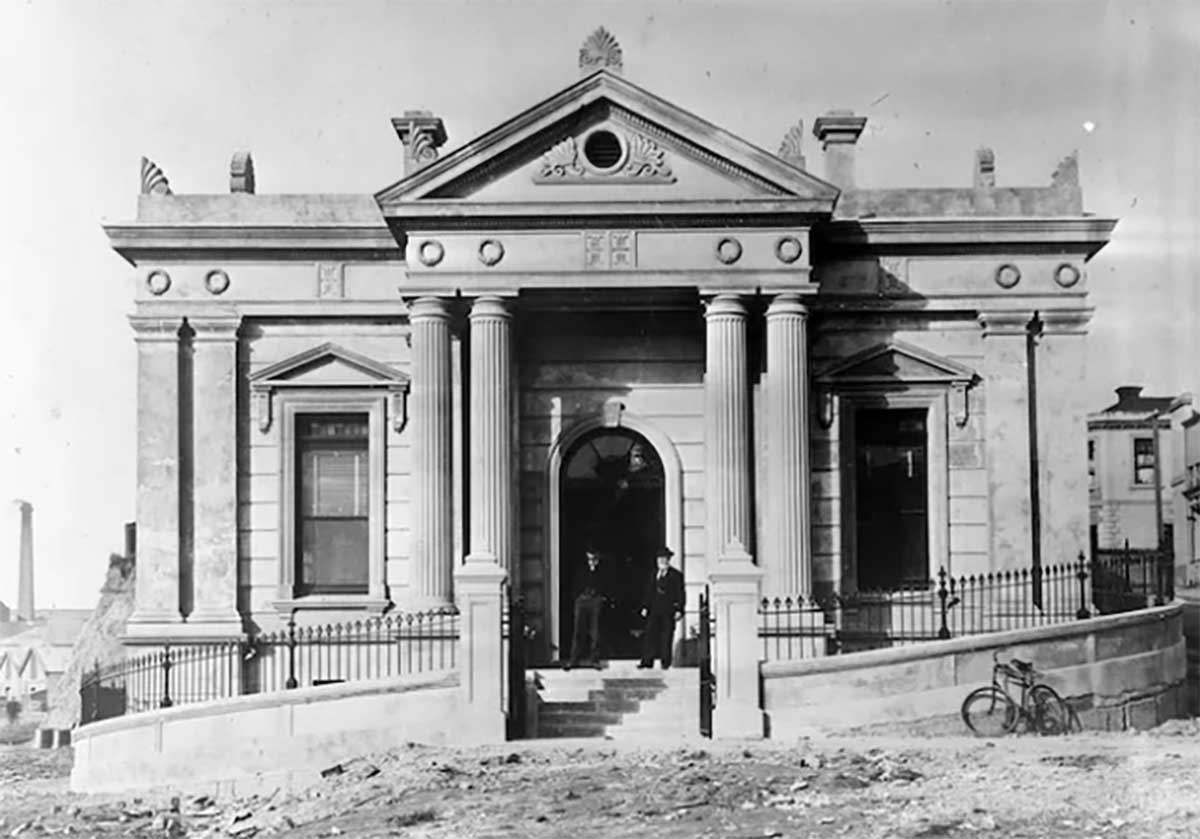
Timaru’s new Customhouse shortly after its completion in 1902. Designed by local architect Daniel West, the Neoclassical building stood close to the harbour and railway, where Customs officers administered the paperwork, valuations and duties associated with international trade. Image source: Alexander Turnbull Library, Wellington. Reference: 1/2-044242-F. https://natlib.govt.nz/records/22314180 Copyright and credit note: Photograph: Alexander Turnbull Library, Wellington, New Zealand, reference 1/2-044242-F. Photographer unknown. Permission from the Alexander Turnbull Library must be obtained before reuse.
A building where Timaru met the world
Timaru’s Customhouse was constructed in 1901–02 and opened in August 1902. Designed by local architect Daniel West, it was an ornate Neoclassical building intended to express order, permanence and government authority.
Its position was deliberate. It stood at the eastern end of Strathallan Street, close to both the harbour and railway station. Customs officers needed to be near the shipping agents, merchants, railway workers and port activity associated with goods moving in and out of South Canterbury.
The Customhouse was not a warehouse and the tea chests, sacks of grain and cases of imported goods were usually handled on ships, wharves, railway wagons and in commercial stores.
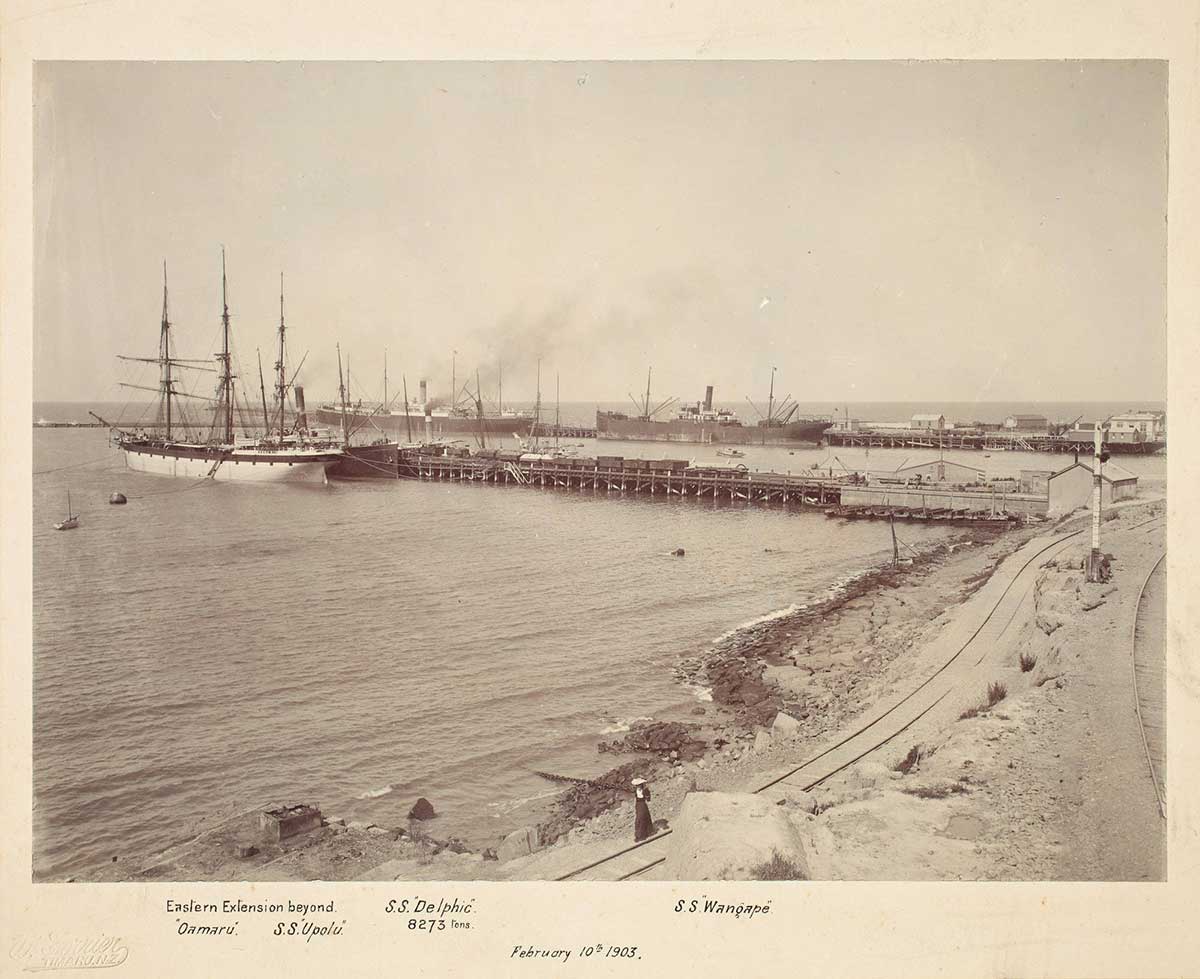
Timaru Harbour in 1903, one year after the new Customhouse opened. The vessels Oamaru, Upolu, Delphic and Wangape are berthed beside the wharves, with railway lines in the foreground. The scene shows how closely Timaru’s port and rail systems worked together. Image source: Auckland Libraries, Kura Heritage Collections Photographer: William Ferrier Date: 10 February 1903. Original collection page: https://kura.aucklandlibraries.govt.nz/digital/collection/photos/id/320063 Copyright and credit note: Photograph by William Ferrier, 1903. Auckland Libraries Heritage Collections.
What moved through the Customhouse was information.
Officers dealt with declarations, valuations, duties, entries and clearances. Each page of paperwork represented something physical being grown, mined, manufactured, packed, shipped, purchased or sold.
The building was Timaru’s administrative doorway to international trade. So, where did that doorway lead?
London: wool, wheat and one piano
One of Timaru’s strongest direct connections was with London.
On 29 January 1901, as the new Customhouse was being planned, the barque Criffel sailed from Timaru for London.
Its cargo included:
6,148 bales of wool and skins
4,831 sacks of wheat
one piano
The wool and grain belonged to the familiar economy of South Canterbury’s farms, stations and grain stores.
The piano is harder to explain... one mysterious piano sitting among thousands of bales and sacks, bound across the world.
The Criffel sailed before the new building opened, but its cargo represents the international commerce the Customhouse was constructed to serve.
Produce from South Canterbury was being gathered at Timaru and shipped to one of the world’s largest commercial centres.
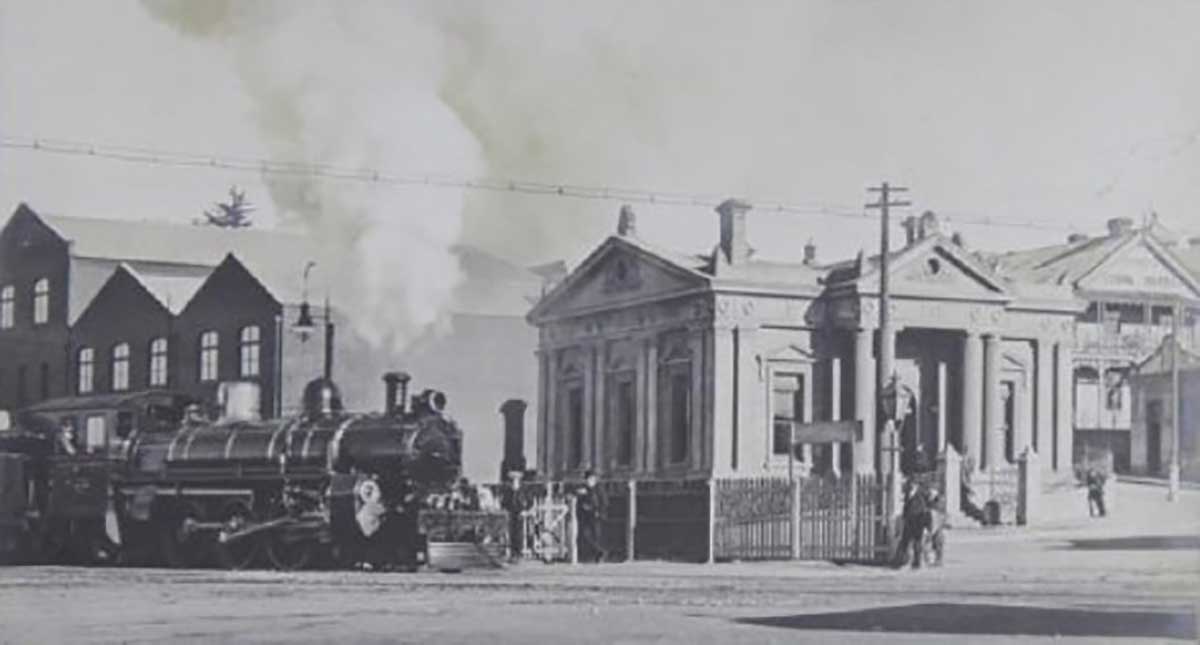
Railway locomotive next to the Customhouse at Timaru p13 1910-1920 South Canterbury Museum 3873
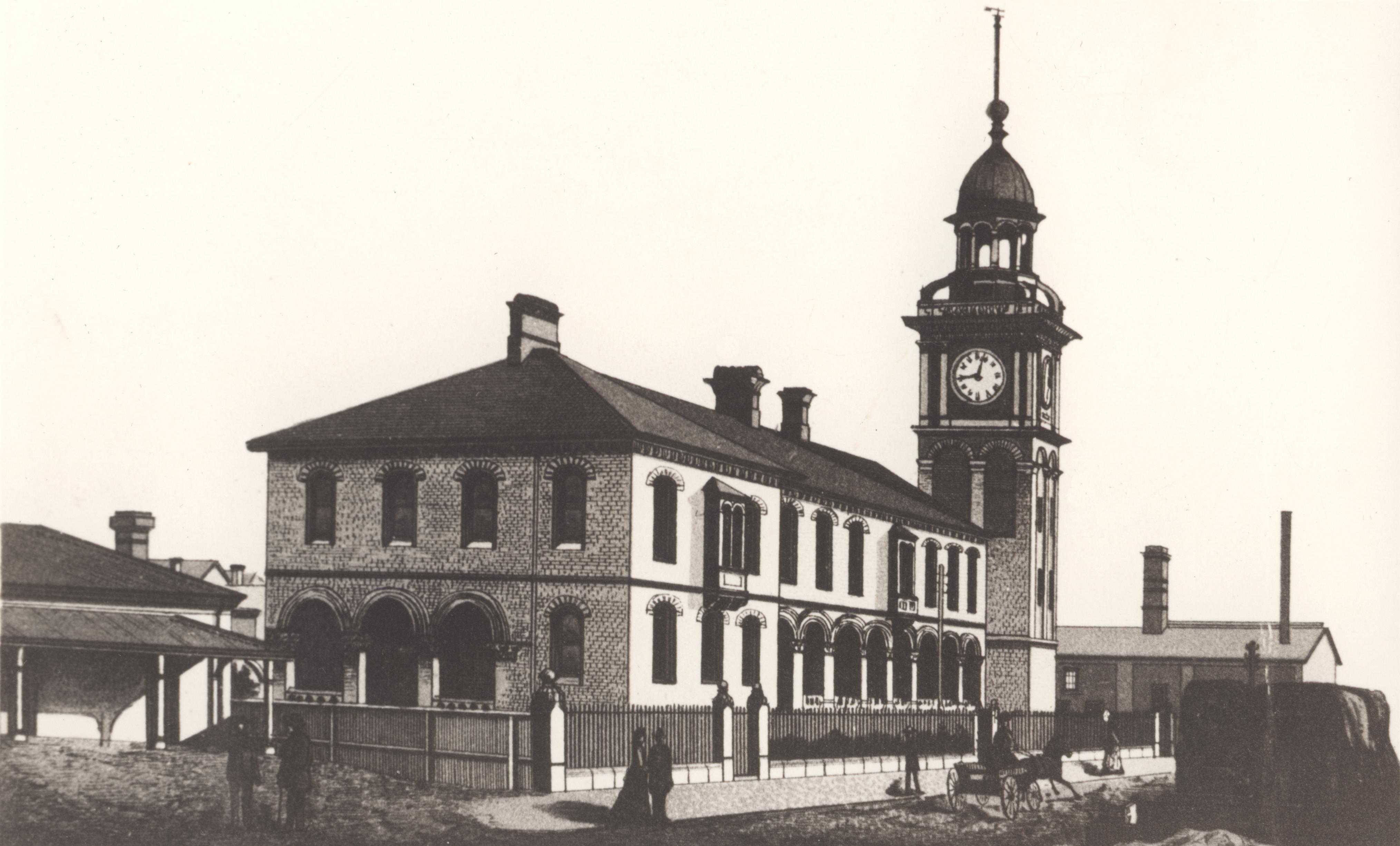
Custom House, Newcastle, NSW, Australia [c.1900], [A8804-P0262(a)]. Living Histories, accessed 21/07/2026, https://livinghistories.newcastle.edu.au/nodes/view/19183
Newcastle: coal across the Tasman
Another route crossed the Tasman Sea to Newcastle in New South Wales. In September 1902, the La Bella left Newcastle carrying coal for Timaru. The steamship Rotokino was also expected from Newcastle with a coal cargo.
These ports represented very different landscapes.
Timaru served a district of farms, flour mills, freezing works, grain stores and pastoral runs. Newcastle was an industrial port shaped by the coalfields surrounding it.
Coal imported from Australia helped power transport, industry and commercial life in South Canterbury.
The Customhouse therefore connected Timaru not only to distant markets for its own produce, but also to the resources the district needed to keep working.
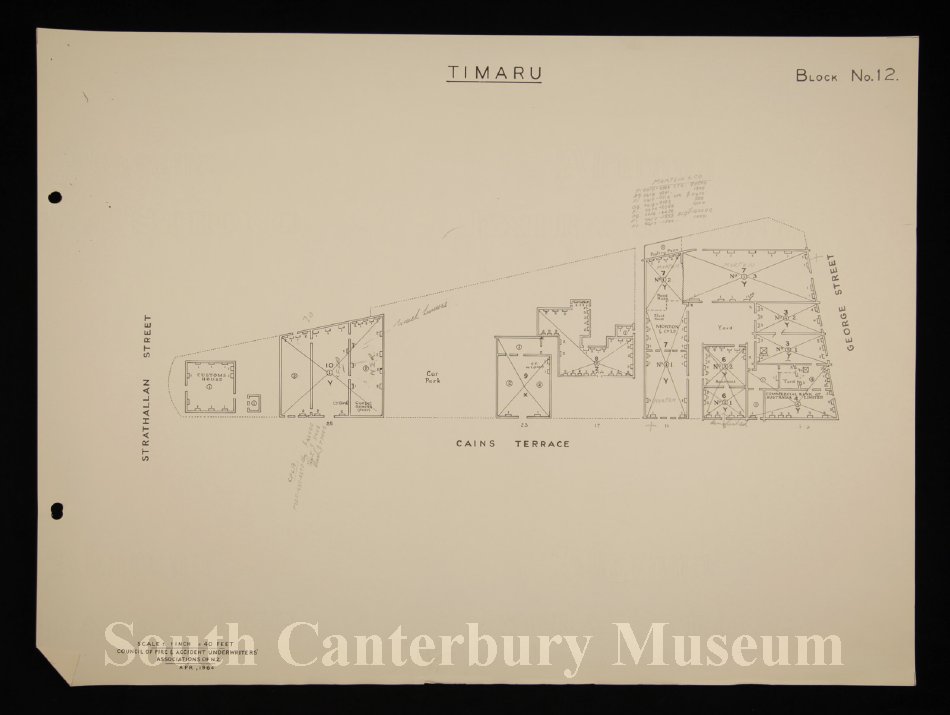
Fire and Accident Underwriters Association : block plans, Timaru and Waimate - South Canterbury Museum https://timdc.pastperfectonline.com/archive/4F12AB13-3F56-4BAE-9E14-145025062100
Colombo: tea packed for Timaru
The clearest Asian food trail discovered so far leads to Colombo, in what was then Ceylon and is now Sri Lanka.
In 1901, Timaru firm Tyrrell, King & Co advertised itself as the local agent for Nirvana Tea. The advertisement said the tea was selected from mountain estates in Ceylon and packed in sealed lead packets at Colombo for shipment around the world.
Now I am picturing in my mind, the journey of tea leaves that were grown and picked on estates in the hills of Ceylon, processed, packed and sealed at Colombo and then entering an international shipping network to eventuate in packets for sale in Timaru.
In August 1902, the same month the new Customhouse opened, the Timaru Customs return recorded £13 11s 8d collected in duty on imported tea. The return does not identify Nirvana Tea or Tyrrell, King & Co, so we cannot connect the advertisement to that particular Customs entry, but it does confirm that tea was among the overseas goods being administered by Timaru Customs.
A cup poured in a Timaru kitchen could begin with leaves grown thousands of kilometres away.

Timaru circa 1904 Dunedin by Muir and Moodie Te Papa C014423 - section of photo
Singapore, Japan, Greece and Britain
Early in 1902, Tyrrell, King & Co placed another revealing advertisement.
It said the business had arranged substantial indent orders involving Singapore, Japan, Greece, Liverpool, London and a place printed as “Columbia”.
The goods listed included tinned pineapple, rice, currants, tinned fish and several kinds of preserved herring.
It is tempting to pair the places and products in sequence. Perhaps the pineapple came from Singapore, the rice from Japan and the currants from Greece.
The advertisement does not say that clearly, so we cannot safely assign each product to a particular country or port. “Columbia” also remains uncertain. It may refer to a place, company or product name that has not yet been identified.
What the advertisement does prove is that a Timaru merchant was participating in a supply network extending across Asia, the Mediterranean and Britain.
The shelves of an Edwardian grocery shop in Stafford Street were small maps of the world.
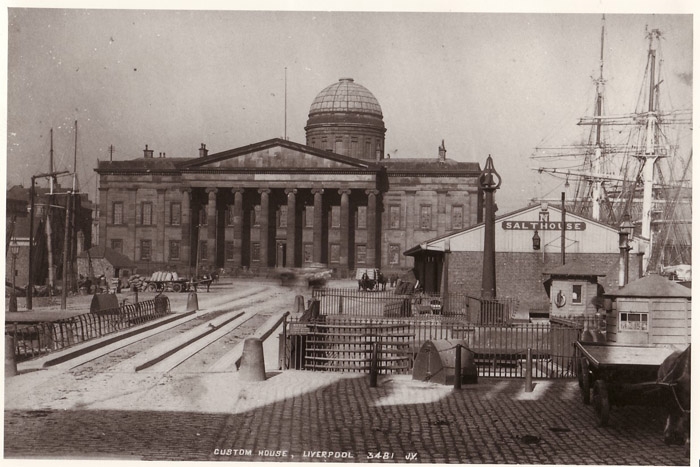
Liverpool’s Old Customs House, seen from near Albert Dock. It was a vast port building on the site of Liverpool’s first dock. It was badly damaged during the Second World War and later demolished, so historic photographs are now especially valuable.
Not every journey was direct
Goods sold in Timaru did not always arrive on a ship sailing directly from the place where they had been grown or manufactured.
A consignment could pass through Singapore, Sydney, Melbourne, Auckland, Wellington, Lyttelton or Dunedin before being transferred to a coastal vessel.
By the time it reached Timaru, the newspaper shipping report might describe it only as “general cargo” or “miscellaneous cargo”.
That is why tracing one sack of rice back to the field where it was grown can be surprisingly difficult.
The final ship does not necessarily reveal the beginning of the journey.
Timaru’s Customhouse therefore connected the town with both distant overseas centres and a chain of closer stepping-stone ports. Goods, documents and payments moved through a system rather than along one neat line on a map.
Following the rice trail towards Siam, my history hunt began with Thailand.
When Timaru’s Customhouse opened, Thailand was commonly known internationally as Siam. Bangkok, positioned on the Chao Phraya River, was the kingdom’s main commercial gateway and the centre of its expanding rice-export trade.
Singapore was an important market and redistribution point for rice exported from Siam.
This makes a journey such as the following historically credible:
Rice grown on the central plains of Siam travelled downriver towards Bangkok.
It was milled, traded and loaded for export.
Some shipments went to Singapore, where goods from across Asia were stored, bought, sold, repacked and sent onwards.
From there, rice could enter trading networks extending towards Australia and New Zealand.
We know Timaru merchants were dealing with Singapore. We also know rice was being sold in Timaru.
What we have not found is the final piece of evidence. No Customs entry, cargo manifest, invoice or shipping notice located so far names a shipment of Siamese rice or other Thai produce entering Timaru. It may have happened. The trading system made it possible.
So, for now, it remains a possibility rather than a fact and for now, the unanswered question is part of the story.
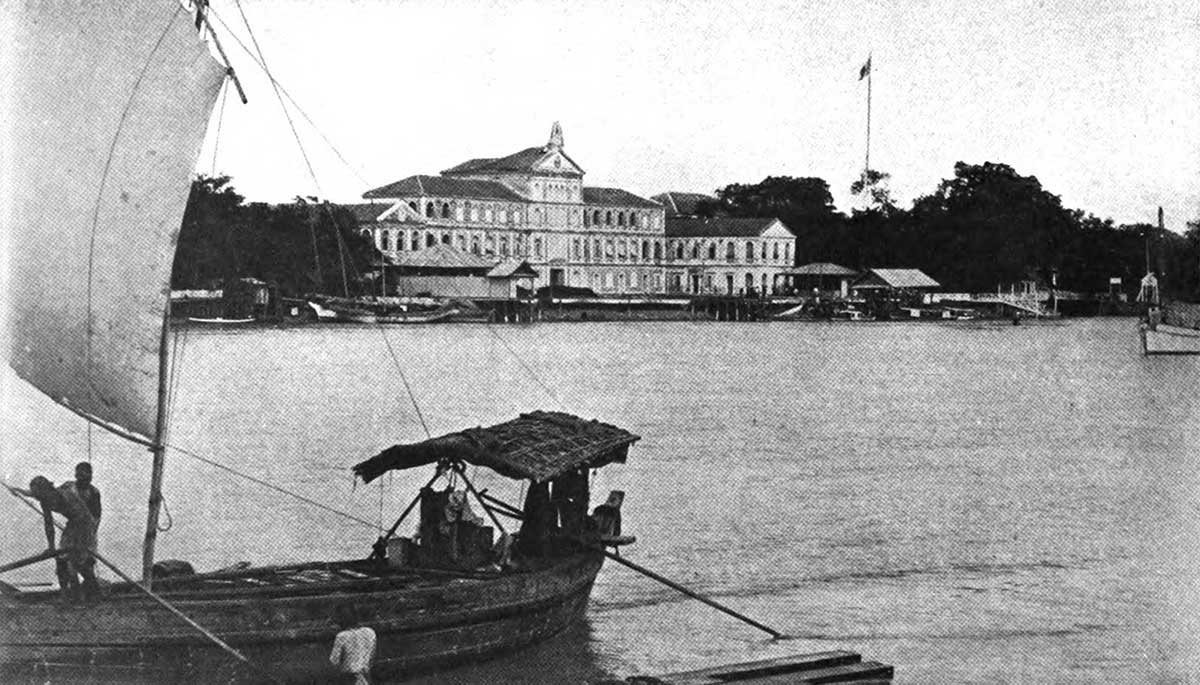
Bangkok’s riverside Customs House in 1904. Built during the reign of King Chulalongkorn, the grand complex faced the Chao Phraya River and served as one of Siam’s principal gateways for international trade. Image source: originally published in The Kingdom of Siam, prepared for the Louisiana Purchase Exposition of 1904. https://commons.wikimedia.org/wiki/File:Siam_1904_b_(35).jpg
Copyright and credit note: Bangkok Customs House, 1904. From The Kingdom of Siam. Courtesy of Wikimedia Commons. Public domain. Wikimedia Commons records the original caption as “The custom house at Bangkok” and lists the image as public domain.
Then I found Bangkok’s Customhouse
Bangkok has its own interesting Old Customs House, standing beside the Chao Phraya River in the Bang Rak district.
The complex was built between 1886 and 1888 during the reign of King Chulalongkorn, Rama V. It followed major changes to Siam’s international trade and financial administration after the 1855 Bowring Treaty with Britain.
The building was also known as the “three-per-hundred tax house”, referring to the three per cent import duty established under the treaty.
Designed by Joachim Grassi, a European architect working for the Siamese government, the complex consisted of three connected buildings. Its main block rose three storeys, with a taller central pavilion, and used a formal Neoclassical, Neo-Palladian design.
Its great façade faced the river, in many ways it would have been Bangkok’s front door.
Ships, merchants, diplomats and travellers approached the city along the Chao Phraya. The Customhouse stood where the kingdom received international trade and made it official.
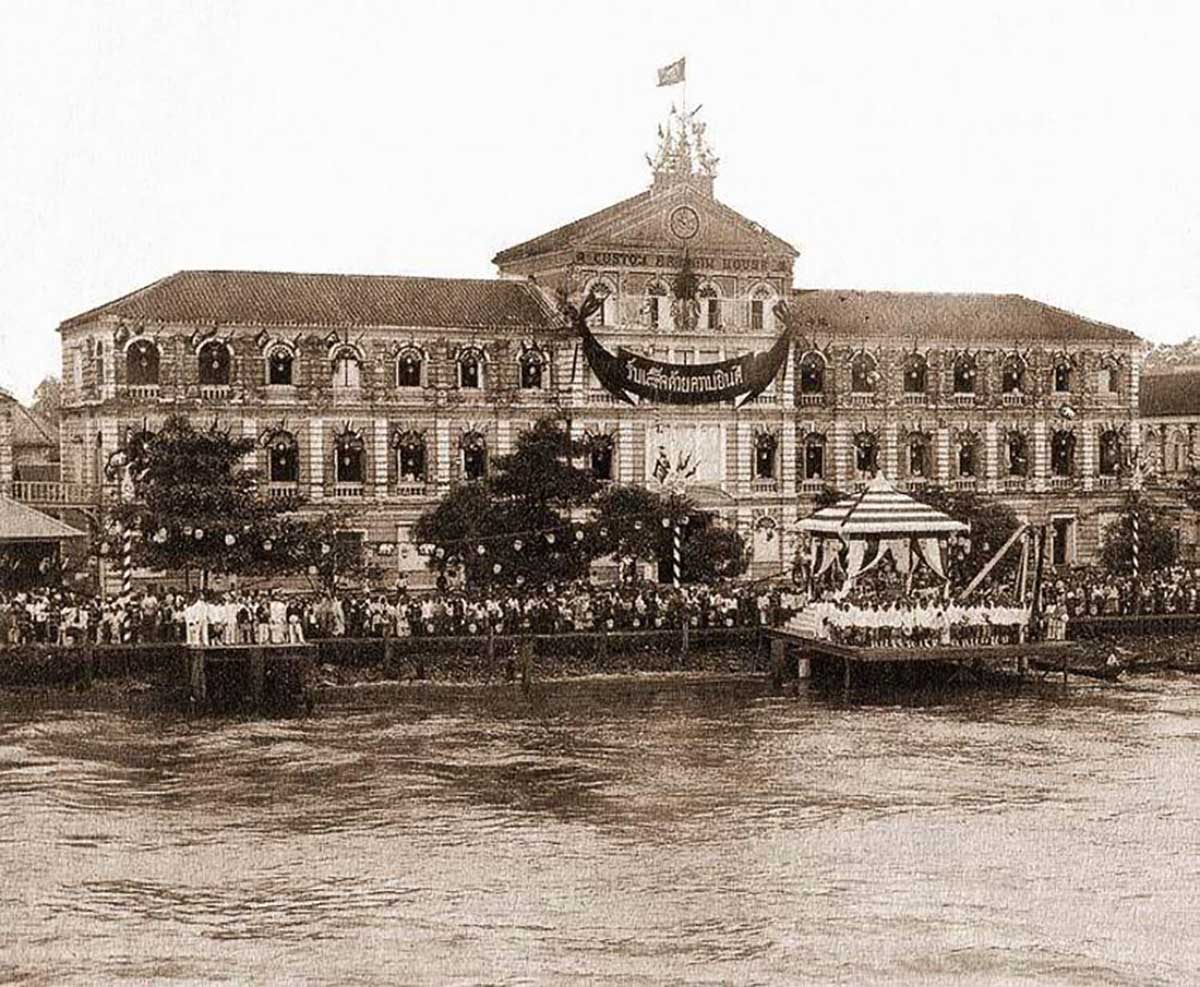
Bangkok Customs House decorated in 1907. Bangkok’s Customs House decorated for the return of King Chulalongkorn from his second European journey in 1907. Crowds and vessels gathered along the Chao Phraya riverfront, demonstrating the building’s ceremonial importance as well as its Customs role. Image source: https://commons.wikimedia.org/wiki/File:Customs_House,_Bangkok,_1907.jpg
Copyright and credit note: Bangkok Customs House, 1907. Photographer unknown. Courtesy of Wikimedia Commons. Public domain. The Commons file describes the event and identifies the image as public domain in its country of origin and the United States.
Two buildings with the same language
Timaru and Bangkok were very different places.
Bangkok’s Customhouse served the capital and principal port of an independent kingdom negotiating the growing influence of foreign trading powers.
Timaru’s served a regional port within British colonial New Zealand, connecting the farms and industries of South Canterbury with overseas markets.
Bangkok’s building was vast and river-facing.
Timaru’s was smaller, standing between harbour, railway and town.
Yet both governments chose the same architectural language. Columns, symmetry, pediments and classical decoration gave dignity to work that was mostly invisible: checking documents, valuing cargo, collecting duties and regulating trade. The buildings told arriving merchants that international commerce was being watched, recorded and controlled. Both stood where a local community encountered a much larger world.
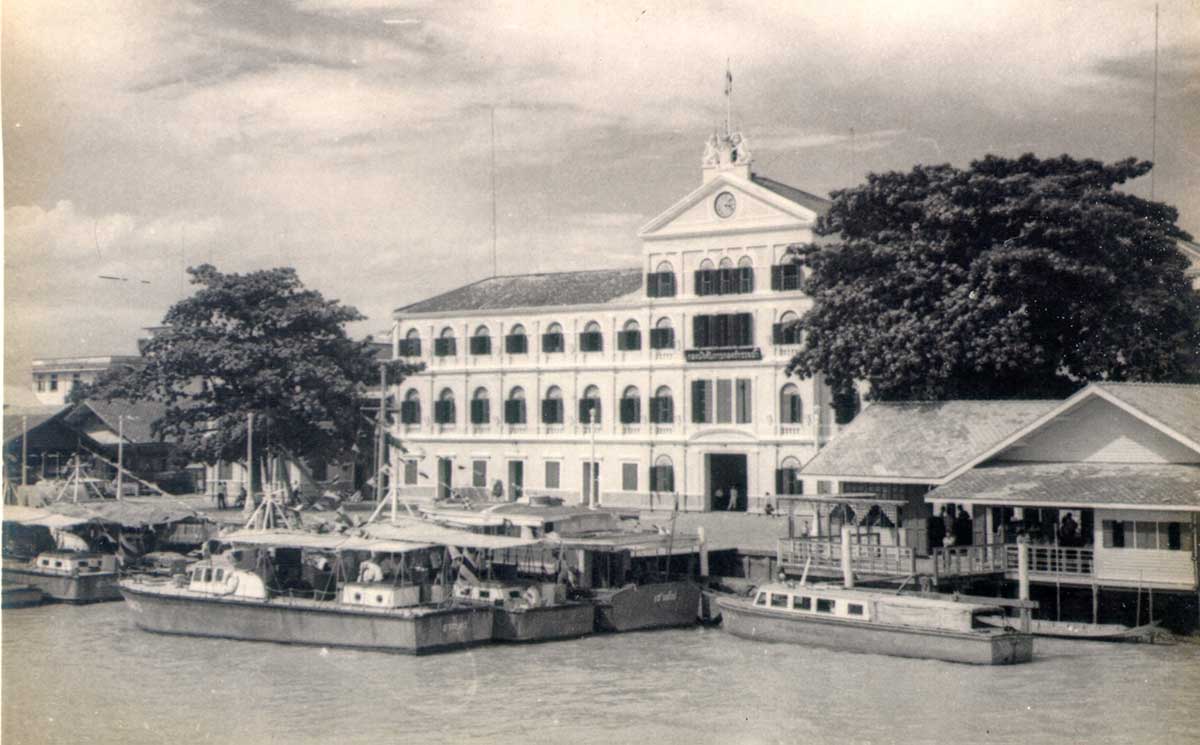
Bangkok Customs House, 1908. A formal view of Bangkok’s Customs House published in Twentieth Century Impressions of Siam in 1908. Its symmetry, central pavilion and river-facing façade gave architectural authority to Siam’s expanding Customs administration. Image source https://commons.wikimedia.org/wiki/File:The_Customs_House_(Twentieth_Century_Impressions_of_Siam).jpg Original publication: https://archive.org/details/twentiethcentury00wrigrich. Copyright and credit note: “The Customs House”, from Twentieth Century Impressions of Siam, 1908, edited by Arnold Wright. Courtesy of Wikimedia Commons. Public domain. The Commons file identifies the source publication, date and public-domain status.
Both buildings found new lives
Bangkok’s Customs administration later moved away from its riverside building. The complex was used by the Marine Police and other public services before entering a long period of deterioration and conservation work.
It is now being transformed into The Langham, Custom House, Bangkok, a boutique riverside hotel with restaurants, event spaces and a bar. The project is presented as a contemporary continuation of the site’s long role welcoming people to Bangkok.
Timaru’s building was relinquished by the New Zealand Government in 1976 and converted to commercial use. The Timaru Civic Trust purchased it in 2018 to help protect it as a significant heritage asset while keeping it actively used.
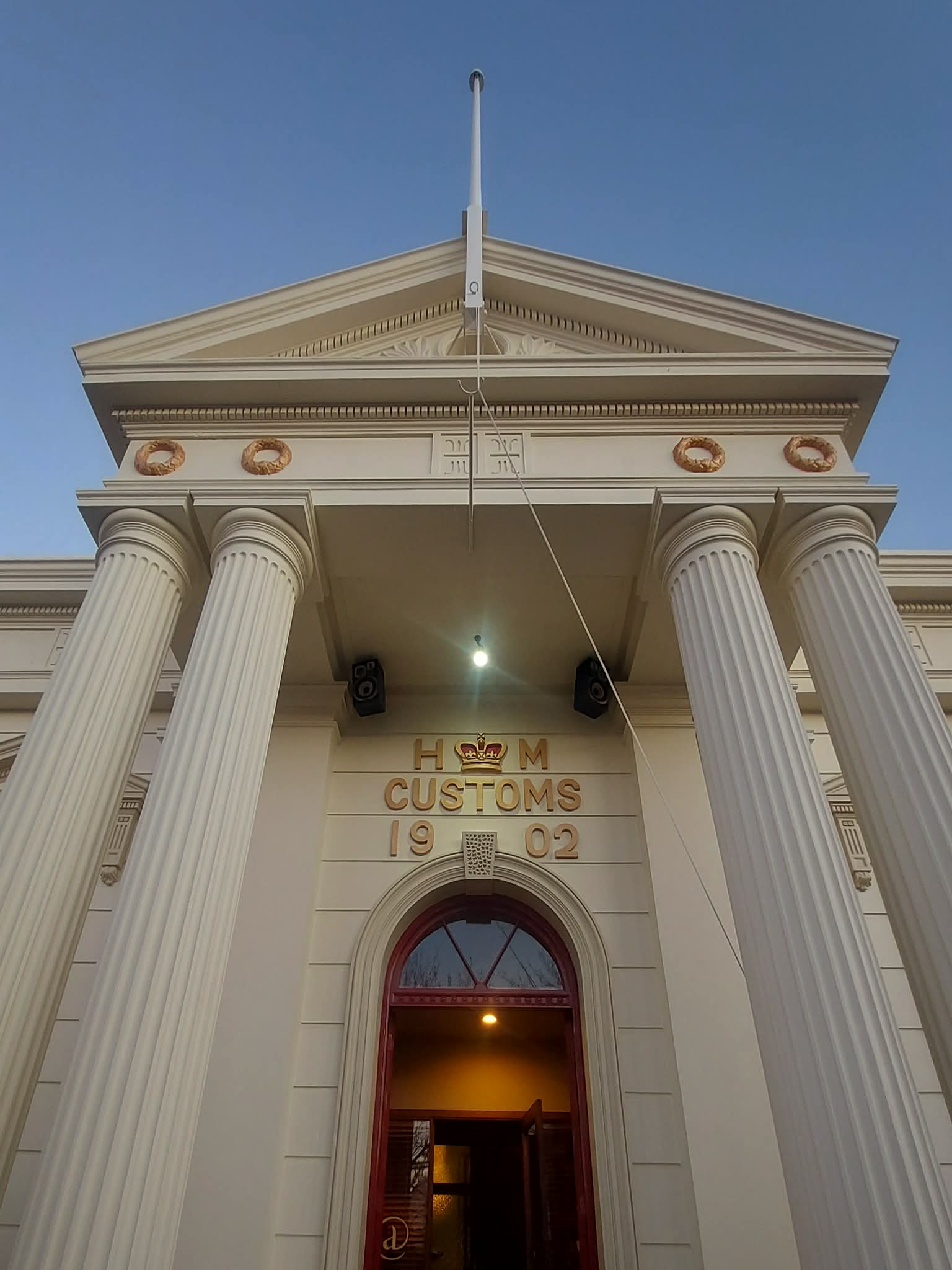
The Trust has recently completed a major exterior repaint and is moving towards the next stage of conservation, including re-roofing.
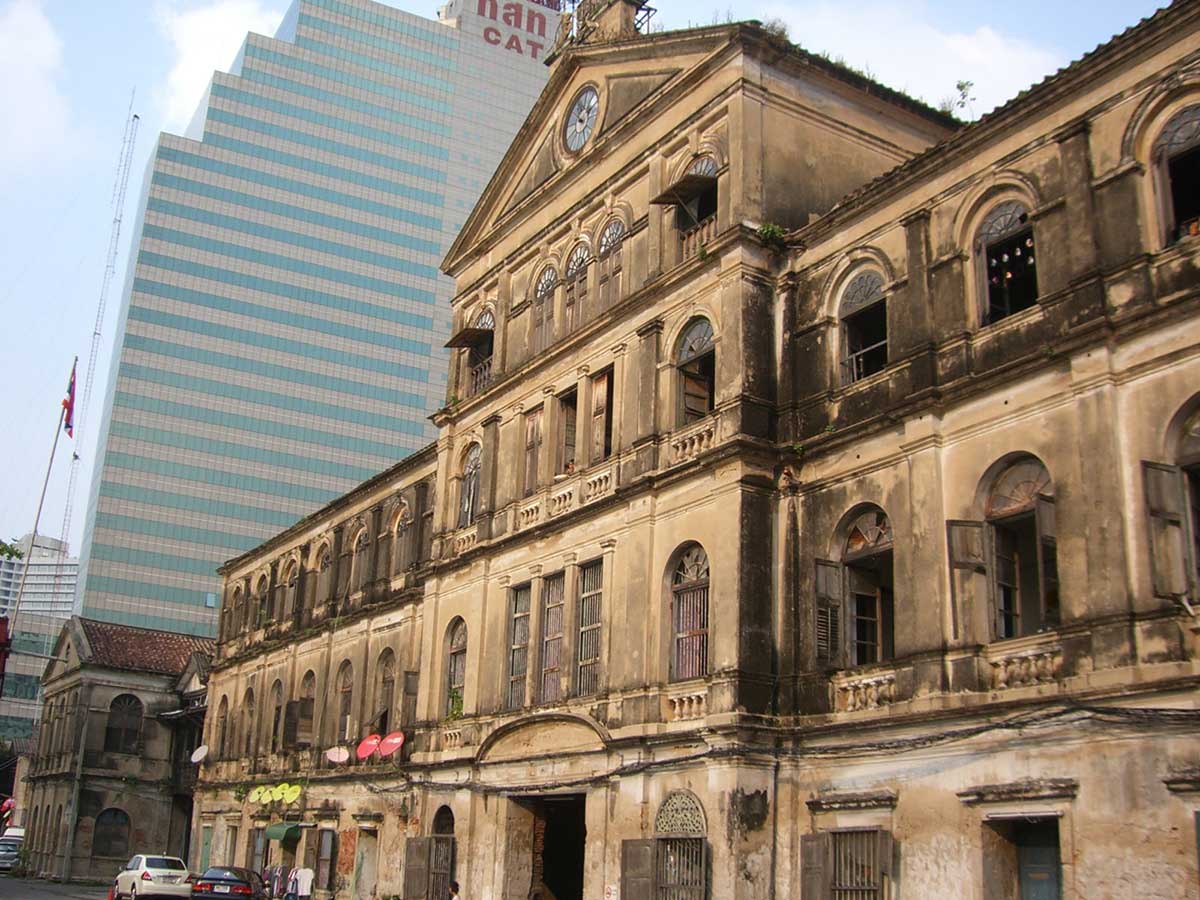
Bangkok’s Old Customs House in 2010, after decades of changed use and deterioration. The photograph records the surviving riverfront complex before its current conservation and hospitality redevelopment. Image source https://commons.wikimedia.org/wiki/File:Old_Customs_House_Bangkok.jpg
Copyright and credit note: Photograph by Sergey, 9 January 2010. Licensed under Creative Commons Attribution–ShareAlike 2.0.
Old Customs House, Bangkok, by Sergey, CC BY-SA 2.0, via Wikimedia Commons. Licence: https://creativecommons.org/licenses/by-sa/2.0/ The licence permits reuse and adaptation provided appropriate credit is given, the licence is linked, changes are identified, and adaptations are shared under the same or a compatible licence.
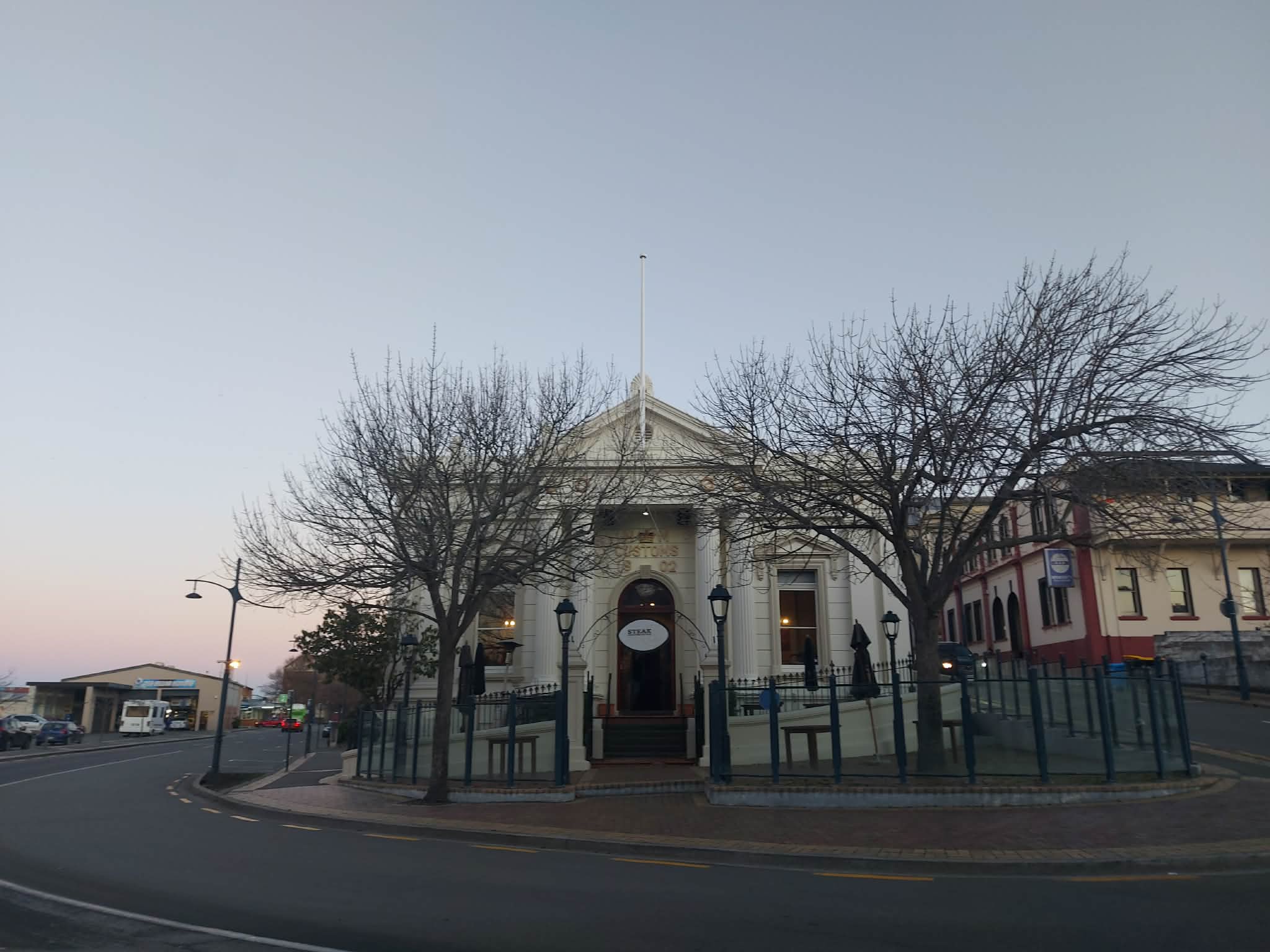
Now the building is preparing for a new Thai restaurant.
Suddenly, the relationship between Timaru and Bangkok is no longer something we need to search for in an old cargo manifest. It is being created in front of us.
A better connection than the one we were seeking... I sat out hoping to find evidence that Thai spices or Siamese rice had once passed through Timaru’s Customhouse and so far I haven't found that evidence.
but on the history hunt I learned that at opposite ends of the world stand two surviving Customhouses both in the Neoclassical tradition, administered the movement of international goods, as gateways between their communities and the wider world who outlived their original purpose, and into hospitality.
Bangkok may not appear on Timaru’s proven historic shipping map.
But Thailand is about to become part of the building’s living history.
The new restaurant will bring Thai cooking, knowledge and hospitality into a place originally built to manage Timaru’s overseas connections.
Where Timaru met the world
The Customhouse’s old records connected South Canterbury farmers with London merchants, Timaru businesses with Newcastle coalfields, and local tea drinkers with estates in Ceylon.
Its paperwork belonged to a network of growers, miners, sailors, packers, merchants, railway workers, Customs officers, shopkeepers and customers who might never meet one another.
Today, the building remains part of that story of connection.
Not because we have uncovered one perfect shipment of spices from Bangkok.
Because two Customhouses, built to meet the world, have found one another through heritage, food and a new chapter of hospitality.
Once a place where international trade was declared, Timaru’s Customhouse is becoming a place where cultures and food are shared.
Research note: The advertisements and shipping records used in this story show that Timaru merchants participated in international supply networks and sold imported foods. They do not always identify the original country of production or match individual products with particular ports. No confirmed shipment from Siam or Bangkok to Timaru has yet been located. The history hunt remains open. Useful clues might include references to Siam, Bangkok, Siamese rice, Garden rice, Tyrrell, King & Co, John King, Timaru bills of entry, merchant account books or Harbour Board cargo ledgers.
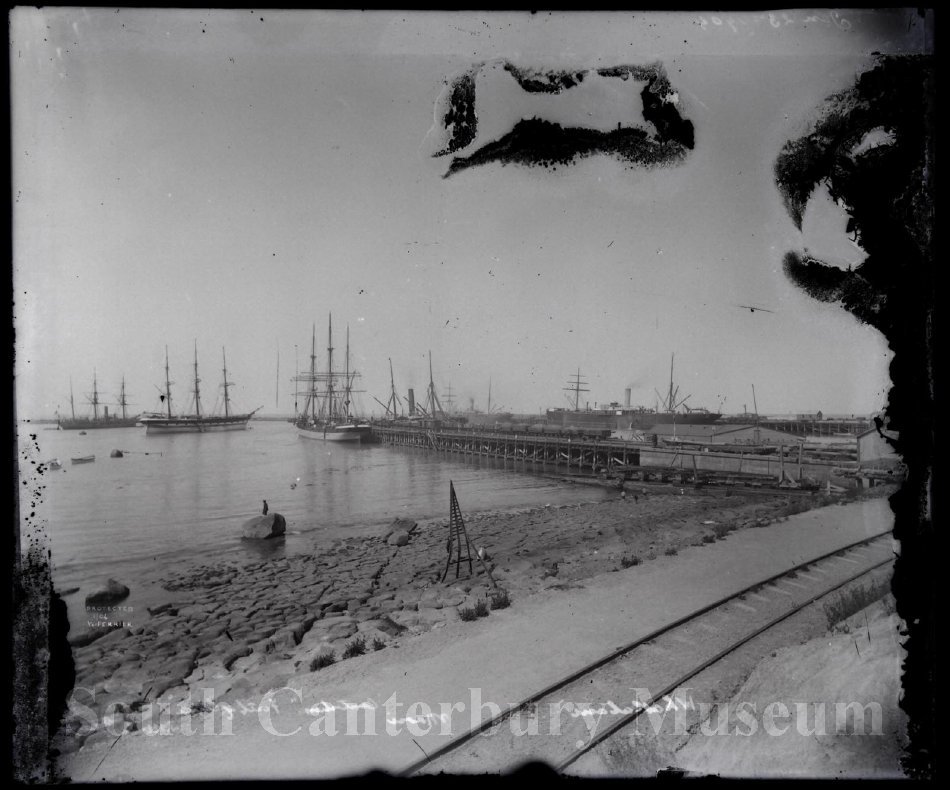
"Timaru Harbour, viewed from the shoreline inside the harbour by No.2 Wharf, dated 25 January 1904. Bears the inscription "Protected 1/04 W. Ferrier" in the lower left quadrant. Along the lower portion of the plate are the pictured ships names which appear to be (left to right): HMS Pylades, Forth of Clyde, Canterbury(?), Maori, and Wharanui(???)."
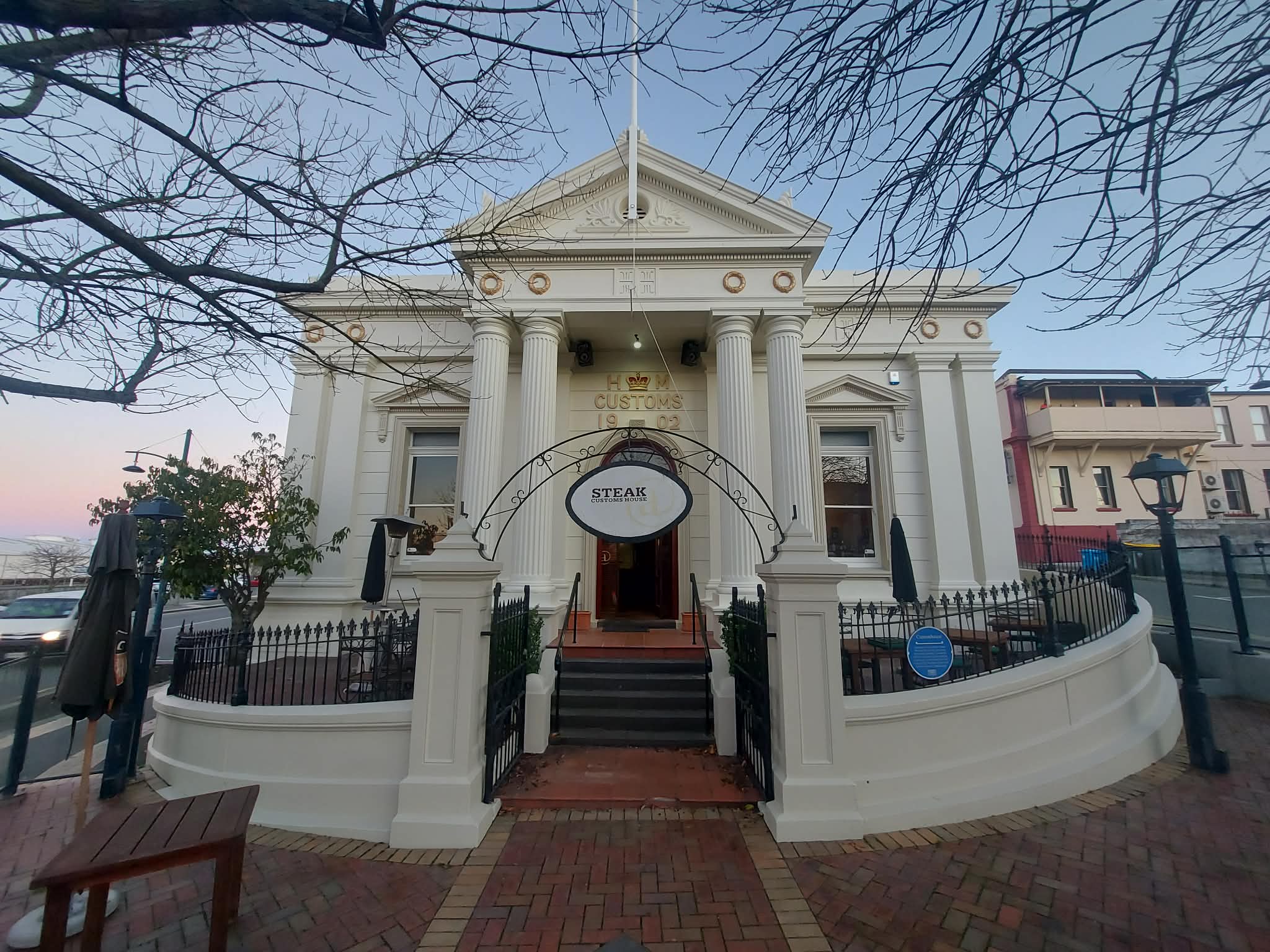
Timaru Customhouse After Repaint at dusk RFauth 2026 2
Timeline
1855 — Siam opens further to international trade. The Bowring Treaty between Siam, now Thailand, and Britain expanded foreign trade and established a three per cent import duty. Bangkok’s later Customs House became known as the “three-per-hundred tax house” because of this duty. Source: https://archaeology.sac.or.th/archaeology/784
1886–1888 — Bangkok’s Customs House is built Bangkok’s Customs House was constructed beside the Chao Phraya River during the reign of King Chulalongkorn, Rama V. Designed and built by Joachim Grassi, the complex used a formal Neoclassical and Neo-Palladian architectural style. It contained three connected buildings, with a three-storey main structure and a taller central pavilion. Source: https://archaeology.sac.or.th/archaeology/784
From 1888 — Bangkok’s riverfront gateway. The new complex became the headquarters of Siam’s Customs administration. Its position beside the Chao Phraya River made it one of the prominent government buildings encountered by ships, merchants, diplomats and travellers arriving in Bangkok. Source: https://archaeology.sac.or.th/archaeology/784
29 January 1901 — Wool, wheat and one piano leave Timaru. The barque Criffel sailed directly from Timaru for London. Its cargo included: 6,148 bales of wool and skins, 4,831 sacks of wheat, one piano. The voyage illustrates the international commerce that Timaru’s new Customhouse was being built to serve. Source: https://paperspast.natlib.govt.nz/newspapers/SCANT19010129.2.3
20 September 1901 — Tea from Colombo is advertised in Timaru Tyrrell, King & Co advertised itself as the sole Timaru agent for Nirvana Tea. The advetisement stated that the tea was grown on mountain estates in Ceylon, now Sri Lanka, packed in lead at Colombo and shipped internationally in its original packets. Source: https://paperspast.natlib.govt.nz/newspapers/THD19010920.2.37.6
1901–1902 — Timaru’s Customhouse is built Timaru’s new Customhouse was constructed at the eastern end of Strathallan Street. It was designed by local architect Daniel West and built by Thomas Pringle in the Neoclassical style. Its position was convenient to both the harbour and railway station. Source: https://www.timaru.govt.nz/__data/assets/pdf_file/0004/673861/Historic-Heritage-Assessment-Report-HHI38-former-Customhouse-Category-A.pdf
27 February 1902 — A Timaru merchant reveals its international network Tyrrell, King & Co advertised substantial indent orders involving:
Singapore
Japan
Greece
Liverpool
London
a place printed as “Columbia”
The goods listed included tinned pineapple, rice, currants, tinned fish and preserved herrings. The advertisement does not clearly match each product to a particular country or port. It should therefore be used as evidence of an international supply network, not proof that a specific product came from one of the places listed. Source: https://paperspast.natlib.govt.nz/newspapers/THD19020227.2.2.2
23–24 July 1902 — Miscellaneous cargo reaches Timaru through coastal ports The Hawea arrived at Timaru from Auckland by way of southern ports with 118 tons of miscellaneous cargo and timber. This demonstrates how goods could travel through several intermediate ports before reaching Timaru. By the time they arrived, their original place of production might be hidden beneath a broad description such as “miscellaneous cargo”. Source: https://paperspast.natlib.govt.nz/newspapers/THD19020724.2.3
August 1902 — Timaru’s new Customhouse opens The new building opened in August 1902, replacing the Customs office that had operated from Timaru’s Post Office. Charles Nixon was the Collector of Customs when the building was constructed. Source: https://www.timaru.govt.nz/__data/assets/pdf_file/0004/673861/Historic-Heritage-Assessment-Report-HHI38-former-Customhouse-Category-A.pdf
August 1902 — Customs duty is collected on imported tea During the month the new Customhouse opened, Timaru Customs collected £2,224 11s 10d in duties. This included £13 11s 8d collected on imported tea. The return does not identify the tea’s merchant, brand or country of origin. Source: https://paperspast.natlib.govt.nz/newspapers/THD19020901.2.5
26 September 1902 — Newcastle coal is sent to Timaru The La Bella left Newcastle, New South Wales, carrying coal for Timaru. The steamship Rotokino was also expected to land Newcastle coal at Timaru. This establishes a documented direct trade connection between Timaru and the Australian coal port. Source: https://paperspast.natlib.govt.nz/newspapers/THD19020926.2.3
1900–1902 — Rice dominates Siam’s exports Rice represented about 80 per cent of the value of Siam’s exports during this period. Singapore was an important market and redistribution centre, receiving more than one-third of Siam’s rice exports during the early 1900s. This establishes a substantial Bangkok–Singapore rice trade. It does not prove that the rice continued from Singapore to Timaru. Source: https://www.cambridge.org/core/journals/journal-of-southeast-asian-studies/article/abs/siam-and-the-gold-standard-19021908/059BD7EC7686FAD66D379B37D3652CB7
1904 — Bangkok’s Customs House is photographed A photograph published in The Kingdom of Siam identified the riverfront building as “The Custom House at Bangkok”. The image was produced only two years after Timaru’s Customhouse opened. Image: https://commons.wikimedia.org/wiki/File:Siam_1904_b_(35).jpg
.jpg)
1907 — Bangkok’s Customhouse becomes a ceremonial gateway The Bangkok Customs House was photographed decorated for the return of King Chulalongkorn from his second European journey. The image shows the building’s role as both a working government office and a ceremonial face of the kingdom. Image: https://commons.wikimedia.org/wiki/File:Customs_House,_Bangkok,_1907.jpg

1908 — Another formal view records the Bangkok building An architectural view of Bangkok’s Customs House appeared in Twentieth Century Impressions of Siam. Image: https://commons.wikimedia.org/wiki/File:The_Customs_House_(Twentieth_Century_Impressions_of_Siam).jpg
.jpg)
1949 — Bangkok Customs moves away Siam’s Customs administration moved from the old riverside complex to the newer port facilities at Khlong Toei. The former Customhouse was subsequently occupied by the Marine Police. Source: https://archaeology.sac.or.th/archaeology/784
1959 — Bangkok’s fire service uses the complex The Bang Rak fire service began using parts of the former Customs House complex. The buildings continued to serve public purposes, but alterations, occupation and limited maintenance contributed to their deterioration. Source: https://archaeology.sac.or.th/archaeology/784
1976 — The New Zealand Government leaves Timaru’s building The New Zealand Government relinquished the former Timaru Customhouse. It was subsequently converted to commercial use. Source: https://www.timaru.govt.nz/__data/assets/pdf_file/0004/673861/Historic-Heritage-Assessment-Report-HHI38-former-Customhouse-Category-A.pdf
1 September 1983 — Timaru’s Customhouse enters the heritage register The former Customhouse was entered on the New Zealand heritage register. It is now recognised as a Category 1 historic place, List No. 324. Source: https://www.heritage.org.nz/list-details/324/Listing
2002 — Bangkok’s complex receives formal heritage protection. Thailand’s Fine Arts Department formally registered the Bangkok Customs House complex as an ancient monument. Source: https://archaeology.sac.or.th/archaeology/784
2018 — Timaru Civic Trust purchases the Customhouse. The Timaru Civic Trust purchased the former Customhouse to help protect this significant heritage building while retaining an active commercial use. Sources: https://www.timaru.govt.nz/__data/assets/pdf_file/0004/673861/Historic-Heritage-Assessment-Report-HHI38-former-Customhouse-Category-A.pdf and https://www.timarucivictrust.co.nz/heritage-nz-listed-category-1.html
From 2019 — Bangkok’s restoration investigations progress. Archaeological investigation, architectural recording and conservation planning were undertaken as part of the redevelopment of Bangkok’s former Customs House. Source: https://archaeology.sac.or.th/archaeology/784
2026 — Timaru’s exterior conservation continues The Timaru Civic Trust completed a major exterior repaint of the former Customhouse. Re-roofing was identified as the next important conservation stage. Source: https://www.timarucivictrust.co.nz/uploads/6/4/4/4/64447489/timaru_civic_trust_july_2026_newsletter_260713.pdf
The current chapter — Two Customhouses enter new lives through hospitality
Timaru’s former Customhouse is being prepared for use as a Thai restaurant. Bangkok’s Old Customs House is being restored and redeveloped as The Langham, Custom House, Bangkok, incorporating accommodation, restaurants, event spaces and a riverside bar. The two buildings were not connected by a historic shipment that can presently be proven. Their connection is deeper and more unusual: both were built to administer international trade, both outlived their original purpose, and both are now being carried into the future through hospitality. Source: https://www.langhamhotels.com/en/the-langham/bangkok/
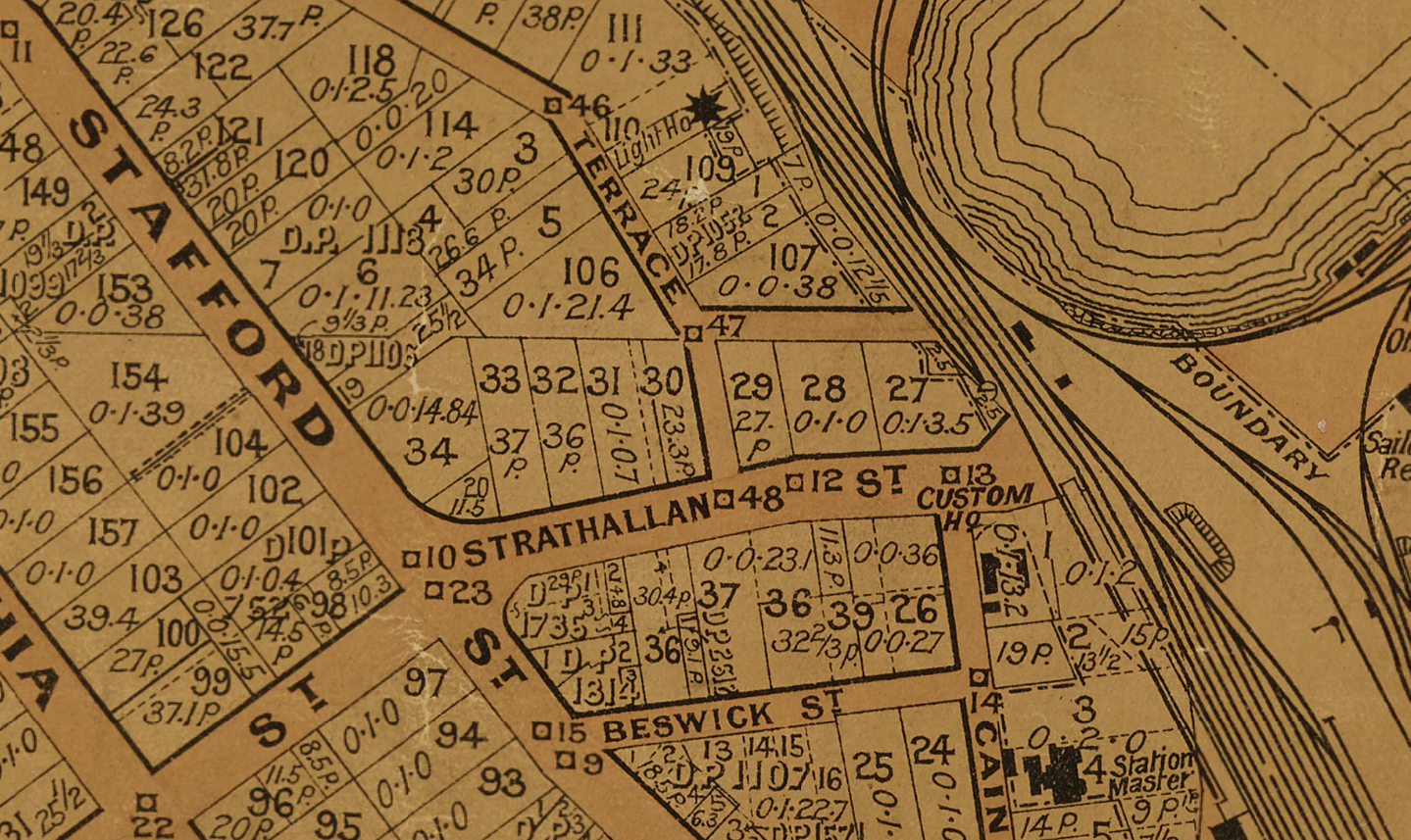
Section of Borough of Timaru, South Canterbury. NZ Heritage Maps Platform, https://maps.recollect.co.nz/nodes/view/336
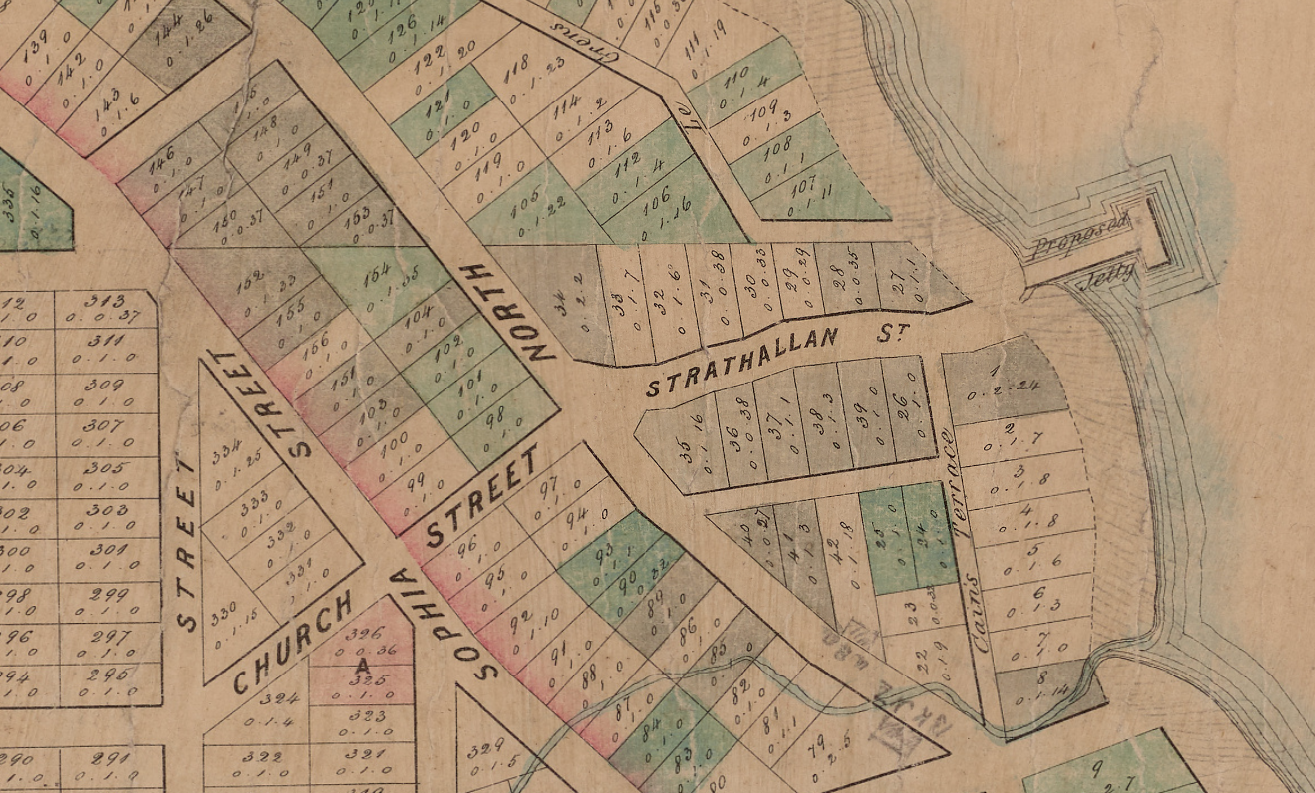
Timaru town. NZ Heritage Maps Platform, https://maps.recollect.co.nz/nodes/view/1138
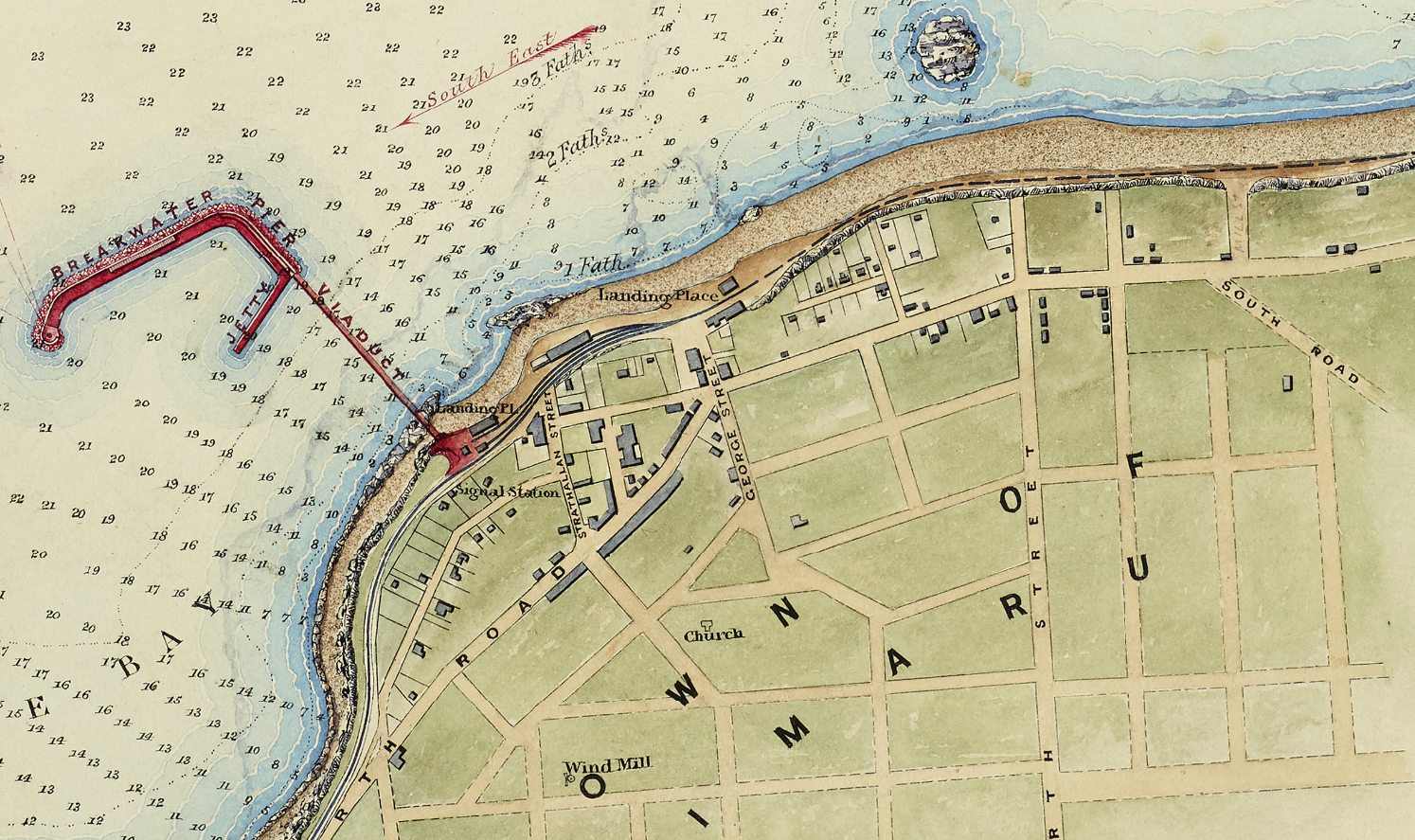
Timaru Foreshore. NZ Heritage Maps Platform, httpsmaps.recollect.co.nznodesview404
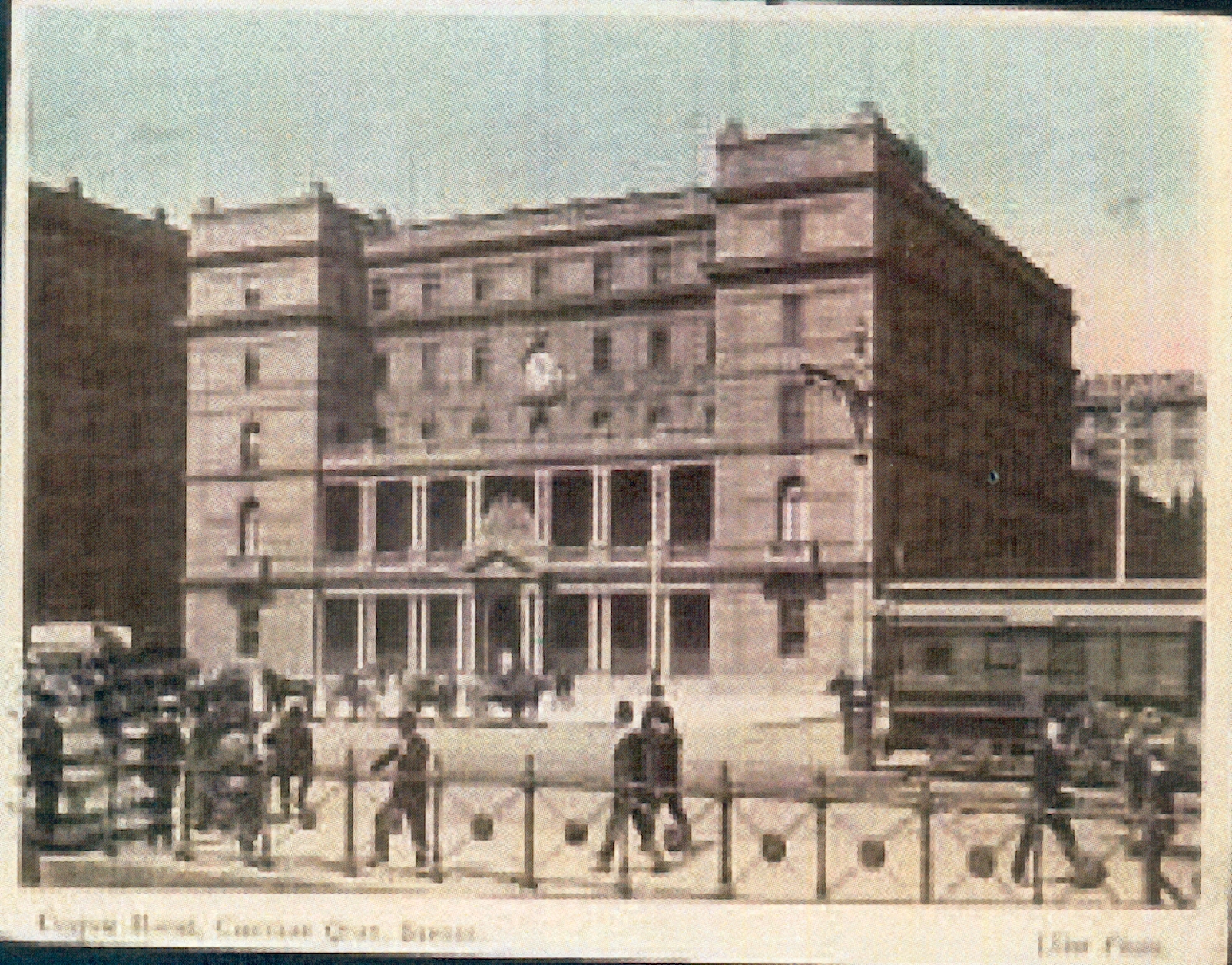
Customs House, Sydney 1913 in Circular Quay, New South Wales https://commons.wikimedia.org/wiki/File:Customs_House_Circular_Quay_Sydney.jpg
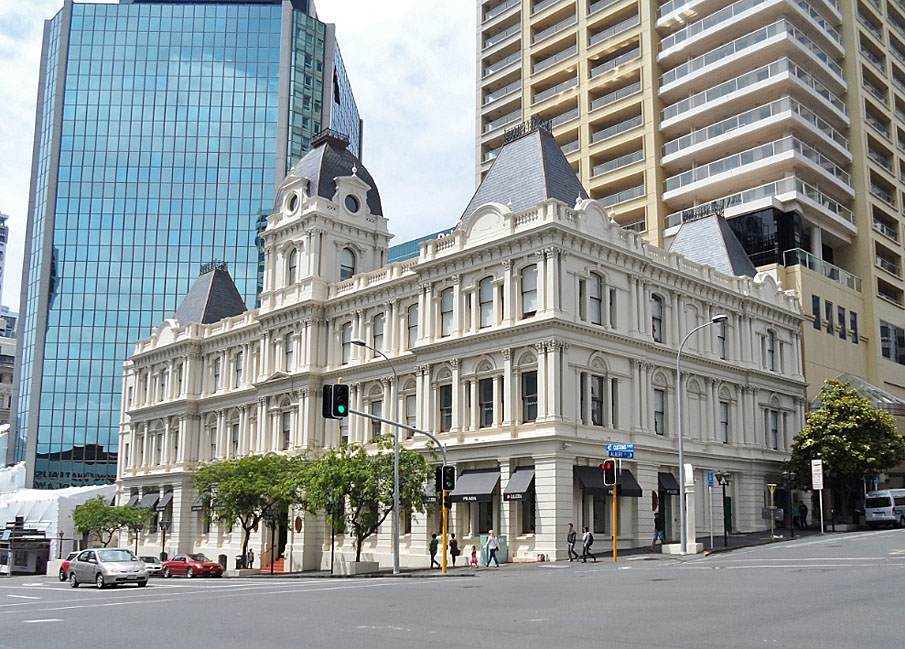
Customhouse (Former), Auckland. Image courtesy of commons.wikimedia.org
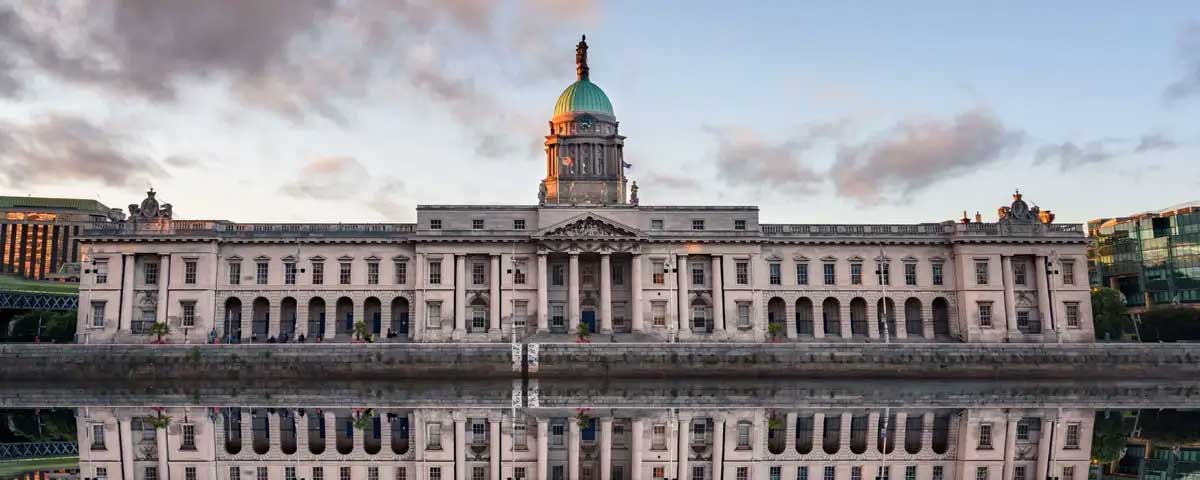
Dublin City's Custom House. The 18th century architectural masterpiece by James Gandon stands sentinel over the River Liffey. https://www.visitdublin.com/custom-house-visitor-centre
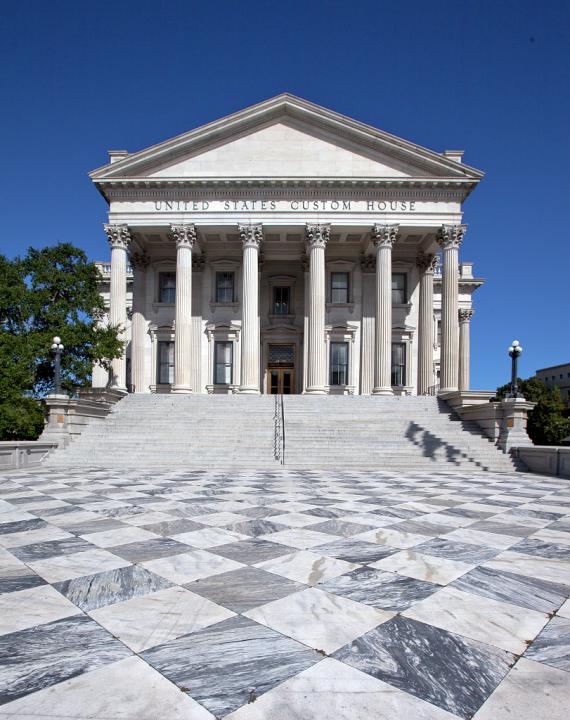
Charleston, South Carolina, the U.S. Custom Service had outgrown its offices in the 1771 Exchange Building on East Bay Street. Responding to increased trade activity in the Atlantic port city, Congress appropriated funds in 1847 for the purchase of a site for a new custom house. The waterfront site on the Cooper River, purchased for $130,000 in 1849, was then known as Fitzsimmon’s Wharf.
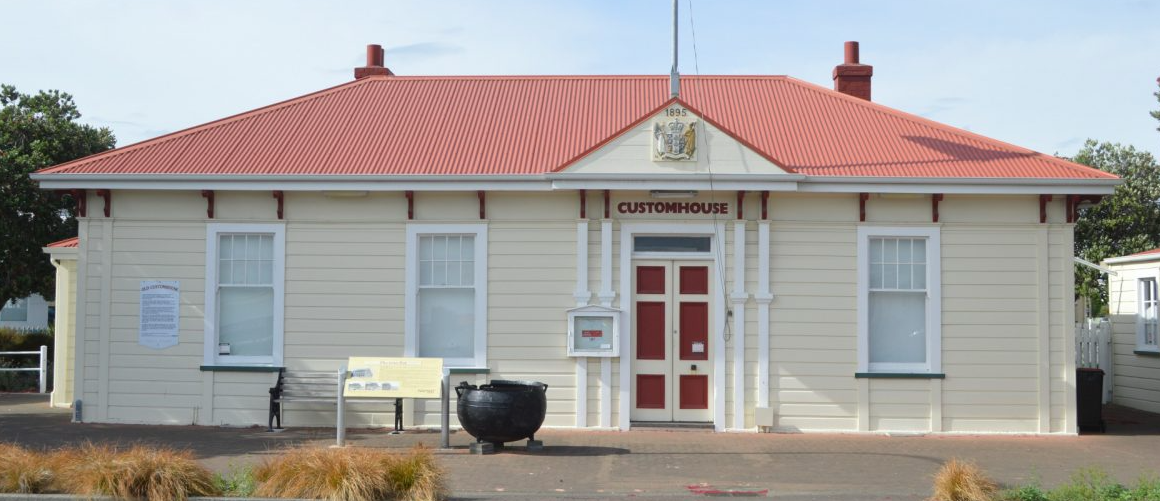
Sources Timaru Customhouse
Timaru District Council — Historic Heritage Assessment: Former Customhouse
https://www.timaru.govt.nz/__data/assets/pdf_file/0004/673861/Historic-Heritage-Assessment-Report-HHI38-former-Customhouse-Category-A.pdf
Heritage New Zealand Pouhere Taonga — Customhouse (Former), List No. 324
https://www.heritage.org.nz/list-details/324/Listing
Timaru Civic Trust — Category 1 Heritage Places
https://www.timarucivictrust.co.nz/heritage-nz-listed-category-1.html
Timaru Civic Trust — July 2026 newsletter
https://www.timarucivictrust.co.nz/uploads/6/4/4/4/64447489/timaru_civic_trust_july_2026_newsletter_260713.pdf
Timaru trade and shipping
South Canterbury Times, 29 January 1901 — Criffel cargo for London
https://paperspast.natlib.govt.nz/newspapers/SCANT19010129.2.3
Timaru Herald, 20 September 1901 — Nirvana Tea from Ceylon and Colombo
https://paperspast.natlib.govt.nz/newspapers/THD19010920.2.37.6
Timaru Herald, 27 February 1902 — Tyrrell, King & Co overseas indent advertisement
https://paperspast.natlib.govt.nz/newspapers/THD19020227.2.2.2
Timaru Herald, 24 July 1902 — Hawea and miscellaneous cargo
https://paperspast.natlib.govt.nz/newspapers/THD19020724.2.3
Timaru Herald, 1 September 1902 — Timaru Customs return and tea duty
https://paperspast.natlib.govt.nz/newspapers/THD19020901.2.5
Timaru Herald, 26 September 1902 — Newcastle coal ships for Timaru
https://paperspast.natlib.govt.nz/newspapers/THD19020926.2.3
Bangkok Old Customs House
Princess Maha Chakri Sirindhorn Anthropology Centre — Bangkok Customs House archaeological record
https://archaeology.sac.or.th/archaeology/784
The Langham, Custom House, Bangkok — Official redevelopment page
https://www.langhamhotels.com/en/the-langham/bangkok/
Siamese rice and Singapore trade
“Siam and the Gold Standard, 1902–1908” — Journal of Southeast Asian Studies
https://www.cambridge.org/core/journals/journal-of-southeast-asian-studies/article/abs/siam-and-the-gold-standard-19021908/059BD7EC7686FAD66D379B37D3652CB7
“The Rice Industry of Mainland Southeast Asia, 1850–1914” — Journal of the Siam Society
https://thesiamsociety.org/wp-content/uploads/1971/03/JSS_059_2f_Owen_RiceIndustryOfMainlandSoutheastAsia.pdf
Historic photographs
Bangkok Customs House, 1904
https://commons.wikimedia.org/wiki/File:Siam_1904_b_(35).jpg
Bangkok Customs House, 1907
https://commons.wikimedia.org/wiki/File:Customs_House,_Bangkok,_1907.jpg
Bangkok Customs House, circa 1908
https://commons.wikimedia.org/wiki/File:The_Customs_House_(Twentieth_Century_Impressions_of_Siam).jpg

Rail in many ways also rearranged the town.
The former Customhouse heritage record notes that an earlier customs building near the breakwater had to be removed to make way for the railway. Later, Timaru’s railway yards were criticised as cramped and inadequate. In 1913, James Craigie MP raised concerns about Timaru Railway Station, including passenger facilities and the Strathallan Street crossing being blocked on the route to wool and grain stores and the goods shed. In 1940, railway yard and locomotive depot improvements required major earthworks, including removal of a bank containing 27,000 cubic yards of material.
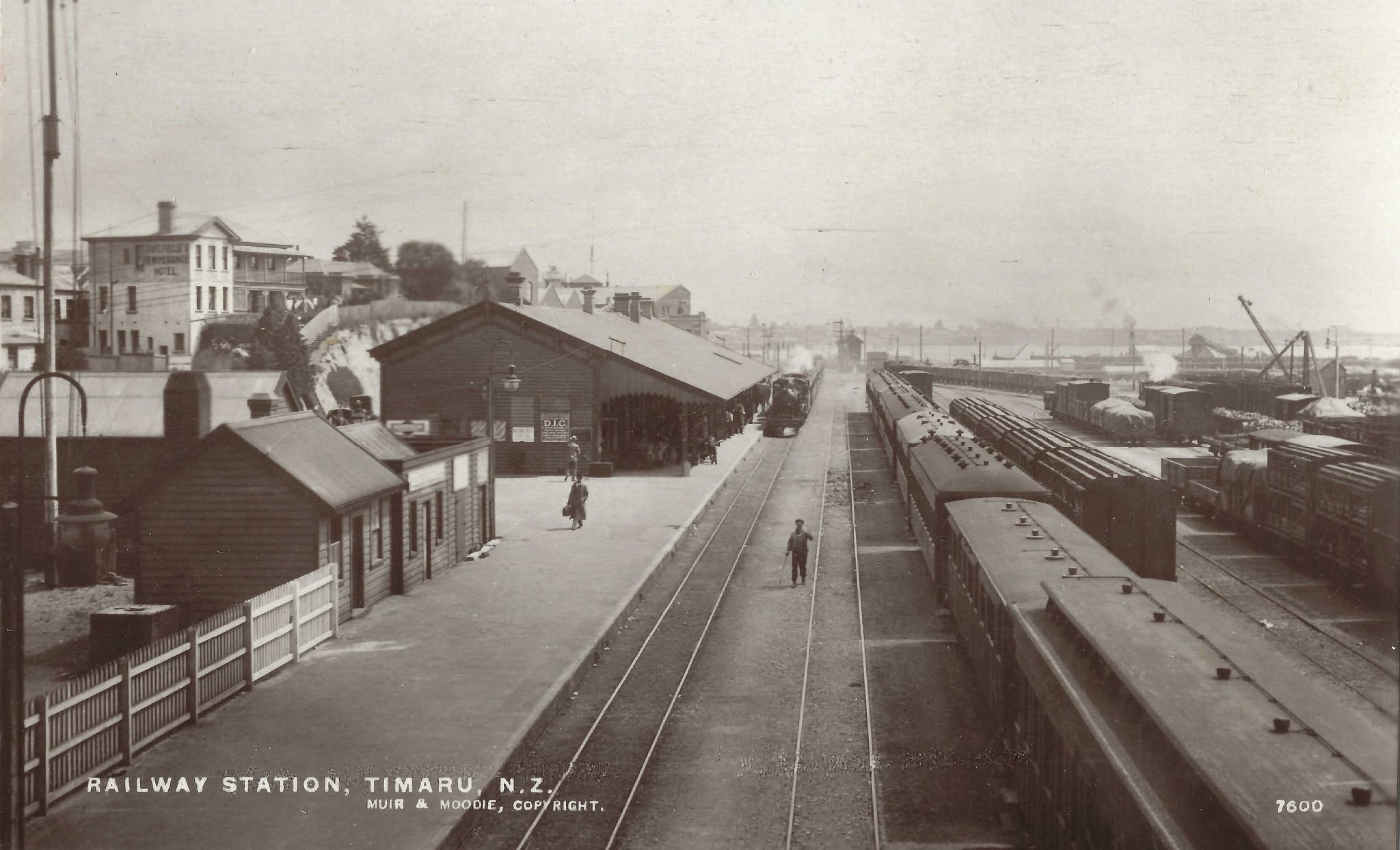
Railway Station Timaru early 1912 (or perhaps late 1911).