
By Roselyn Fauth
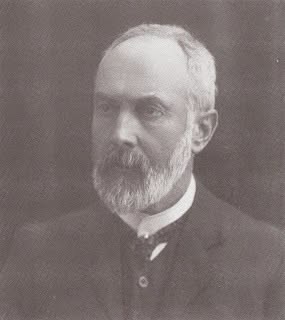
I think there is something quite extraordinary about old photographs... a camera may record only a fraction of a second, yet the image can continue speaking for more than a century... It might capture a shopfront, a ship, a crowded street, or an unfamiliar face... and the photo becomes evidence, showing us not just what the past looked like, but how people lived, worked, played and volunteered back in the day.
For Timaru, many of these visual connections exist because photographers such as William Ferrier chose to point their lenses at the people and places around them. And I am so grateful because William's work has given me hours of free fun and history hunting...
He was born in Edinburgh in 1855 and arrived in New Zealand with his father, David Ferrier, in 1869 and learned photography while working under a Christchurch photographer recorded as John Gall, (or possibly Gaul, I found a few variant spellings).
By the late 1870s, Ferrier was working as a photographer in Christchurch. In May 1881, he established his own business in Fife’s Buildings in Timaru.
Photography at the time was far removed from the instant images we take today. Cameras were large, exposure times could be slow, and glass plates, chemicals, and carefully controlled light were part of the process. Every photograph required preparation, judgement, and technical skill.
I have grown up with a photographer father, so I have experienced the patience of waiting for the lighting, the importance of setting up a shot... when a click cost money, it had to count.
Ferrier’s Timaru business grew, so he moved from Fife’s Buildings to larger space in the Royal Arcade and later operated from Stafford Street. Directory records place him at 125 Stafford Street in 1903 and at 155 Stafford Street during the 1910s. For a period in the 1880s, he also operated a branch in Tees Street, Oamaru.
I would love to stand at the Stafford Street window and look out where he must have... if anyone has the keys and wants to show me around, I would be so excited to have a look around.
While Ferrier took many studio portraits, he also photographed local views and advertised Christmas and New Year cards featuring scenes from the district. In an age before social media, television or widespread illustrated news, these photographs and cards helped circulate images of South Canterbury. They allowed people to send a small piece of Timaru to friends and family elsewhere. I bet they were proud to lick a stamp and press it on the back, and send their mail round the globe to show their hometown.
Ferrier exhibited at the 1884 International Exhibition in Christchurch. This was a really important milestone in his career as it placed his work within a wider display of colonial industry, technology, and art.
Records show him working across several decades, from the 1870s through to at least 1915. During that time, Timaru changed considerably. Buildings appeared and disappeared. Businesses opened, families grew, and the town developed around its port, railway and commercial centre.
Ferrier’s photographs preserved fragments of those changes. They may have been concentrating on exposure, composition, light and the practical needs of their customers, but they were also creating an archive of community life. I wonder if he knew this at the time?
A photograph made for one family could later become evidence for hundreds of researchers. A commercial streetscape could help identify a demolished building. A portrait could restore a face to a name found in a newspaper, cemetery record or family tree...
Ferrier’s legacy also extended into New Zealand’s artistic history. He was the grandfather of the artist Colin McCahon.
William Ferrier died in 1922. The moments he captured have outlived both the photographer and many of his subjects. If you have visited his grave like I have, its pretty tricky to find. While others are memorialised with large stones and thoughtful messages, for what ever reason, William has no grand monument to mark his grave. I have been told that this was because William didn't want a fuss, and if you look hard, there is a small square as a marker to find.
Through his lens, his photographs allow us to stand in the present and look back into streets filled with people who could not have known that, generations later, we would still be studying their buildings, clothing, expressions and surroundings.
Our early photographers did more than make pictures... they gave the future a way to remember. What an incredible legacy.
As I have learned about William, I now plan to learn about the women in his life... stay turned for my HerStory hunt :)
Image attribution: William Ferrier material held by Auckland Libraries Heritage Collections should be acknowledged accordingly. The photographer record is available under a Creative Commons Attribution licence, CC BY.
Photo: William Ferrier - Photographer by John Lester
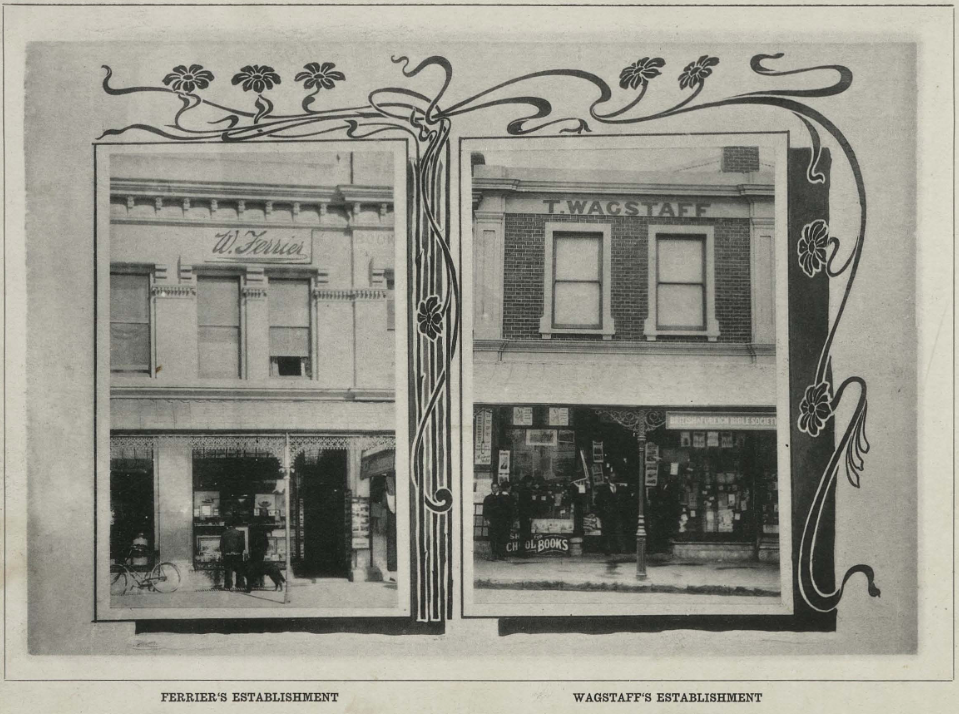
William Ferrier, Album of Views Timaru & District Descriptive & Illustrated. Aoraki Heritage Collection, https://aorakiheritage.recollect.co.nz/nodes/view/168