By Roselyn Fauth

Mrs E. M. Studholme and family at The Cuddy, Te Waimate, photographed between about 1885 and 1900. The museum’s catalogue identification is consistent with Effie M. Studholme, although the other members of the group have not been identified here. South Canterbury Museum, Object 2974. Reproduction permission should be confirmed before publication.
When I first saw the Cuddy, it was in a sepia-toned photograph held by the South Canterbury Museum.
I had searched the collection using the word “Mrs”, hoping the names of women might lead me into stories that had been overlooked. That was how I came across a photograph catalogued as Mrs E. M. Studholme and her family outside the Cuddy at Te Waimate.
The building and the people seemed to belong to different worlds. The women wore long, carefully fitted dresses. The men had tailored jackets and formal collars. Behind them stood a low cottage with timber-slab walls and a thick thatched roof.
My first question was simple: had these women ever lived in this tiny house?
The answer was no, at least not as their family home.
Michael Studholme had lived in the Cuddy before his marriage. In 1860, when his new wife Effie came to Te Waimate, the couple moved into a larger house that had been built nearby. The photograph was taken decades later, when the Cuddy had already become a tangible link with the station’s earliest European history.
That did not make the photograph less interesting. It made me ask a different question. Why had this family chosen to gather outside the older building, and what did the Cuddy represent to them by then?
The story begins before the Cuddy
The history of this place did not begin when the Studholme brothers arrived.
In 1853, Te Huruhuru and many people from the lower Waitaki moved to Te Waimatemate. They established a settlement at Tutekawa on the western bank of the Waimate River. About 40 or 50 people lived there in 25 dwellings made from tōtara bark.
When Michael Studholme arrived in 1854 looking for land for a pastoral run, he entered an inhabited and culturally significant landscape. He met Te Huruhuru at Te Waimatemate in July of that year. Te Huruhuru was an influential Ngāi Tahu leader with extensive knowledge of the rivers, inland routes and seasonal food-gathering places of the southern South Island.
Settler family histories later presented the relationship between the two men as one of friendship and mutual agreement. Those accounts are part of the historical record, but they were written from the settler family’s perspective. A fuller account of the land, the agreements made and their consequences should be developed with mana whenua, particularly Te Rūnanga o Waihao, rather than relying on the Studholme account alone.
A house built from what was available
The Cuddy was constructed in 1854 by John, Paul and Michael Studholme with George Brayshaw. Saul Shrives carried out the thatching.
Heritage New Zealand describes it as the first Pākehā settler dwelling built in Waimate. The two-roomed cottage was based on an English building form but adapted to the materials available locally.
Its walls were made from vertical tōtara slabs with cob pugging on the inside. The floor was beaten clay. The original roof was thatched with native snowgrass, remnants of which survive beneath later layers of corn-straw thatch.
The slabs are traditionally said to have come from a single tōtara tree. Heritage New Zealand uses the more cautious word “purportedly”, so it is best treated as an established tradition rather than a fact we can conclusively prove.
Effie later described the Cuddy’s interior. There was a rough table, Michael’s sea chest, a bunk, a couple of simple stools and a large sod fireplace. Guns and stockwhips hung above the hearth. It was basic, but Effie thought it beautifully clean.
Michael lived there until 1860. The Cuddy also accommodated travellers and became a place where plans for the station’s farming and land-development work were discussed. A new house was then built nearby to coincide with Michael’s marriage to Effie Channon.
Who was Effie?
Effegenia Maria Louisa Channon was born in London on 28 March 1838.
According to the family history written by her son Edgar, her parents intended to give her only one Christian name. The woman who took the baby to be baptised added two more names that she had heard being discussed. Fortunately, the rather grand Effegenia Maria Louisa was soon shortened to Effie.
She emigrated to New Zealand with her father and sisters in 1851. After living in Wellington and Canterbury, she married Michael Studholme in Christchurch on 18 April 1860.
Effie later wrote an account of that year for private circulation. Her son reproduced substantial parts of it in his 1940 book, Te Waimate: Early Station Life in New Zealand. This means we can follow part of her journey in her own words, rather than knowing her only through the lives of her husband and sons.
The journey south
After their wedding and a journey to Akaroa, Michael and Effie began the long ride south towards Te Waimate.
There were no comfortable highways connecting the settlements. They followed tracks, crossed rivers and creeks, and stayed with people along the way. Effie later remembered the Washdyke crossing as particularly frightening because the bottom was soft and the horses plunged as they moved through it.
On 24 May 1860, Queen Victoria’s birthday, the couple arrived at Mr Woollcombe’s home at Waimataitai. They stayed there overnight and walked around the garden the following morning.
Effie admired the gum trees, which were still unusual enough to attract attention. Mr Woollcombe gave her cuttings from a jessamine growing around the house. He also lent her his overcoat because the weather appeared likely to turn.
This is the plant gift that Effie herself recorded.
It gives us a small but vivid connection between an early garden at Waimataitai and the new home being established at Te Waimate. A few cuttings could carry beauty, scent and familiarity from one household to another. That is something many of us still do today when we divide a plant, take a cutting or pass seeds to a friend.
A rough welcome at Te Waimate
The weather worsened during the final part of the journey.
By the time Effie reached Te Waimate, she was exhausted, soaked and suffering from a headache. Through the rain she finally saw the outline of a house.
Dogs began barking, and a man rushed out of the nearby hut with what Effie described as a series of Irish exclamations, including:
“What a divil of a day to bring the Missis home.”
The house intended for the newly married couple was not ready. It was unfurnished, their luggage had not arrived, and there was no change of clothing waiting for Effie.
At that point, another woman enters the story.
Mrs Mackintosh, the shepherd’s wife, came to help. She took off Effie’s wet hat, lent her dry clothing, wrapped her in a treasured tartan and made up a large fire.
Effie wrote that Mrs Mackintosh “mothered” her.
It is a small moment, but an important one. The story of settlement is often presented through land, buildings, livestock and the achievements of men. Effie’s account reminds us that survival also depended on practical acts of care. A woman noticed another woman’s condition and quietly found what she needed.
Effie and Michael spent their first night on straw spread across the bedroom floor. The Cuddy was nearby, but an older station worker was living there, and Michael believed they would have had no privacy.
The Cuddy was therefore not the house to which Michael brought his bride. But it stood beside the cold, unfinished house where Effie’s life at Te Waimate began.
What about the rose?
This is where the evidence becomes less certain.
A newspaper feature published in 1965 stated that rose bushes growing in the garden had been brought to Te Waimate by Mrs Michael Studholme in her side-saddle when she rode to the station as a young bride in 1860.
It is a lovely story, and it may preserve a genuine family memory. But it was published more than a century after the journey.
I have not yet located a passage in Effie’s surviving memoir identifying the rose, its variety or its giver. Nor have I found reliable evidence that it was a Pearl Pink rose given to her by a Woollcombe woman.
The earlier version of this article went too far. I had connected the unidentified Mrs Woollcombe with Jaquette Woollcombe and imagined a friendship between Jaquette and Effie. That was speculation, not evidence, and I should not have allowed it to harden into fact.
What the sources presently allow us to say is this:
A later account associated rose bushes at Te Waimate with Effie’s 1860 journey. Effie’s own memoir records that Mr Woollcombe gave her jessamine cuttings at Waimataitai. Whether the roses also came from that garden remains an open question.
Sometimes correcting a story does not make it less interesting. It reveals the next thing we need to find.
Effie’s life at Te Waimate
Effie and Michael had ten children, six sons and four daughters.
Running a large household at a busy station involved far more than the domestic tasks we usually imagine. Travellers arrived, sometimes without warning. Food had to be grown, preserved and prepared. Children were raised, visitors accommodated, employees supported and community events organised.
A contemporary report in the Timaru Herald gives us a glimpse of Effie working beyond her immediate household. In January 1869, Mr and Mrs Studholme held a picnic for about 90 Waimate children.
The newspaper reported that Mrs Studholme, assisted by local and visiting women and men, worked hard to provide games and amusements. There were races, toys, sweets, tea, cakes and other food. This is stronger evidence of her contribution to the community than later claims about Plunket or Red Cross work that appear to belong to another generation of the family.
Michael died in September 1886, aged 53. The family continued its association with Te Waimate, but Effie’s life did not end at the station.
About 1910, she retired to Timaru. She enjoyed literature and music, maintained a wide circle of friends and continued writing. Her Timaru home became a gathering place for members of her family who were by then living in different parts of the country.
Effie died on 4 February 1917, in her seventy-ninth year.
The building that remained
The large Te Waimate homestead was destroyed by fire in 1928. The much smaller Cuddy survived.
Over the years, it has undergone several programmes of repair and rethatching. In 1960 it was declared a private historic reserve. It is managed by Heritage New Zealand Pouhere Taonga and is listed as a Category 1 historic place.
The Cuddy stands on private property and is recorded as having no public access, so it should not be presented as a place people can freely visit.
Its survival allows us to see much more than an early building technique. It gives physical form to stories of arrival, labour, adaptation and memory.
But the building alone cannot tell us whose stories have been amplified and whose have been pushed to the edges.
What one photograph opened up
I began with a photograph and a question about whether the women had lived in the house behind them. The answer led me somewhere richer.
I found an early building that Effie admired but did not inhabit. I found a wet and exhausting journey in her own words. I found jessamine cuttings carried south from a Waimataitai garden. I found a later tradition about roses that still needs its earliest source.
Most of all, I found Mrs Mackintosh. She does not appear in the grand timelines of pastoral settlement. Yet on the night Effie arrived, cold and soaked, Mrs Mackintosh was the person who recognised what had to be done. She found dry clothes, wrapped Effie warmly and lit the fire.
That is why searching collections for words such as “Mrs” matters. Women are often present in historical records, but not always named in headings, building histories or lists of public achievements.
The Harvard course Tangible Things encouraged me to start with an object or image and follow the questions it raises. The Cuddy photograph did exactly that. A dress, a wall, a plant cutting and a half-remembered rose opened several different doors.
The challenge is to enjoy the hunt without filling the gaps too quickly. I am told a good history story should leave room for wonder. It should also be honest about what we know, what we have inferred and what we still need to find.
What are the small things we carry, grow or give today that might still be telling stories in another 150 years?
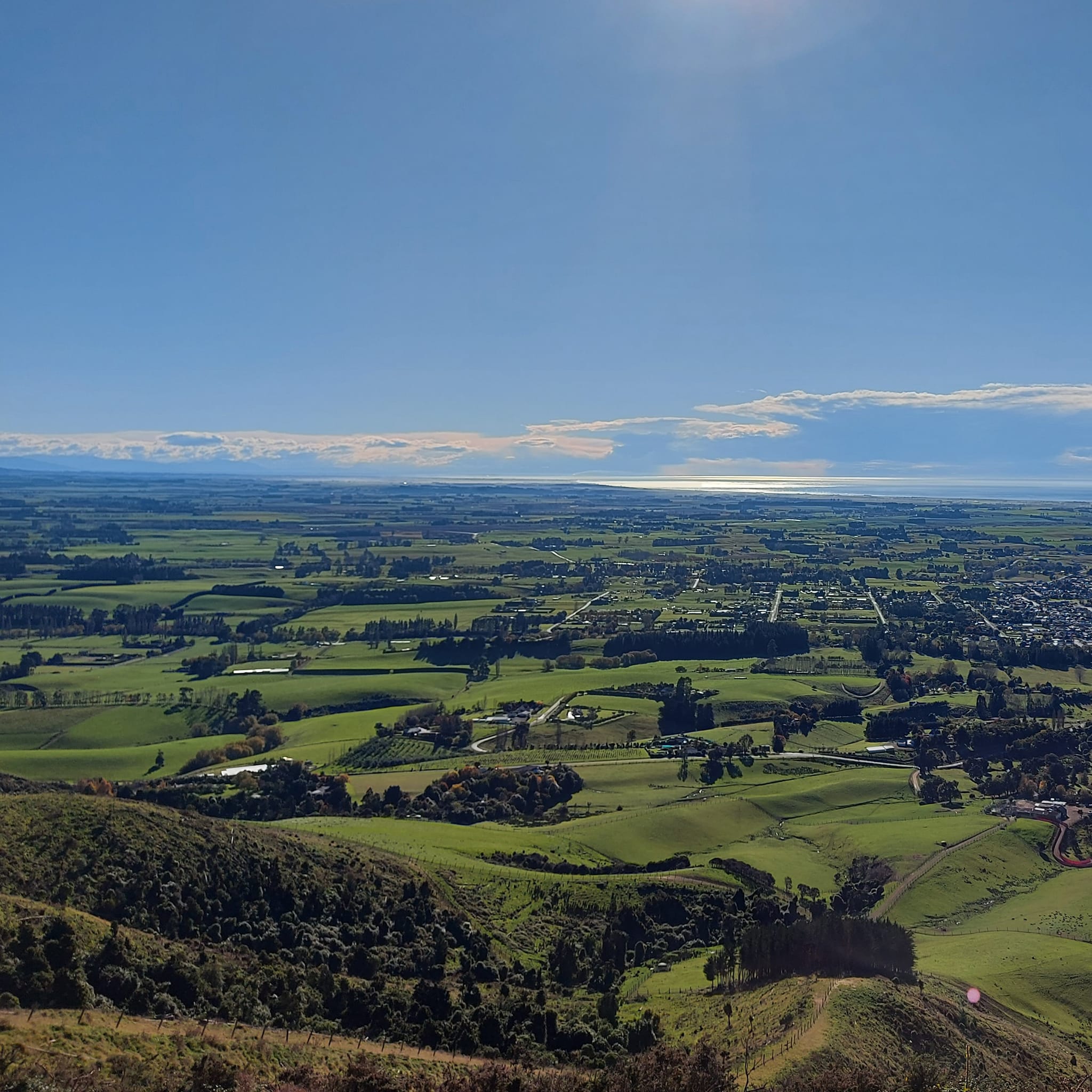
Looking out over Waimate from the White Horse Monument - Roselyn Fauth
He Whakamōhio – Acknowledging the First Peoples
As I reflect on the early settler stories told through homes like The Cuddy, I want to acknowledge that this land, Te Waimate, was not empty. It was, and remains, the ancestral whenua of Māori, including the hapū of Te Rūnanga o Waihao. The forests that were cleared and the rivers that were used for sustenance had long been part of an intergenerational relationship with the land. When settlers like Michael Studholme arrived and built homes from native timber, it marked a shift in how the land was used and understood. These stories of early European women, homes, and roses are woven into a larger history of colonisation, one that we are still learning from today. I acknowledge the mana whenua and express respect for their enduring connection to this place.

P H S, The Cuddy Was Built At Te Waimate in 1854, Property Has Been in Studholme Family For Over Hundred Years (16 Oct 1965). Aoraki Heritage Collection, accessed 12/07/2025, https://aorakiheritage.recollect.co.nz/nodes/view/5129
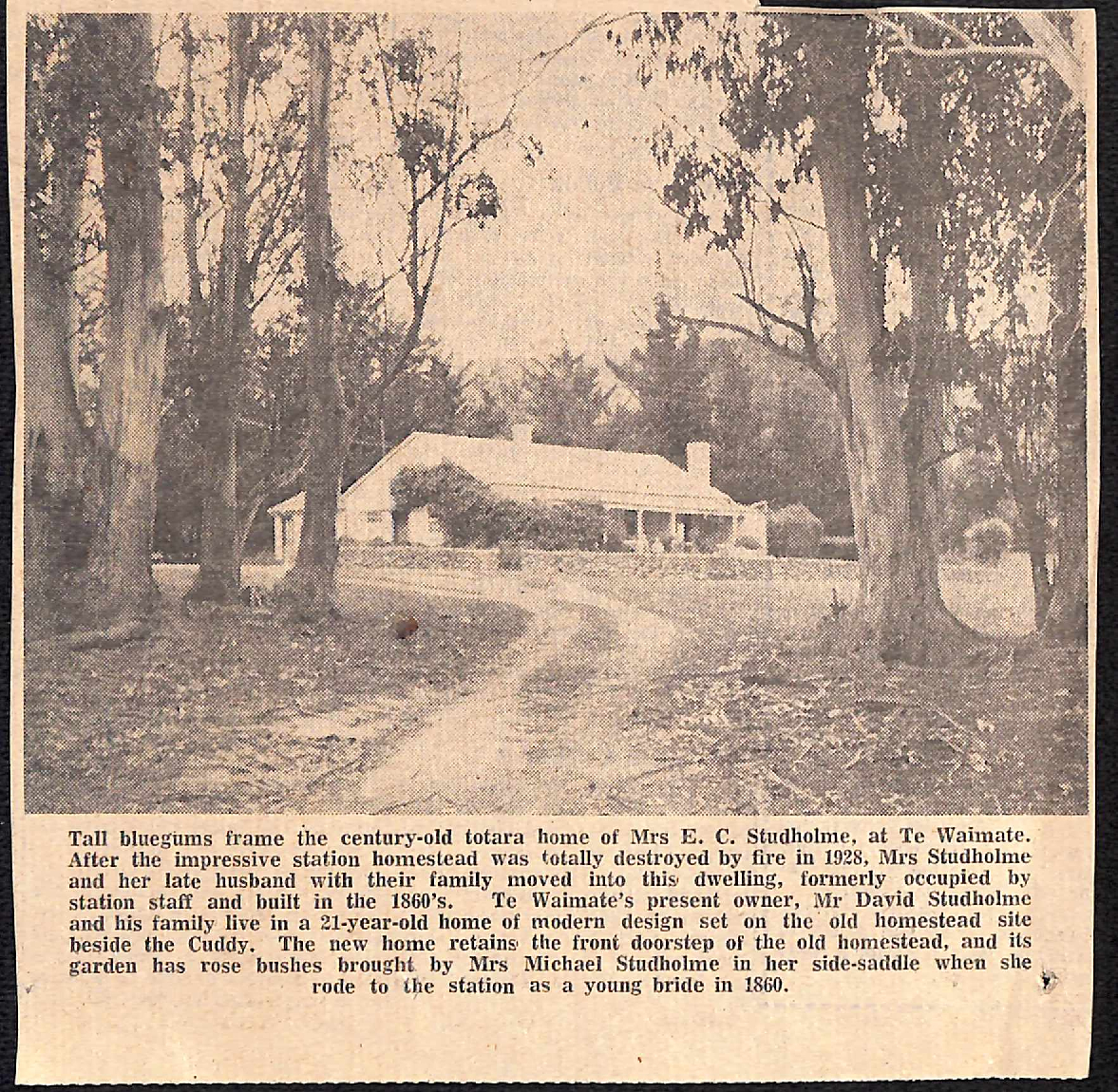
aorakiheritage.recollect.co.nz/nodes/view/5129#idx12410

Thatchers work to restore SC history (14 Jan 1977). Aoraki Heritage Collection, accessed 12/07/2025, https://aorakiheritage.recollect.co.nz/nodes/view/5137
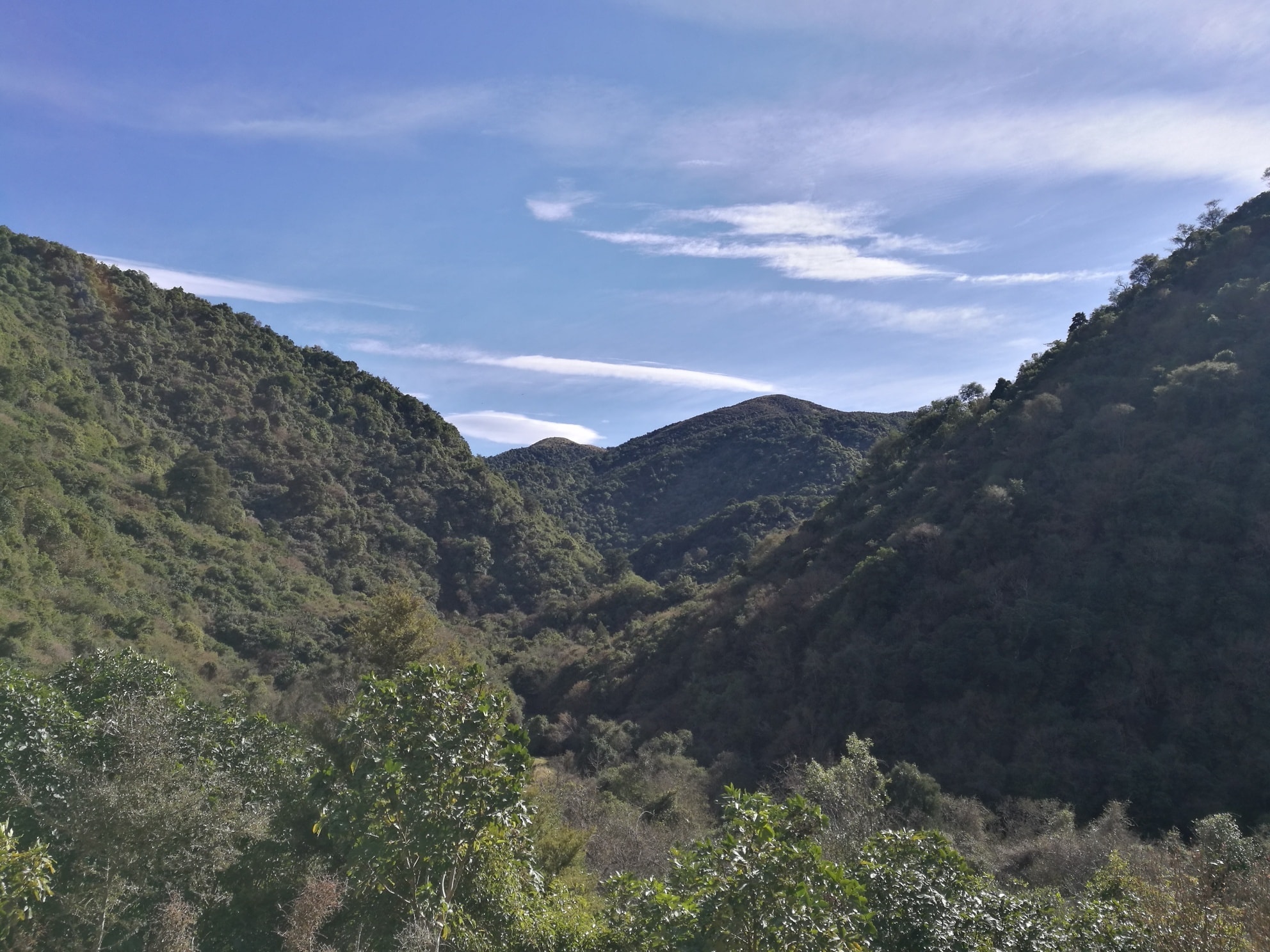
Totara Tree – Fun Facts and Heritage Significance
Tōtara is a native New Zealand conifer from the ancient podocarp family.
It can grow up to 30 metres tall with trunks over 2 metres wide.
The wood is light, strong, and rot-resistant, ideal for construction and carving.
Māori used tōtara for waka, whare carvings, and sacred structures.
The Cuddy was built in 1854 using slabs from a single tōtara tree.
Its original thatched roof was made of native snowgrass.
The bark is reddish-grey and stringy, while the leaves are needle-like and sharp.
Female cones produce fleshy red fruit loved by native birds like kererū.
Some tōtara waka could carry up to 100 warriors.
Tōtara trees can live for centuries, standing as living monuments to the past.
Timeline of The Cuddy and the Women Connected to It
Timeline
1838 Effegenia Maria Louisa Channon, known as Effie, is born in London on 28 March.
1853 Te Huruhuru and many lower Waitaki people establish a settlement at Tutekawa, Te Waimatemate.
1854 John, Paul and Michael Studholme and George Brayshaw construct the Cuddy. Saul Shrives undertakes the thatching. Michael Studholme meets Te Huruhuru at Te Waimatemate.
1860 Michael Studholme and Effie Channon marry in Christchurch on 18 April. During their journey south, Effie stays at Mr Woollcombe’s home at Waimataitai and receives jessamine cuttings. Effie arrives at Te Waimate and moves into the newly constructed house near the Cuddy.
1869 A contemporary newspaper reports Effie helping to organise games and refreshments at a picnic for Waimate children.
1885–1900 The photograph catalogued as Mrs E. M. Studholme and family at The Cuddy is taken.
1886 Michael Studholme dies, leaving Effie and their ten children.
About 1910 Effie retires to Timaru, where she continues writing and regularly welcomes members of her extended family.
1917 Effie dies on 4 February, aged 78.
1928 The large Te Waimate homestead is destroyed by fire. The Cuddy survives.
1960 The Cuddy is declared a private historic reserve.
1965 A newspaper feature reports a family tradition that rose bushes at Te Waimate had been carried there by Effie in her side-saddle in 1860. The original source and precise provenance of the roses remain unresolved.
2026 The Cuddy is a Category 1 historic place managed by Heritage New Zealand Pouhere Taonga. It stands on private property and has no general public access.
Sources
Heritage New Zealand Pouhere Taonga: The Cuddy
Building chronology, construction, family details, heritage status, management and access information.
Papers Past: Te Waimate: Early Station Life in New Zealand
Edgar Channon Studholme’s family history, containing substantial passages from Effie Studholme’s privately published Reminiscences of 1860. It is valuable because it preserves Effie’s voice, while still requiring the caution appropriate to a commemorative account written by her son.
Timaru Herald, 16 January 1869: Waimate
Contemporary evidence of Effie helping to organise a community picnic and amusements for Waimate children.
Dictionary of New Zealand Biography: Te Huruhuru
Information about Te Huruhuru, the community at Tutekawa and the Māori occupation of Te Waimatemate before the establishment of the Studholme station.
Aoraki Heritage Collection: The Cuddy Was Built at Te Waimate in 1854
A 1965 newspaper feature containing the later account that rose bushes at Te Waimate had been carried there by Effie in 1860. This is a useful lead, but not yet an original or contemporary source.
South Canterbury Museum, Object 2974: Mrs E. M. Studholme and family at The Cuddy, Waimate, 1885–1900
Use the museum’s catalogue title and check reproduction permission before retaining the photograph on the website.
https://www.heritage.org.nz/list-details/49/The-Cuddy
https://waimate.org.nz/historic-sites
World Famous in Waimate, the Cuddy was built in 1854 by Waimate’s first European settler, Michael Studholme. What an amazing piece of local history! Constructed from a single totara tree, with snowgrass thatch and an earth floor, it was the home where Michael brought his new wife, Effie. Ephgenia Channon (known as Effie) Effie’s memoir, Reminiscences of 1860, is fully digitised on Aoraki Heritage Online. Her detailed accounts of river crossings and her first overland journey to Waimate offer a fascinating glimpse into the past. https://aorakiheritage.recollect.co.nz/nodes/view/3358