
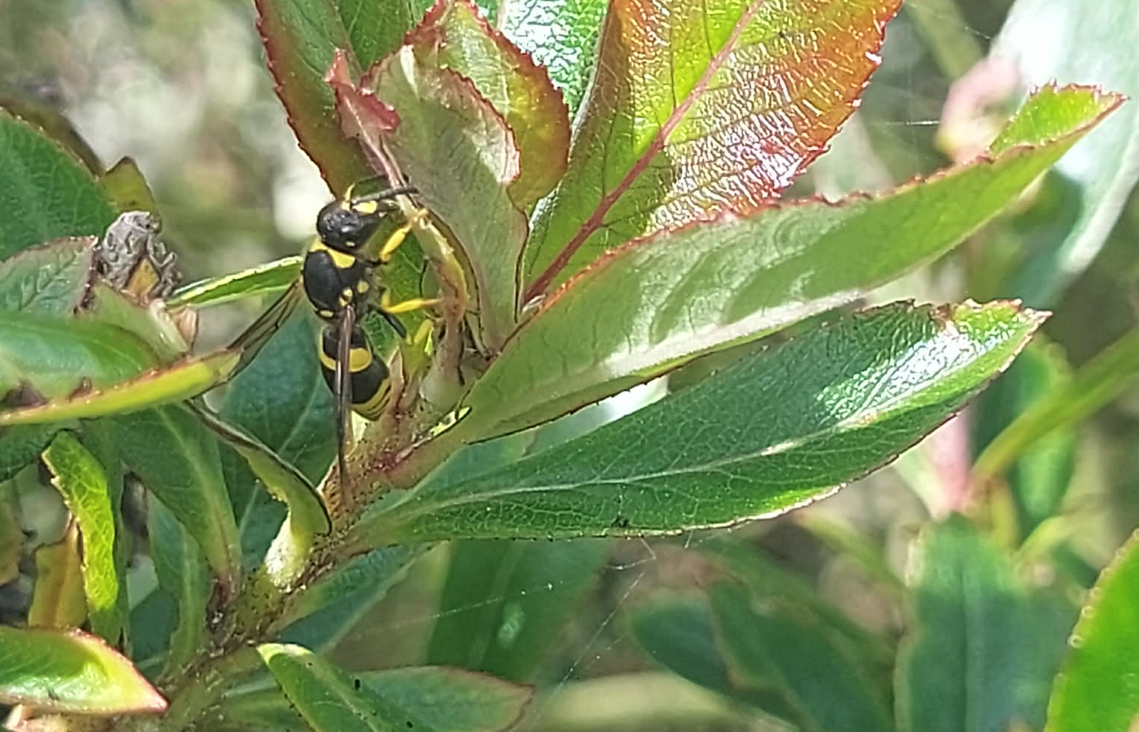
Wasp - Photo Roselyn Fauth 2026 - Is it hunting caterpillars?
When we think about pollination, bees usually get all the attention, but wasps can play a part too! I spotted this little black-and-yellow visitor in the garden and I think it could be a European tube wasp (Ancistrocerus gazella). If that is the case then it is an interesting find because it wasn't deliberately brought to New Zealand! Originally from Europe, this solitary wasp was first recorded in Auckland in 1988 and is thought to have arrived accidentally, possibly tucked away in imported materials. Unlike the familiar wasps that gather around our summer picnics, it lives independently rather than in a large colony. Look closely and you'll notice its narrow waist, glossy black body, yellow markings and slender legs. It's easy to mistake for a small social wasp, or even a bee, until you start noticing the differences.
So what has this accidental arrival got to do with pollination? Adult European tube wasps visit flowers to drink nectar and may pick up and transfer pollen along the way. Unlike bees, which collect pollen to feed their young, female tube wasps hunt caterpillars, paralysing them and storing them in tiny nesting chambers sealed with mud. Research in Central Otago has even documented their nurseries inside old nail holes, hollow stems and gaps in masonry! Research published in 2024 found that some wasps can be more effective pollinators than previously assumed, although we don't yet know how much pollination this particular species contributes in New Zealand. It's a fascinating reminder that different flowers attract different visitors, and not every insect has the same job. An introduced wasp might help transfer pollen and hunt caterpillars, although that doesn't necessarily mean its arrival has been good for native biodiversity. Next time you see something buzzing around a flower, take a closer look. Is it a bee, a wasp or perhaps a hoverfly pretending to be one? There's often a much bigger story hiding in the smallest garden visitors.