
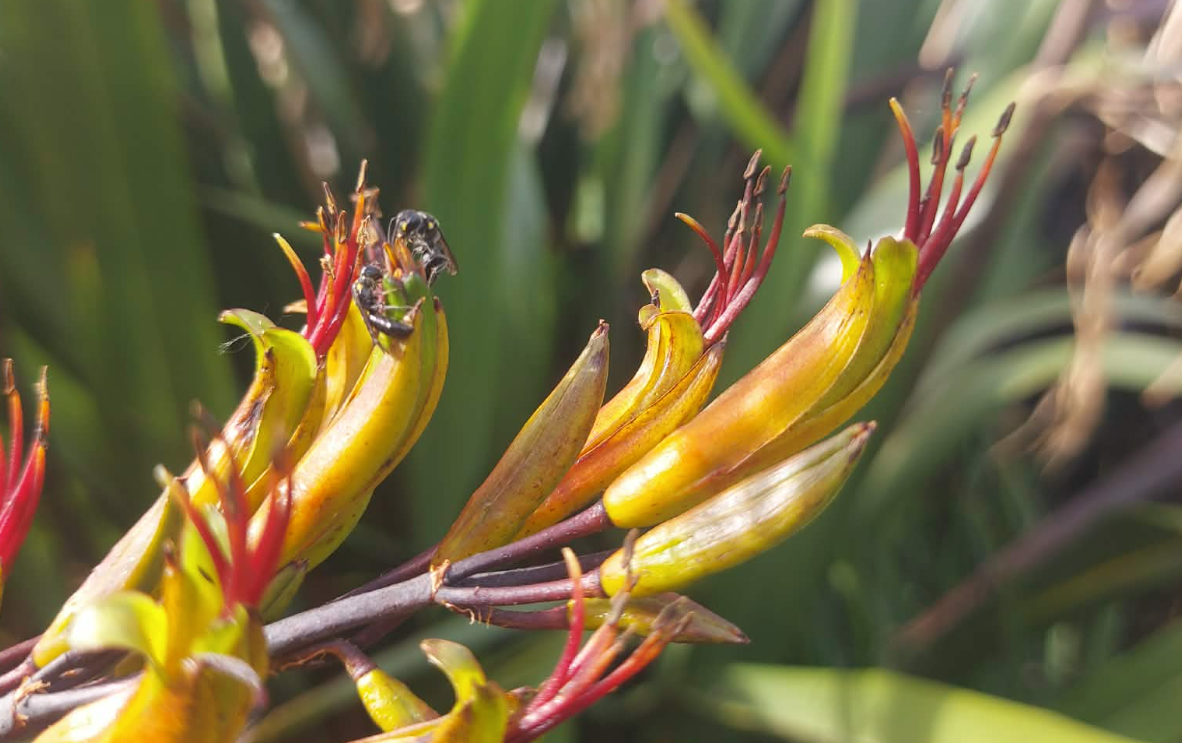
Pollinators on Harakeke - Photo Roselyn Fauth 2026
Here's another little garden visitor that had me looking twice! At first glance, its glossy black body and yellow markings made me think it was another wasp. But after looking more closely and comparing photographs, I wondered whether I'd found one of New Zealand's native masked bees, possibly Hylaeus agilis. Unlike the familiar fuzzy honey bee, these little bees have relatively smooth bodies and can look remarkably like wasps. Hylaeus agilis is endemic to New Zealand, meaning it occurs naturally here and nowhere else in the world. There's another fascinating difference. While honey bees carry visible bundles of pollen on their hind legs, female Hylaeus bees swallow pollen mixed with nectar and transport it internally to feed their young. So you could be watching a pollen-collecting bee without seeing a single yellow pollen basket! My photographs aren't quite detailed enough to confirm the species, but it's certainly a possibility worth investigating.
I photographed this little insect exploring the flowers of harakeke, our native New Zealand flax. Harakeke is particularly well known for attracting nectar-feeding birds such as tūī and korimako, which can transfer pollen between flowers, but insects visit too. Whether my tiny visitor was collecting nectar, gathering pollen or successfully pollinating the flower is something the photographs alone can't establish. What makes this discovery especially interesting is that I'd also spotted a likely European tube wasp in the garden, an introduced solitary wasp that arrived in New Zealand accidentally and may transfer pollen while feeding on nectar. Two little black-and-yellow insects, potentially two very different histories and relationships with plants. It's a lovely reminder that different flowers attract different visitors, and different pollinators have different superpowers. Next time you see something small and wasp-like investigating a flower, look a little closer. It might be one of our native bees going about its work, almost unnoticed.
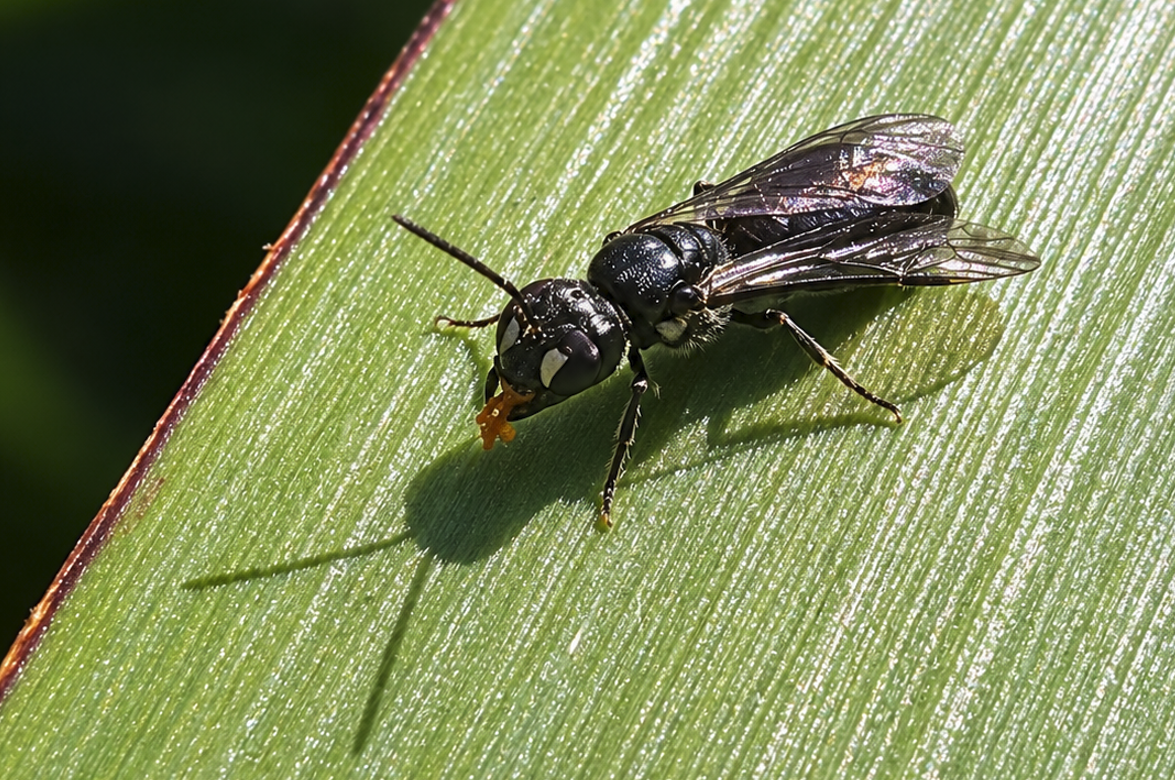
What could this be? Insect eating on a Harakeke leaf Photo Roselyn Fauth 2026