
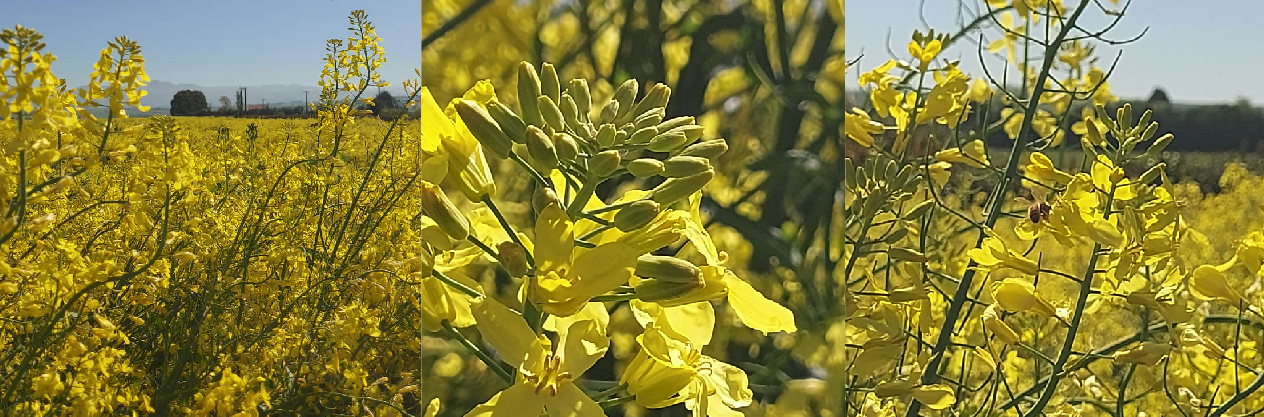
Rapeseed plant at Pareora - Photo Roselyn Fauth 2026
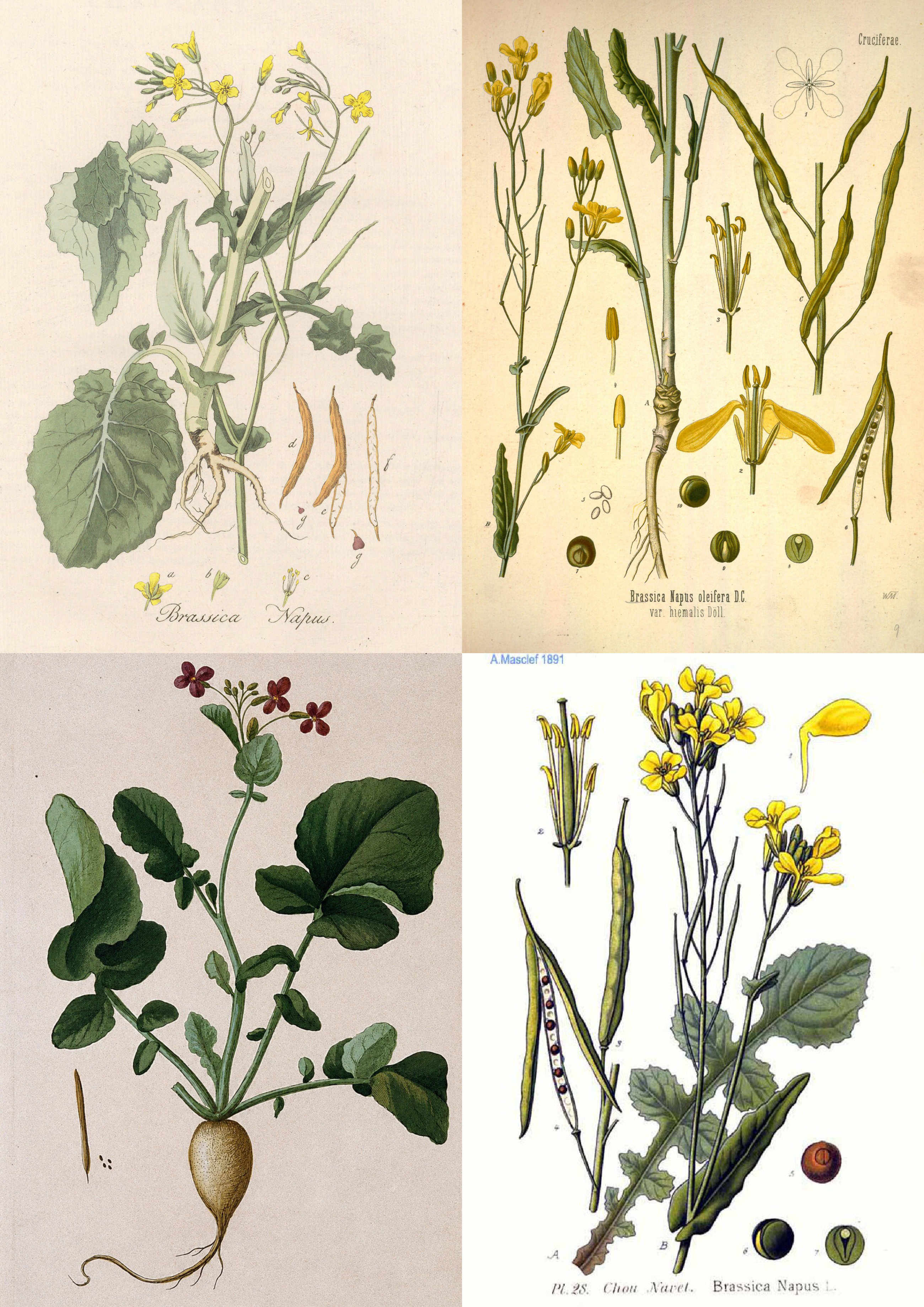
TOP LEFT | Rapeseed, 1822. Botanical illustration from Flora Batava, Volume 4, Plate 314, edited by Jan Kops. Illustration attributed to Christiaan Sepp. Koninklijke Bibliotheek, National Library of the Netherlands. Public domain.
https://commons.wikimedia.org/wiki/File:Brassica_Napus_-_Pl0314_-_FloraBatava-KB-v04.jpg

TOP RIGHT | Oilseed Rape, 1887. Botanical illustration signed W. Müller, from Köhler's Medizinal-Pflanzen, Volume 1, Plate 9. Missouri Botanical Garden, via the Biodiversity Heritage Library. Public domain.
https://www.biodiversitylibrary.org/page/303578
BOTTOM LEFT | Rapeseed, 1770s. Hand-coloured botanical etching by Magdalena Bouchard, published in Rome by Bouchard and Gravier. Wellcome Collection, reference 17225i. Public domain.
https://wellcomecollection.org/works/z5d94tkt
BOTTOM RIGHT | Rapeseed, 1891. Botanical illustration by Amédée Masclef (1858–1916), from Atlas des plantes de France, Plate 28. Wikimedia Commons. Public domain.
https://commons.wikimedia.org/wiki/File:28_Brassica_napus_L.jpg

How does rapeseed grow and reproduce?
Rapeseed (Brassica napus) has roots that absorb water and nutrients, a stem that supports the plant, and leaves that capture sunlight to produce energy. Its distinctive yellow flowers have four petals arranged in a cross, six pollen-producing stamens and a central pistil containing the ovary. After fertilisation, the flowers develop into long green seed pods, each containing seeds that can grow into new plants.
For seeds to develop, pollen must reach the flower's stigma, allowing fertilisation of the ovules inside the ovary. Rapeseed can pollinate itself, but honey bees, bumblebees, flies and other insects also carry pollen between flowers as they gather nectar and pollen. Their visits can improve fertilisation, increasing the number and quality of seeds produced. For South Canterbury's commercial seed growers, effective pollination can mean a more productive harvest and better financial returns. Without successful fertilisation, there are no viable seeds to grow the next crop. The better the fertilisation the better the yeild.