
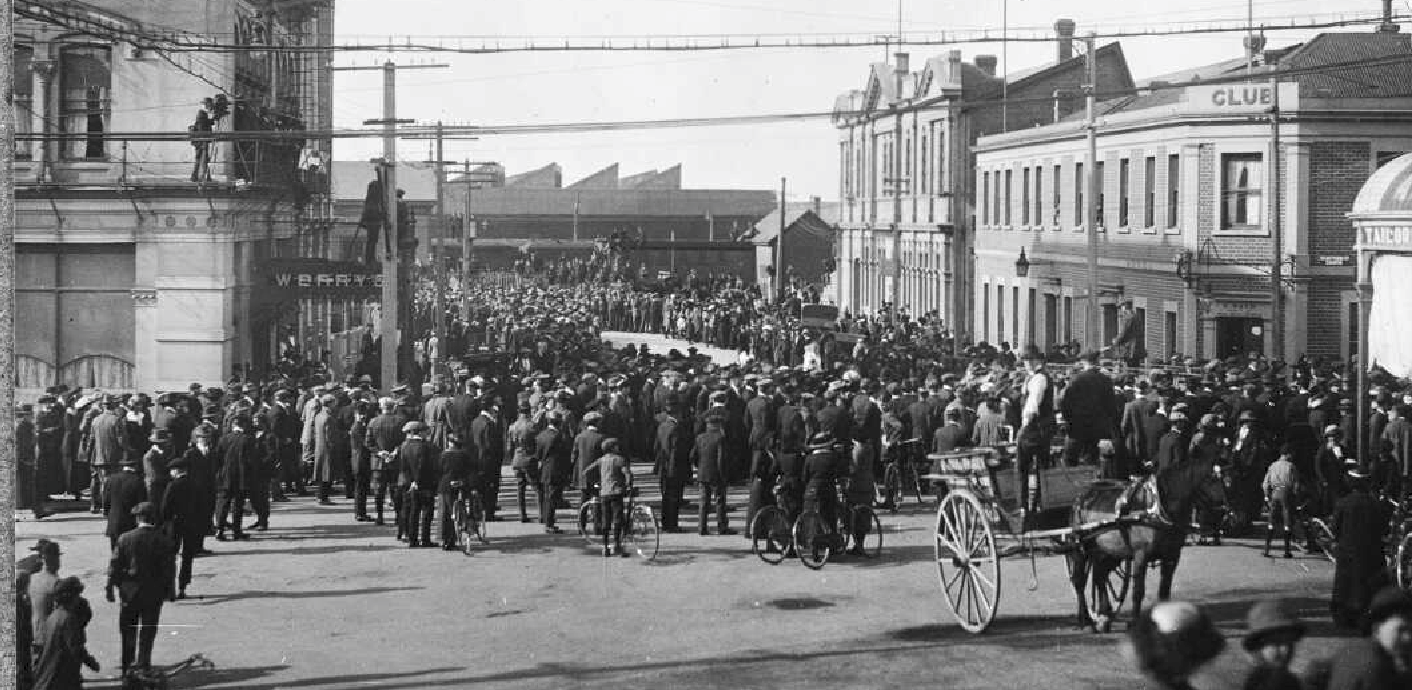
1914. Crowds gather as people leave for war at the Timaru Railway Station. Alexander Turnbull Library (1 2-049274F)
For thousands of years, horses carried soldiers and hauled chariots, artillery, wagons, ambulances and supplies. New Zealand sent about 8,000 horses to the Boer War, 1899–1902. In 1900, the Timaru Agricultural and Pastoral Show (A&P) included troop-horse classes and military drill.
During the First World War, 1914–1918, New Zealand acquired more than 10,000 horses for military service. More than half carried mounted troops and officers, while nearly 4,000 draught, heavy-draught and packhorses hauled artillery and supplies. Many died overseas and only four returned to New Zealand. Military horse traditions continued after the war.
Timaru A&P still judged troop and field-artillery horses in 1922, and troop horses were judged at the Temuka and Geraldine A&P Show in 1926, the year Phar Lap was born. Horse classes continue at A&P shows today, including led and ridden classes, hunters and show jumping.
Horses were also part of everyday life. Many children rode horses or ponies to school. Timaru Girls’ High School converted its horse paddock into a playing field in 1926, and in 1933 girls in T. D. Burnett’s “best all-round girl” competition had to saddle and bridle their horses, mount, dismount, trot and canter.
During the hardest years of the Great Depression in the early 1930s, Phar Lap’s victories gave many people something to cheer about.
By the Second World War, 1939–1945, New Zealand’s military had largely shifted from horses to motor vehicles, though horses were still used for training at home and pack animals remained useful overseas.
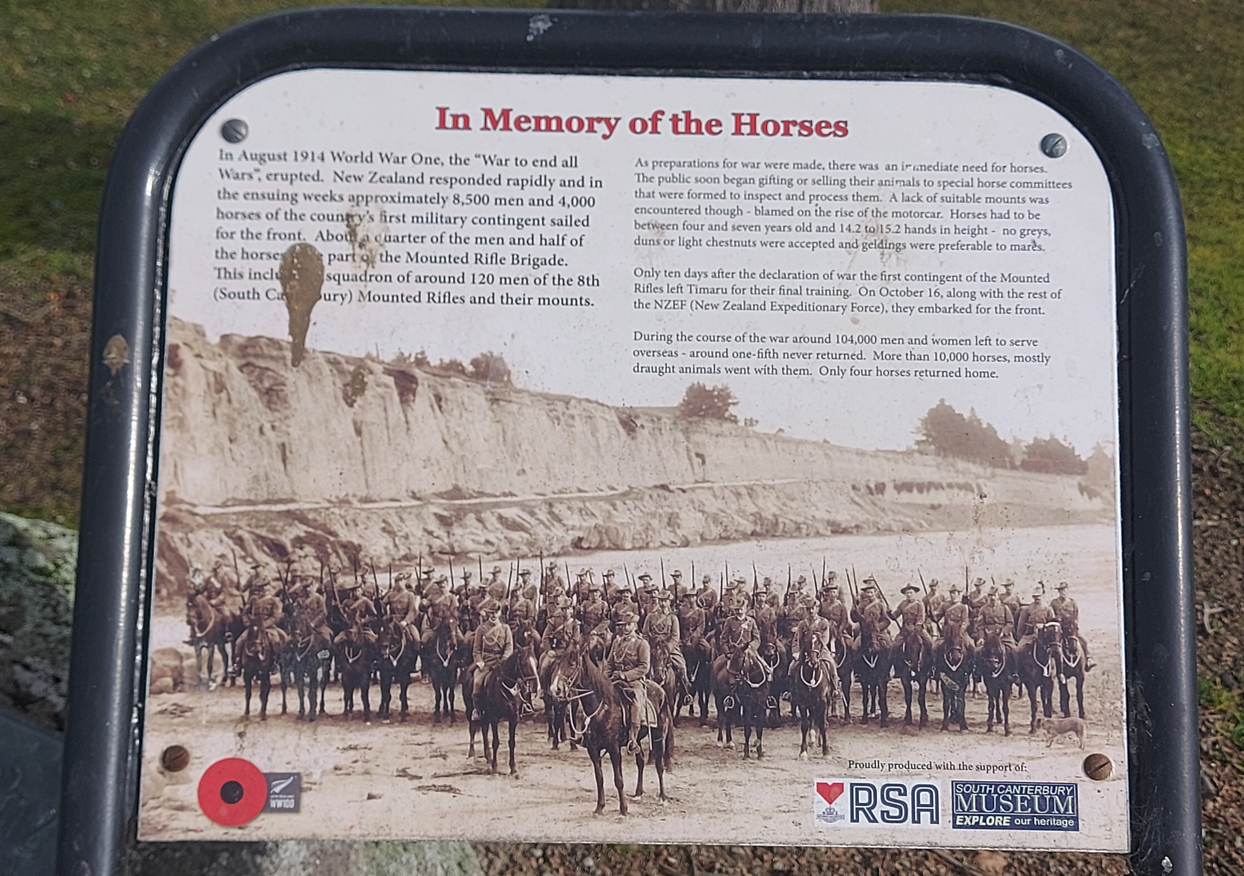
Sign for Horses in the war at Phar Lap Monument