
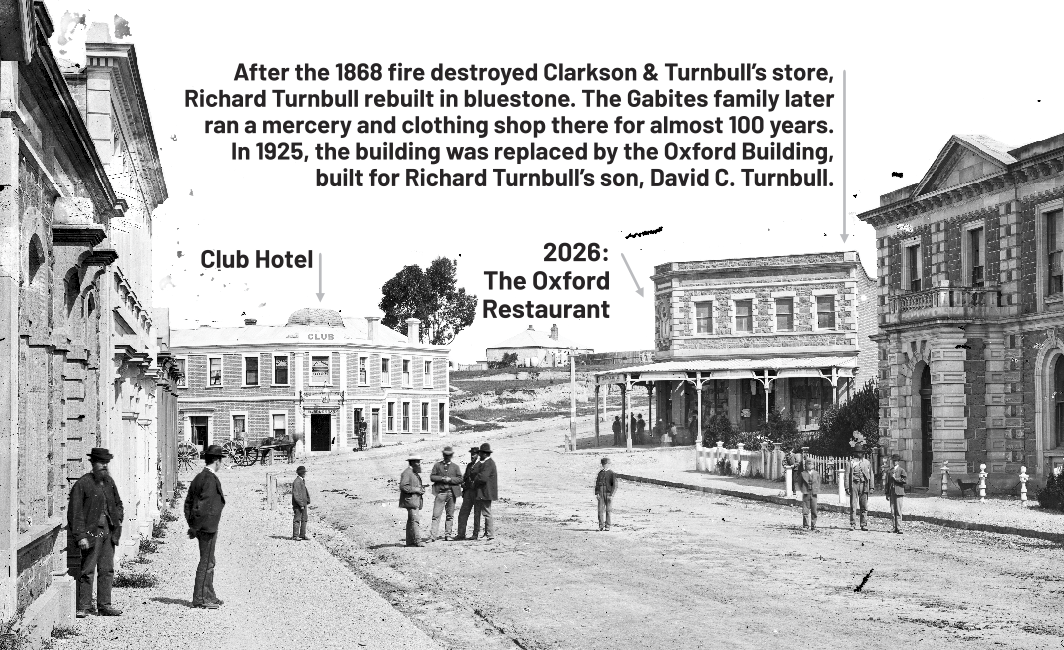
1875 Intersection of George and Stafford Sts, looking south-east. Te Papa (C.014371)
South Canterbury developed a powerful export economy built on wool, wheat and frozen meat. By 1913, Canterbury held half of New Zealand’s wheat-growing land, and South Canterbury was known as the country’s “food bowl”. That prosperity flowed through Timaru’s CBD and can still be seen in its built heritage.
The Oxford Building opened in 1925, between the two world wars, amid rapid change in technology, transport and business. Four years later came the 1929 Wall Street Crash, followed by the Great Depression.
2026: South Canterbury has just 1.2% of New Zealand’s population, yet produces 6.2% of its food and fibre exports. The CBD remains a hub for shopping, hospitality, services, tourism and jobs, supporting the national economy.
Constructed between WWI and WWII The Oxford Building opened a year before Phar Lap was born. The Wall Street Crash followed in 1929, as the world slid into the Great Depression.