
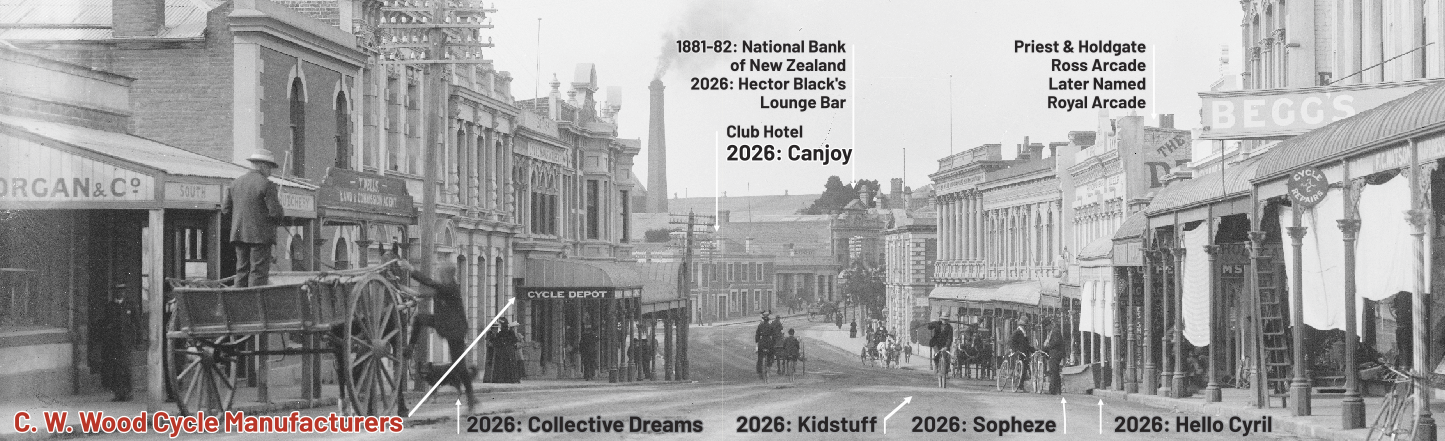
Brehaut Brothers took over the cycle business in 1910. By 1921 Wood had formed the Cecil Wood Company on Sefton St, becoming a Ford dealer. Timaru became one of three Ford assembly centres in NZ. Its Sophia St plant employed 152 people and could turn out around 18 vehicles a day. Te Papa (C.014724)
South Canterbury was also home to inventors. By 1926, the year Phar Lap was born, horses, carts, bicycles and motor cars all shared the CBD. Blacksmiths, workshops, merchants and stables still shaped the town, but new technology was changing how people moved.
c. 1901: Cecil Wood, born in Timaru in 1874, built one of New Zealand’s earliest locally made motor vehicles: an engine-powered three-wheeler with a two-horsepower motor. It reportedly first ran in Timaru on 4 June 1901. The Brehaut brothers worked for Wood and also helped build his three-wheeler. c. 1903: Richard Pearse, born near Temuka in 1877, made early powered take-offs in an aircraft he designed and built near Waitohi. Wood helped him make engine components on Stafford St.
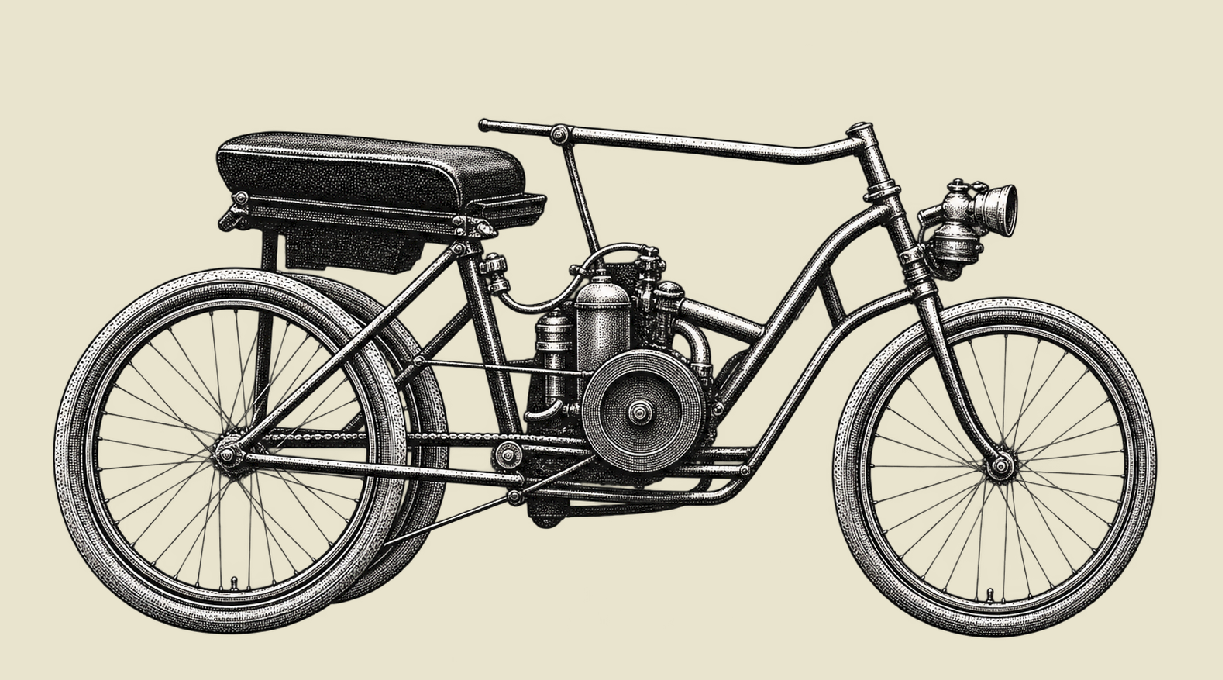
By April 1903, C. W. Wood & Co. was advertising itself as Timaru’s motor factory. Cecil Wood’s engine-powered three-wheeler. AI illustration based on a photograph "Tourist Cycle Works” Jublilee History of South Canterbury by Johannes C. Andersen, 1916, p. 468.
1869 A Velocipede Club formed in Timaru and ordered a bicycle from Melbourne. These early pedal-powered bicycles had heavy frames and wooden wheels and became known as “boneshakers”.
Farmers, blacksmiths, builders and engineers came to the CBD for tools and machinery. Priest & Holdgate’s Vulcan Warehouse imported ironmongery, tools and agricultural machinery, including reapers and binders, while also making iron and tinware locally. Heavy stock was moved through the basement of what is now the Royal Arcade on a rail trolley. The firm also sold pressed-metal ceilings, examples of which still survive in the former Royal Arcade premises. By 1911, Priest
& Holdgate were Timaru agents for products supplied through Briscoe & Co. Briscoes N.Z. bought the business in 1950, and the shop closed in 1971.
Horses also feature in myths and legends across many cultures, often linked with power, travel, war and the gods. Vulcan was the Roman god of fire, metalworking and the forge, and a patron of smiths and craftspeople.
Photographer William Ferrier had a studio in the Royal Arcade and took many photographs of Timaru.
The Royal Arcade. The right-of-way became Timaru Borough property in 1934.