
The survivor at the centre of the Timaru poisoning case
c.1855–1925
Survival and resilience

Catherine Emily Hall (née Elspie, later Cain, known as Kate or Kitty) was the daughter of Jane (née Ellis) Cain, her step father was Captain Henry Cain, half-sister of Jane Ellis (Espie) Collins, married Thomas Hall in Timaru on 26 May 1885, she was the mother of Nigel Cuthbert Hall born 1886; she would be forever linked to the story of the Timaru poisonings, with her husband convicted of one crime and suspected of another. Details from Aoraki Heritage Collection, accessed 24/07/2025, https://aorakiheritage.recollect.co.nz/nodes/view/773
In 1886, newspapers across New Zealand reported every dramatic detail of what became known as the Timaru poisoning case. The man accused and convicted was Thomas Hall. The person whose illness exposed the crime was his wife, Kate.
Kate Emily Espie married Thomas Hall in Timaru on 26 May 1885. She was a stepdaughter of Captain Henry Cain, an early Timaru resident and former mayor. Within months of the marriage, Thomas arranged a will under which he would receive her property and took out substantial life-insurance policies on her life.
Their son, Nigel, was born on 19 June 1886. Kate became seriously ill soon afterwards. Her doctor, Patrick McIntyre, struggled to explain her symptoms, but noticed that her condition appeared to worsen after medicine was given to her by her husband. After another woman became ill from tea prepared for Kate, McIntyre sent a sample of Kate’s stomach contents for analysis. Antimony was detected.
Thomas Hall and Margaret Houston, a woman living in the household, were arrested in August 1886. Houston was acquitted. On 19 October, Hall was convicted of attempting to murder Kate and sentenced to life imprisonment.
The surviving reports concentrate on evidence, poison, money and courtroom drama. They tell us much less about what Kate experienced while recovering from childbirth, repeated illness and the discovery that her husband had tried to kill her. Nor should survival be confused with an uncomplicated recovery. The public record does not allow us to reconstruct her private emotions or the effect of the case on her health, trust or later relationships.
Kate and her son were living in England by the early twentieth century. She secured a divorce in 1902, five years before Hall was released from prison on the condition that he remain outside New Zealand. Kate’s importance in this history is not simply that she was “the wife” in a notorious trial. She was the intended victim, the patient whose symptoms were taken seriously, and the woman who survived.
Reframing the story around her changes what readers notice. It draws attention away from fascination with the offender and towards the realities of coercion, financial exploitation, medical vigilance and the long life a survivor still had to rebuild.
Read the WuHoo story: The Booklet That Gripped Timaru, and the Survivor Kate Hall
Sources
Dictionary of New Zealand Biography: Thomas Hall
Supports Kate’s name, marriage, will and insurance arrangements, the birth of her son, her illness, the medical investigation, Hall’s arrest and Kate’s later divorce and residence in England.
NZHistory: Hall poisonings, 1886
Confirms Hall’s conviction on 19 October 1886 for attempting to murder Kate and his life sentence.
Aoraki Heritage Collection: Timaru alleged poisoning case
Describes the contemporary booklet containing evidence from the Police Court hearing.
Aoraki Heritage Collection: Report and Narrative of the Trial
Identifies the surviving account of the Christchurch Supreme Court trial.
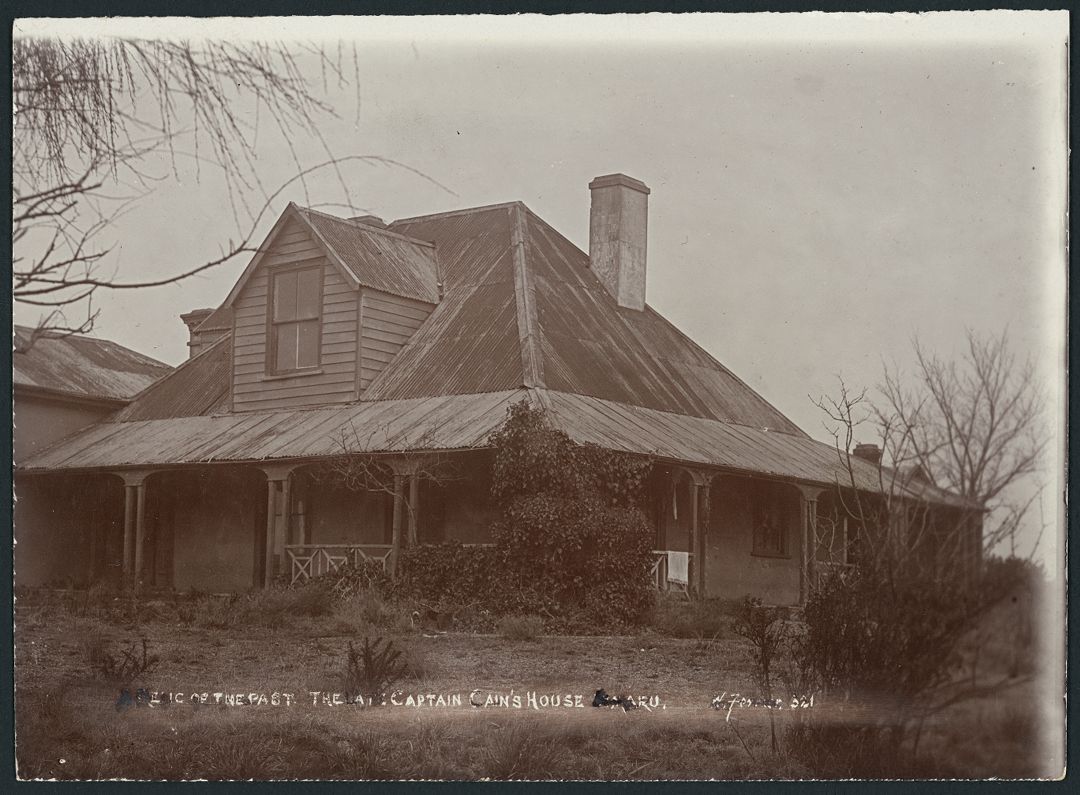
Ferrier, William, 1855-1922. Ferrier, William, 1855-1922 : Photograph of Captain Henry Cain's house, Timaru, Canterbury. Ref: PAColl-9015. Alexander Turnbull Library, Wellington, New Zealand. /records/23223940