
Work, family and survival at Mount Cook Station
c.1837–1914
High-country community care
Women’s memorials
Above Mount Cook Station stands a cairn dedicated to Catherine MacKay Burnett. At Cave, St David’s Pioneer Memorial Church also preserves her name alongside that of her husband, Andrew Burnett, and the station workers commemorated there.
Catherine was born in Scotland around 1837. A South Canterbury Museum photograph is believed to show her before she left Scotland in 1861. She and Andrew subsequently came to South Canterbury and took up Mount Cook Station in May 1864, initially in a short-lived partnership with George McRae.
The station was a remote high-country property. Public histories frequently describe Andrew’s land acquisition, flock and business decisions, while Catherine’s work is compressed into phrases such as “helped her husband”. This makes it difficult to identify exactly what she did from day to day.
A contemporary article published after her death provides some clues, although it is openly commemorative. It recalled that she would travel considerable distances to help when other families were in distress and described the Burnetts’ work of establishing a home in difficult surroundings.
Catherine died on 8 July 1914. A memorial cairn was later erected at Mount Cook Station, and photographs of it are now held by South Canterbury Museum.
Her son Thomas David Burnett later commissioned St David’s Pioneer Memorial Church at Cave. Heritage New Zealand records that the church was built in 1930 in memory of Andrew and Catherine and to commemorate runholders, shepherds and station workers. Three sanctuary windows were given in memory of Catherine and Andrew, while another window commemorated the women of the Mackenzie Country more collectively.
These memorials tell us how Catherine’s family and later community chose to remember her. They do not provide her own account of her work, hopes or hardships.
To know more about her life, it would be wonderful to find letters, diaries, household accounts, station papers and correspondence from visitors. Until then, Catherine’s story is based on a possible imbalance in the record. Her presence was essential to the household and community established at Mount Cook Station, but I think the surviving public evidence still tells us more about how men memorialised her than about how she described her own life.
Read the existing WuHoo story: A Plaque Beneath the Oak: Remembering Catherine Burnett
Sources
Heritage New Zealand: St David’s Pioneer Memorial Church
Supports Catherine’s approximate dates, the 1864 establishment of Mount Cook Station and the later church and stained-glass memorials.
South Canterbury Museum: Catherine Burnett
Identifies museum material relating to Catherine and her memorial cairn.
DigitalNZ and South Canterbury Museum: Catherine Burnett portrait
Describes a photograph believed to have been taken before she left Scotland in 1861.
Timaru Herald, 15 July 1914: “A Friend to Many”
Provides contemporary, though commemorative, evidence of assistance she reportedly gave to other rural households.
Timaru Herald death notice, 9 July 1914 confirms her death.
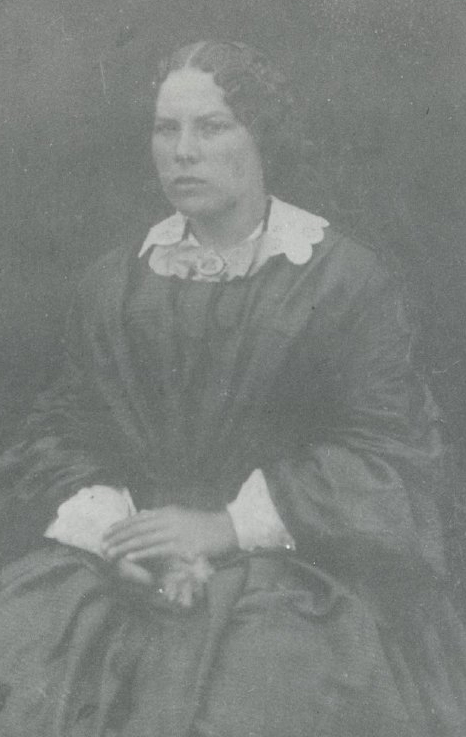
Section from an oval portrait of Catherine Burnett at age 19, taken before leaving Scotland, from an old daguerreotype; silver gelatin print on paper, circa 1855, copy print from the Burnett Collection, South Canterbury Museum (2015/184.922).
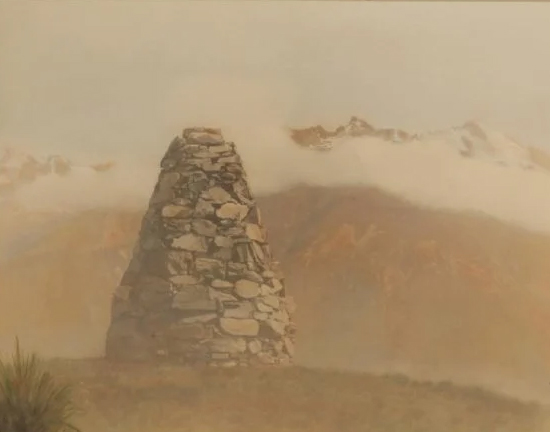
Coloured landscape view of the memorial cairn commemorating Catherine Burnett at Mount Cook Station, photographed circa 1920 by Havelock Williams of Timaru; original glazed and framed photographic print mounted on card, Burnett Collection, South Canterbury Museum (2015/184.094).