

This is the Canterbury Farmers’ Co-operative Association’s grain and wool store in Heaton Street, Timaru, in 1899. The building was next to the main trunk railway line from Christchurch to Bluff – a vital link between wool and grain stores and the ports. Hugh Stringleman, Stock and station agencies – Farmers’ co-operatives, Te Ara – the Encyclopedia of New Zealand, https://teara.govt.nz/en/photograph/17387/canterbury-farmers-co-operative-association-store (accessed 30 June 2026).
THE CANTERBURY FARMER’S CO-OPERATIVE, 1899 Warehouse and Offices, Cains Terrace, Heaton Street Grain and Wool Stores. This is the Canterbury Farmers’ Co-operative Association’s grain and wool store in Heaton Street, Timaru, in 1899. The building was next to the main trunk railway line from Christchurch to Bluff – a vital link between wool and grain stores and the ports. Using this item PGG Wrightson Reference: Eulla Williamson, Farmers in business, 1880-1980: one hundred years of trading by the Canterbury Farmers’ Co-operative Association Limited, Timaru and branches. Timaru
I had been researching John Jackson — coal merchant, timber merchant, landowner, and an early Timaru business person. Jackson’s story had already taken me to the beach, the landing service world, timber yards, coal, shipping, and the rough-and-ready business of building a town before the town had quite worked out what it was going to become... then I found him again, tucked into the early history of the Canterbury Farmers’ Co-operative Association — the C.F.C.A., later known to many simply as Farmers.
In 1881, the new Association leased land from John Jackson in the Heaton Street–Beach Road area. Grain stores were built there. Jackson was not just part of Timaru’s coal and timber world. His land also became part of the early working footprint of Farmers — one of South Canterbury’s most important co-operative businesses.
The Association’s early life began elsewhere: in newspaper debate, public meetings, Stafford Street offices, and grain-store arrangements at Cain’s Terrace. Jackson comes into the story slightly later, when the new co-operative needed land, storage, and access to the transport links that made the whole thing work.
Today, the word Farmers can make people think of a shop, but the Canterbury Farmers’ Co-operative Association did not begin as a department-store memory... it began as a response to pressure. In 1880, South Canterbury farmers were operating in a difficult economy. New Zealand had been through the big borrowing and public works years associated with Julius Vogel. Railways, roads and immigration had helped stimulate growth, but the prosperity was not as solid as it looked. Wool and grain prices along with international markets mattered. Before refrigerated export changed everything, farmers were heavily dependent on goods that could survive long journeys — wool, skins, tallow, wheat, timber and gold.
When prices fell, the weakness showed. South Canterbury was already a major grain-growing district, but producing grain was only one part of the problem. Farmers also needed storage, transport, fair prices, buyers, agents, credit and market access. Once produce left the farm, a lot of control could pass into other hands.
That is the problem sitting underneath the Farmers story. Control. So Thornhill Cooper and the idea of co-operation.
One of the people who saw the problem clearly was Thornhill Cooper, a farmer from Fairlie Creek. In 1880, Cooper wrote to The Timaru Herald arguing that farmers needed to work together. His point was practical. If producers combined their efforts, they might have more control and keep more of the value from what they had grown. A meeting followed at the Grosvenor Hotel in Timaru on 17 July 1880.
About 40 farmers, landowners and others interested in agriculture attended, enough to begin turning an idea into an organisation. The Canterbury Farmers’ Co-operative Association took shape soon after. A provisional directorate was elected. William Postlethwaite became the first chairman. Other early names included Joshua Page, John Hayhurst, John Talbot, Charles Bourn, John Bradshaw, John Buckle, D. McLaren and John E. Goodwin. When the Association was formally established, more names were added, including John Kelland Jr, William Barker Howell, John Campbell, John Scott Rutherford, Andrew Cleland, Michael Studholme and William Upton Slack.
First office, first stores, then Jackson’s land
The Association was registered in January 1881. Its first manager-secretary was James Watkins, who came from Dunedin. The first office was in Maclean and Stewart’s buildings in Stafford Street. The new co-operative also bought Henry Green’s grain store in Cain’s Terrace. That gave it office and warehouse space.
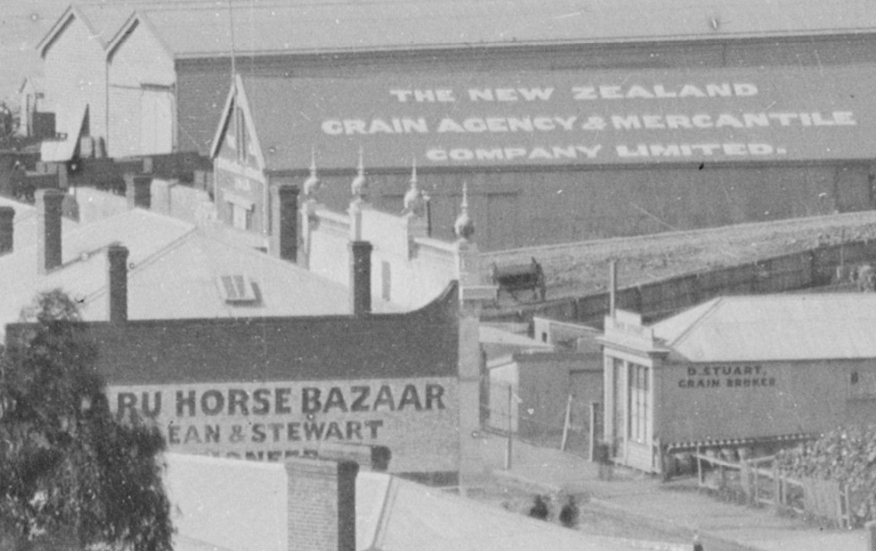
Section of a photo Photo taken by the Burton Brothers on Strathallan Street. Te Papa the building at the left is the Horse Bazar and part of its construction includes bluestone
Then the search for more practical storage land near the railway and port. That is when John Jackson enters the story.
In 1881, the Association wanted land near town that could work for a grain store. A special committee looked at Jackson’s half-acre in the Heaton Street–Beach Road area. Jackson would not accept the first offer, so the Association leased the land instead, with a right to purchase later. Excavations for a grain and wool store began that year.
That one detail links two stories that might otherwise sit in separate folders. John Jackson: coal, timber, land, trade. C.F.C.A.: farmers, grain, wool, co-operation, rail, port. But in early Timaru, these things were not separate. They rubbed up against each other all the time.
Why Heaton Street mattered
Heaton Street mattered because of where it sat. The railway line ran nearby. The port was close. Wool and grain could come in from the district, be stored, handled, sold, and moved on. Farmers was not just creating an office. It was creating a system. The later photographs of the Canterbury Farmers’ Co-operative Association grain and wool stores in Heaton Street show this. The buildings were working buildings, a physical machinery of a rural district trying to get its produce to market. The railway was part of the business model and was the reason the chain worked.
The stores were the middle point between farm and market.
A careful note about the buildings... There is one important detail I do not want to blur. The 1881 Jackson lease belongs to the early Heaton Street–Beach Road story. The former C.F.C.A. wool and grain stores that survive at 1 Heaton Street are later buildings, dated to 1888–89 and 1892, and associated with F. W. Marchant. So I would not call the 1899 Heaton Street building “John Jackson’s building” unless the land records prove that exact connection.
John Jackson’s land gave the new co-operative one of its early footholds in the Heaton Street–Beach Road area. The later Heaton Street stores show how that practical idea grew into major railway-side infrastructure.
In 1880, farmers met to talk about co-operation.
In 1881, the Association had offices, stores, staff, leases and a plan. By 1899, the C.F.C.A. had grain and wool stores beside the main trunk railway line, connecting South Canterbury farms to rail, port and market. That is a remarkable change in less than 20 years. John Jackson takes you to the beach, timber, coal and land. Farmers takes you to grain, wool, co-operation and railway stores. Heaton Street takes you to the railway. The railway takes you to the port. The port takes you back to the farmers, the merchants, the ships, the stores and the town.
The buildings are not just old walls. They are evidence of problem-solving and people trying to make a young town work. Farmers tells us The C.F.C.A. story is not just a business anniversary story, it was a story about farmers deciding they needed more control in a hard decade.
And John Jackson? He was not the founder of Farmers. His land was not the first site. But his name appearing in the Heaton Street story reminds us how connected early Timaru really was.
One merchant’s land became part of a farmers’ co-operative’s working footprint.
Source note
This story draws on the centenary history of the Canterbury Farmers’ Co-operative Association, Eulla Williamson’s Farmers in Business, 1880–1980, Te Ara’s image record for the Canterbury Farmers’ Co-operative Association store, and Timaru District Council’s heritage assessment for the former C.F.C.A. wool and grain stores at 1 Heaton Street. Further land-title research would help confirm exactly how John Jackson’s 1881 lease relates to the later surviving Heaton Street buildings.
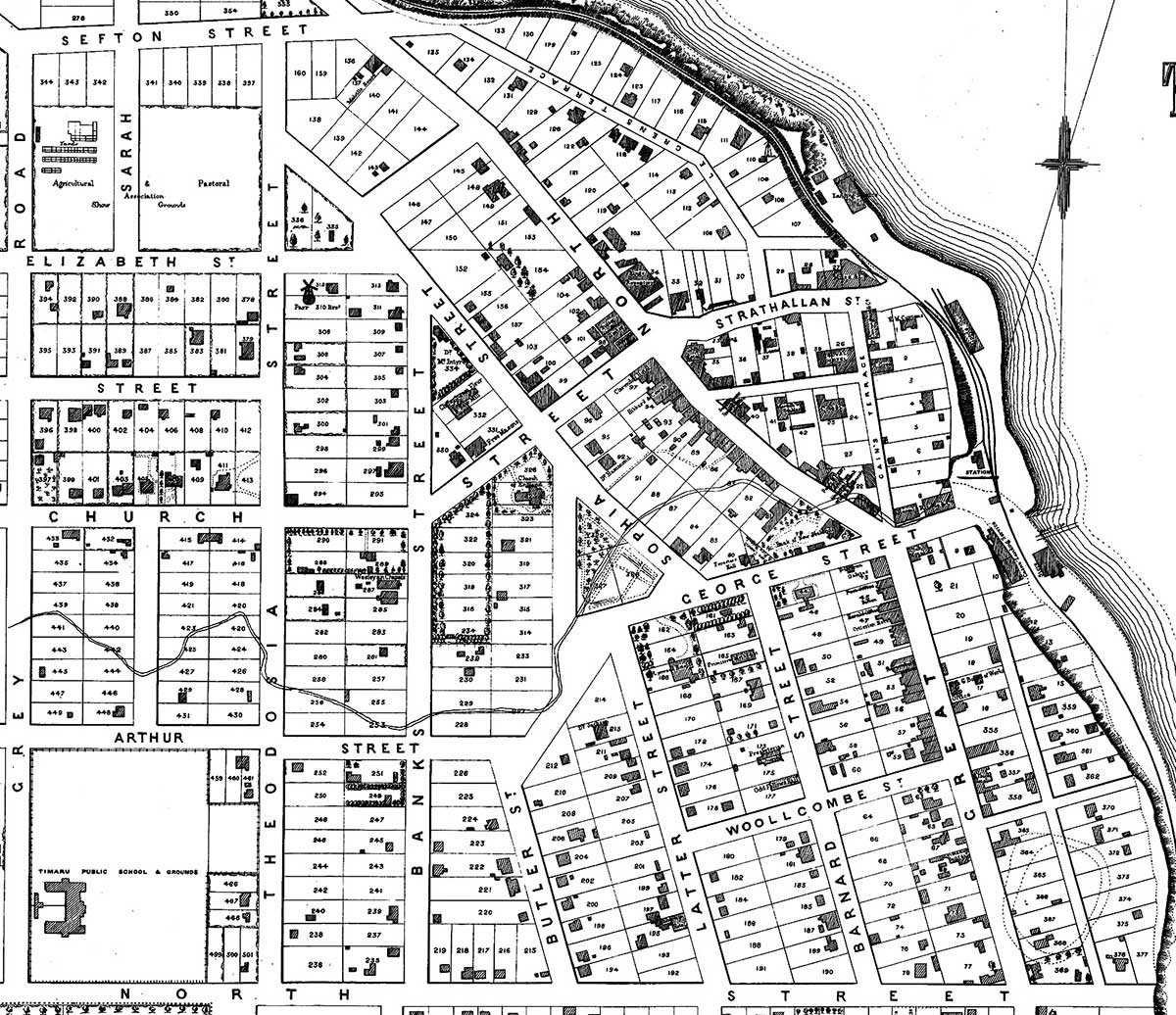
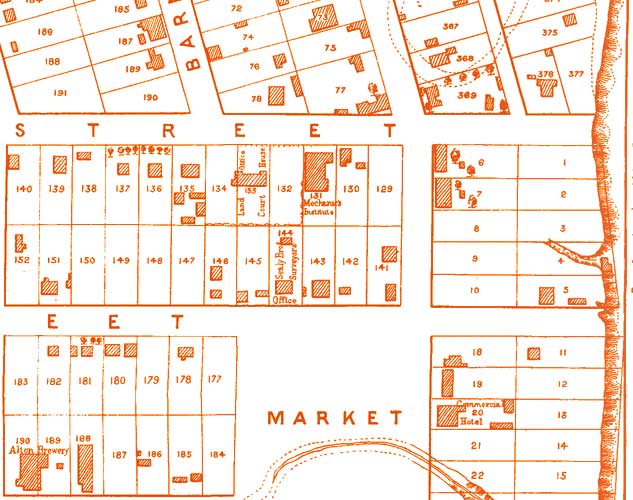
Plan of Timaru Townships, Canterbury, N.Z., 1875. Scale 3 chains to an inch. Lithographed at the Lyttelton Times Office, Christchurch, N.Z. - Courtesy of the Timaru District Council
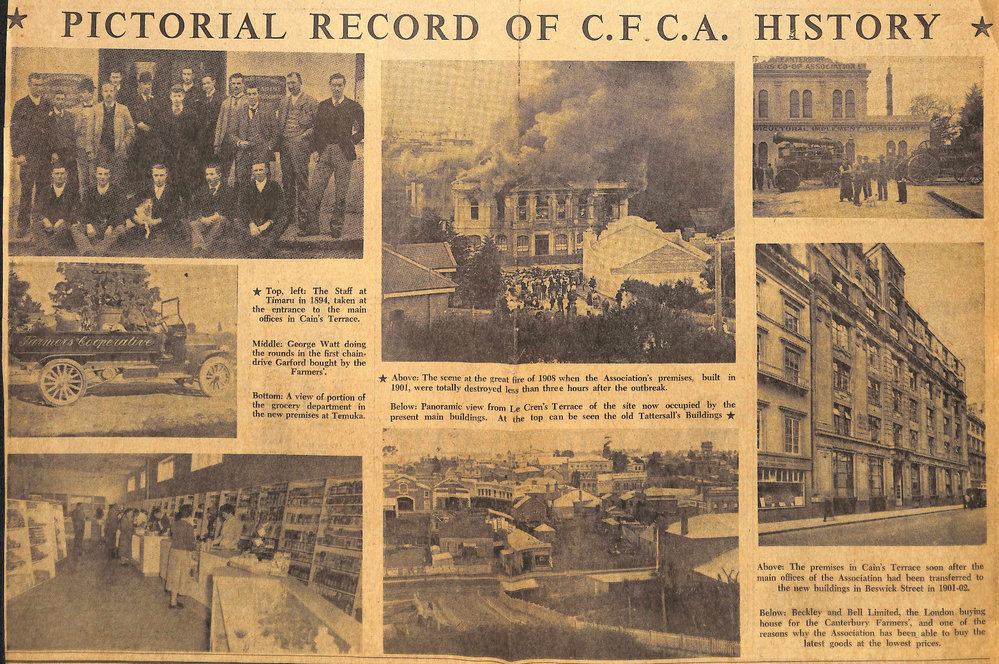
Pictorial Record of CFCA History (17 Oct 1956). Aoraki Heritage Collection, accessed 29/06/2026, https://aorakiheritage.recollect.co.nz/nodes/view/459

Constructed in 1915, this photo was taken a year later, 1916. Exterior view of the Grosvenor Hotel, Timaru, c 1916, photographed by Frederick George Radcliffe. Timaru. F.G.R. 5553 - National Library 1/2-006876-G & hocken.recollect.co.nz/52786 No known copyright or other restrictions on use exist in this image.

Original wooden Grosvenor that got burnt down in fire. Circa 1875 - Picture of Grosvenor Hotel, Timaru
Julius Vogel’s Economic Programme and Agricultural Impact (1869–1889)
1869
-
Julius Vogel’s Bold Proposal:
As Colonial Treasurer, Julius Vogel proposes borrowing £10 million over 10 years to fund infrastructure and stimulate economic growth.-
The plan is seen as radical, even shocking, by many in Parliament.
-
1873
-
Vogel’s Rise as Premier:
Only four years later, Vogel becomes Premier of New Zealand.-
He is hailed in both New Zealand and Australia as the "greatest borrower of all time."
-
£20 million had already been borrowed — double the original proposal — despite New Zealand's population being only 250,000.
-
1874
-
Warning Signs Emerge:
A fall in wool prices signals potential economic trouble.-
Critics argue that prosperity is due more to high global demand for wool and skins than to Vogel’s borrowing.
-
1878
-
Boom Peaks:
After continued borrowing and economic stimulation, wool prices rise again, leading to an even wilder boom than before.
1879
-
Sharp Decline in Wool Prices:
The price of wool drops sharply, exposing the fragile and debt-dependent nature of the economic boom.
By 1880
-
Export Realities:
-
Wool and its allied products (skins, tallow) dominate exports — making up 60% of New Zealand’s total exports.
-
Meat and dairy are not yet exportable due to the lack of refrigeration.
-
Other non-perishable exports include gold, wheat, and timber.
-
1880–1889
-
The Long Depression:
-
This decade is referred to as "The Long Depression of the 1880s".
-
It severely affects the rural economy and highlights the vulnerabilities in relying on overseas borrowing and commodity exports.
-
1880s
-
Co-operative Movement Begins:
-
During this difficult period, The Canterbury Farmers, based in Timaru, is established.
-
It becomes New Zealand’s first farmers’ co-operative, offering a new model of agricultural organization and resilience in tough economic times.
-
https://archive.org/details/farmers-in-business-1880-1980/page/n13/mode/2up?view=theater