
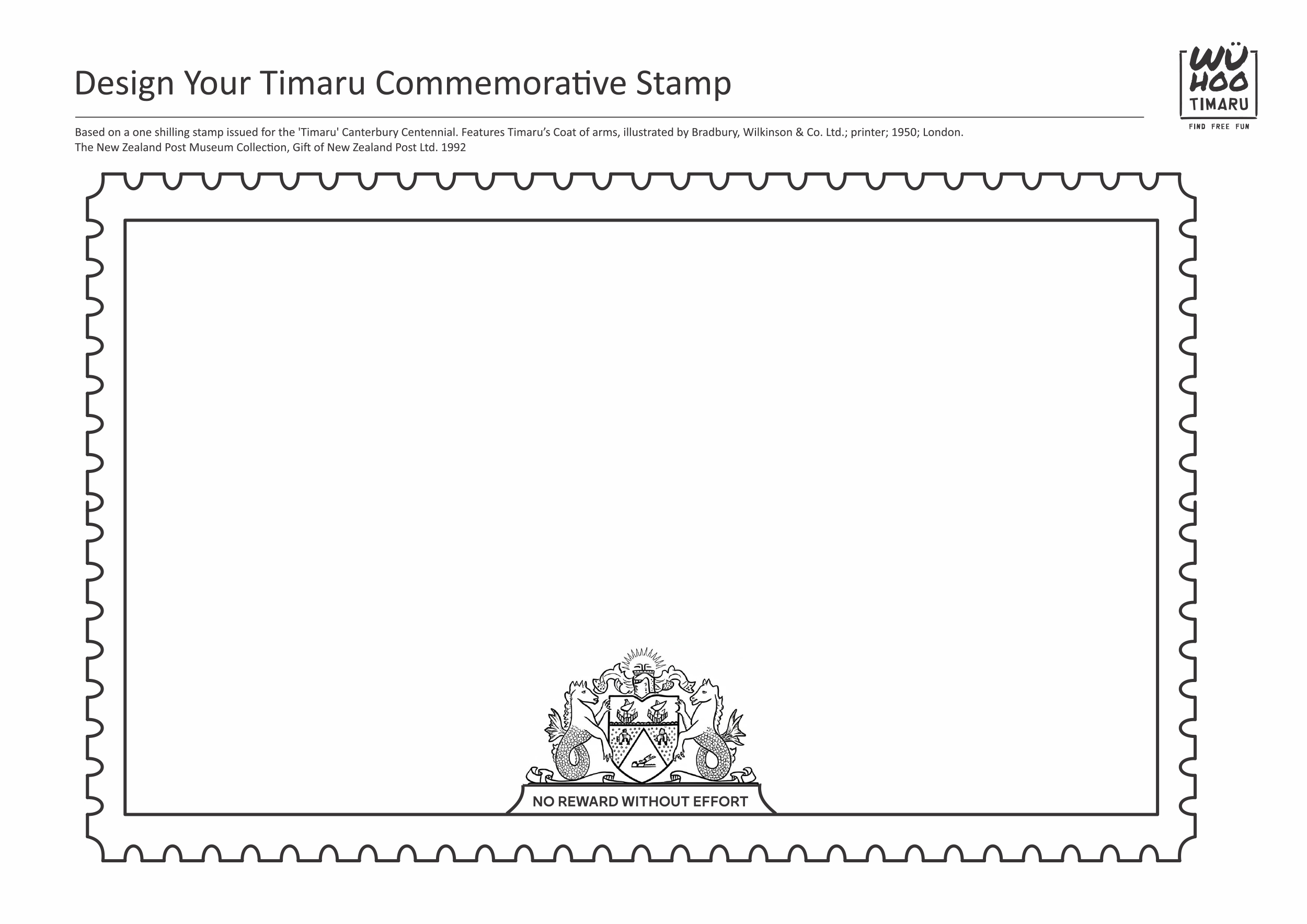
Artists have always used images to tell stories. A stamp is a tiny canvas. When an artist designs one, they choose a moment in time and share it with the world. Today, you can be the artist. In 2025, the 1862 Alexandra Lifeboat returned to Caroline Bay. This template invites you to design a stamp that captures that moment and shares its story of sea rescues, the heros, those lost and the way the community has used the lifeboat to reflect and remember our maritime stories and history.
Design your own commemorative stamp
Designing a stamp lets you capture a moment, share an idea, and celebrate something that matters. A stamp may be small, but it speaks loudly. It shows what a community values and what it chooses to remember.
When you create a stamp design, you:
- choose the story you want to tell
- select symbols, images and words that matter to you
- turn history into something visual and personal
In the past, designing a stamp was a great honour. The design travelled far beyond its starting place and often lasted long after the letter arrived. Many stamps were saved, collected and remembered.
In 2025, the Alexandra Lifeboat returns to Caroline Bay. This is a moment worth marking. You can use this worksheet to design a commemorative stamp that celebrates the lifeboat, the sea, courage, rescue, community or care for others. Let your design show what you think is important.
Your stamp does not have to be perfect. It just has to be yours.
Create it and feel free to share it with your friends, family and WuHoo Timaru.
Incase you were wondering why stamps have zig-zag edges... Stamps were not printed one at a time. They were printed together on large sheets, with many stamps on one page. Tiny holes were added between each stamp. These are called perforations. They made it easy to tear one stamp away from the sheet without scissors. That is why stamps have zig-zag edges. The shape is a reminder that your stamp once belonged to something bigger.